127 Years of Honey from the Same Hills
Прочети на български
1899 was when a group of beekeepers in Plovdiv decided to organize. That year, the Municipal Beekeeping Association "Acacia 1899" was founded, and it has operated continuously ever since. On 15 November 2026, members of this 127-year-old organization set up stalls at Rimski Stadion square, the plaza beside Plovdiv's ancient Roman stadium, and sold honey directly to residents and tourists until dusk.
The weather cooperated. Despite wind, the square stayed sunny. Some visitors had come first for a photo exhibition nearby, then wandered over to the improvised bazaar. What they found was not a single product but a catalog of regional flora, translated into jars.
What the Bees Visited
The 2026 honey season was abundant, according to the producers present. This allowed them to harvest nearly every variety characteristic of the Plovdiv region: spring bouquet, herbal, forest, field, acacia, lavender, linden, manna, thistle, and coriander. The last is rare. Coriander honey carries notes often described as coconut and anise, and requires bees to forage during the flower's brief bloom.
Field honey comes later in the season, harvested in July and August when sunflowers and other late-blooming plants flower. Some producers also offered variants with turmeric and ginger, additions that expand the range without altering the core principle: the honey's character comes from what the bees visit, not from anything added afterward. The beekeepers were explicit about this. They do not use artificial flavors or additives.
This is a terroir logic, the same framework that shapes how wine or single-origin coffee is understood. Honey terroir means a jar from Plovdiv's acacia groves will taste different from one produced in Provence's lavender fields, even if the same species of bee made both.
Beyond the Jar
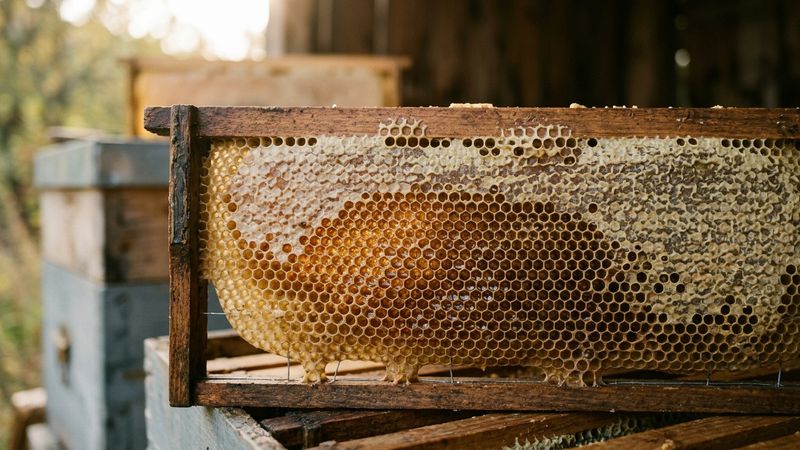
The bazaar was not limited to honey. Producers brought beeswax candles, honey apple cider vinegar made without added sugar, balms for the nose and for burns, and raw honeycomb frames.
For winter wellness, the stalls offered propolis, propolis tincture, pollen, and royal jelly. Some producers sold blends combining all four with honey, intended for immune support. The beekeepers described pollen as a natural source of vitamins, minerals, and amino acids. Cosmetic items were also present: shampoos, soaps, and lip balms made from hive-derived ingredients.
Among the products was perga, known in English as bee bread. This is not raw pollen. It is pollen that bees have packed into honeycomb cells, mixed with honey and saliva, and sealed. Inside the comb, the mixture undergoes natural lactic acid fermentation over several weeks. The process breaks down the tough outer shell of the pollen grains, making nutrients more bioavailable, and produces lactic acid, which preserves the product.
Christiana Yakofova, one of the participants at the bazaar, explained that perga has stronger qualities than ordinary pollen, but extracting it is exceptionally difficult.
Bee bread is stored inside the comb, and removing it without damaging the hive requires care. The fermentation cannot be rushed. For this reason, few producers bother with it.
Producers, Not Traders
Everyone selling at the bazaar was a producer. The honey on the stalls came from the beekeepers' own hives, not from a distributor. The relationship between the person behind the table and the jar in front of them was direct.
This is the model the association has maintained since its founding. According to records cited during the organization's 2013 centennial celebration, documents confirmed that "Acacia 1899" was indeed established in 1899. The association has survived two world wars, political upheavals, and the industrialization of food production.
The bazaar at Rimski Stadion square was a market day, the kind that has happened in Plovdiv for over a century, in a square built atop a Roman stadium that once seated 30,000 spectators. The honey came from the hills around the city. The beekeepers came from the same association their predecessors joined 127 years ago.
Frequently Asked Questions
Q: What is bee bread (perga) and how is it different from pollen?
A: Bee bread is pollen that bees have packed into honeycomb cells, mixed with honey and saliva, and allowed to ferment naturally over several weeks. The lactic acid fermentation breaks down the pollen's tough outer shell, making nutrients more bioavailable than in raw pollen. It also produces lactic acid, which acts as a natural preservative.
Q: What honey varieties are specific to the Plovdiv region in Bulgaria?
A: The Plovdiv region produces spring bouquet, herbal, forest, field, acacia, lavender, linden, manna, thistle, and coriander honey. Field honey is harvested in July and August when sunflowers and late-blooming plants flower. Coriander honey is considered rare due to the brief bloom period.
Q: When was the Municipal Beekeeping Association "Acacia 1899" founded?
A: The association was founded in 1899 in Plovdiv, Bulgaria, confirmed by historical records examined during the organization's centennial celebration in 2013. As of November 2026, it has operated continuously for 127 years.
The Artisan