The queue at Beijing's roving farmers' market stretches past the vegetable stalls and the rice wine vendors. At the end of it, a man in an apron is wrapping wedges of something that, fifteen years ago, most Chinese adults would have refused to taste. Liu Yang has already sold twenty kilograms of cheese this morning.
The scene would have been unthinkable when Liu left his management career in 2006 to study cheesemaking in Corsica. In China, milk was historically associated with invading nomads. Cheese was spoiled milk, nothing more.
The first cheese I tried was Camembert, and I thought, this is not difficult to enjoy.
Liu Yang
That simple realisation became a business thesis. By 2009, when Liu launched Le Fromager de Pekin, Chinese cheese consumption was growing at twenty percent annually, reaching 11,400 tonnes.
The Parallel Closer to Home
For anyone watching Bulgaria's artisan food scene, Liu's trajectory reads like a blueprint. Bulgarian dairy has deep roots, but artisan cheese as a positioned category barely exists here. The country produces excellent kashkaval and sirene, yet lacks the export infrastructure and storytelling that Western European makers have spent decades building.
Liu's early customers were French expatriates in Beijing's foreign enclaves. It took years before Chinese buyers outnumbered them. By the time Monocle visited, more than half of his regular customers were local. The shift happened because Liu treated cheese as culture, not commodity.
Building Taste, Not Just Sales
Liu's product line tells the story of his approach. Beijing Grey is a Camembert made in China, with plans to add truffles. Pyramide starts creamy and sweet, aging into something sharper. Beijing Brie is lighter, designed for palates still adjusting to the category. Each cheese is a teaching tool as much as a product.
The strategy worked because it arrived at the right moment. A series of domestic food scandals had created demand for provenance and quality. A new generation was trying on the trappings of Western lifestyle. Liu offered both: something foreign enough to signal sophistication, local enough to feel accessible.
His expansion plan follows the same logic. He's adding a dairy farm to his workshop on Beijing's outskirts, controlling production from cow to table.
Wine Follows the Same Arc
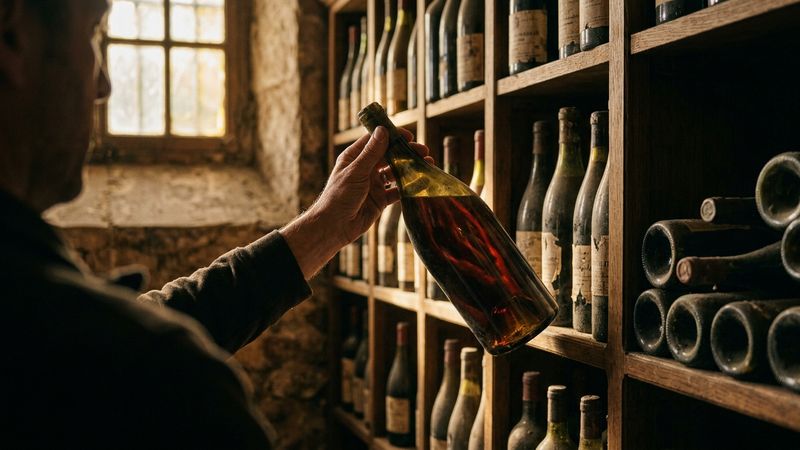
The pattern repeats across categories. Averardo Borghini Baldovinetti, a fine wine trader in Hong Kong, describes the same evolution in his interview with Monocle:
Not surprisingly, the Chinese first discovered the top Bordeaux wines.
But now they are looking into Burgundy and are also starting to be interested in Italian wines.
Averardo Borghini Baldovinetti
His wine fund has grown nearly sixty-eight percent since its 2008 inception. Even domestic Chinese producers are learning the lesson. Grace Vineyard in Shanxi province produces about two million bottles annually. CEO Judy Leissner is honest about the timeline:
Вкусът еволюира по предвидим път - от престиж към автентичност.
Excellent wine takes a long, long time. We're nowhere close to that stage.
Judy Leissner
The numbers tell the broader story. In 2011, Chinese wine consumption grew 54.25 percent. Cheese rose 20.7 percent. Coffee increased fifteen to twenty percent.
What This Means for Makers Here
In Sofia, Flow Cacao operates on the same philosophy: single-origin sourcing, family ownership, and consumer education about the difference between commodity and craft. The model works because it treats the customer as someone capable of learning, not just buying.
Liu's story is not about selling cheese to foreigners. It's about building local taste and then exporting confidence. The next generation of consumers, whether in Beijing or Sofia, are willing to pay for quality and story. But only if makers are willing to educate, not just sell.
Twenty kilograms of cheese, sold before noon, to customers who once thought the product was spoiled milk. Taste can be built.
Frequently Asked Questions
Q: How did Liu Yang build demand for cheese in a market that historically rejected it?
A: Liu focused on education and cultural positioning rather than volume sales. He started with expatriate customers, developed products designed to ease Chinese palates into the category, and benefited from post-food-scandal demand for provenance. By the time of Monocle's profile, more than half his regular customers were Chinese.
Q: What growth rates define China's artisan food market?
A: Chinese cheese consumption grew at twenty percent annually, reaching 11,400 tonnes by 2009. In 2011, wine consumption rose 54.25 percent, cheese 20.7 percent, and champagne 19.4 percent. Coffee grew fifteen to twenty percent in the same period.
Q: What can Bulgarian artisan producers learn from Liu's approach?
A: Liu's model emphasises controlling the production chain, educating consumers about quality differences, and positioning craft products as cultural markers rather than commodities. Bulgarian makers with strong dairy traditions could apply the same framework to build export credibility and domestic demand for premium positioning.
The Slowmade Letter: what happened in the city this week, gathered into one letter.
By subscribing you agree to receive the Slowmade Letter once a week at this address. You can unsubscribe with one click, at any time. How we handle your data
Analytics cookies
We use Google Analytics and Microsoft Clarity to understand which stories get read and how you move around the site. Nothing is recorded without your consent. The cookies needed to sign in always work. Learn more