Beyond the Label: What Actually Makes Something Artisan
Прочети на български
Somewhere between the third jar of artisan honey and the fifth handcrafted chocolate bar, the word loses all meaning. Walk through any Sofia market or scroll through any online shop, and the term appears everywhere: on factory-sealed packages, on products that have never seen a human hand, on items whose only connection to craft is a rustic font on the label.
The problem is simple: there is no legal definition of "artisan" in Canada or most other countries, and Bulgaria is no exception. Anyone can use the word. A factory producing thousands of units daily can call its output artisan. A company repackaging industrial goods can slap the label on and charge a premium. Datamonitor found more than 800 new food products dubbed "artisan" in just five years, and that was back in 2011. The number has only grown.
So how does someone who genuinely cares about craft, about supporting real makers, about buying something that was actually made with intention, tell the difference?
The Questions That Cut Through
Michigan State University Extension suggests three questions that separate marketing from reality: Does a real person craft this product with care? Is it made by hand, in small batches, using specialty ingredients? Does it reflect expertise, tradition, or a process that takes time?
These questions work because they shift focus from the label to the maker. A true artisan product has a person behind it, someone who can explain why they do what they do, how long the process takes, what choices they made along the way.
At Sofia's Zhenski Pazar, the city's oldest and largest open-air market, this distinction becomes tangible. Established in the 19th century, the market sprawls across blocks near the city centre, a chaotic mix of industrial imports and genuine local production. The difference between the two is rarely on the label. It is in the conversation.
The grandmother selling jars of lyutenitsa, the traditional pepper and tomato relish, can tell you which village the peppers came from, how long she roasted them, why she adds a little more garlic than her neighbour. The vendor with identical jars but no story, no specifics, no willingness to discuss process? That is the tell.
Time as the Honest Indicator
Genuine artisan production takes time that industrial methods cannot replicate. A salami that cures for six weeks. Chocolate that melanges for 48 hours. Bread that rises slowly overnight. These timelines are not marketing choices; they are the process itself.
When a maker mentions specific durations, specific temperatures, specific stages, they are describing something that cannot be faked. Industrial production optimises for speed. Craft production optimises for result.
This is why the Saturday farmers' market at Rimskata Stena near Vasil Levski Stadium, organised by the food cooperative Hrankoop, attracts people willing to pay more. The producers there can explain their process. They know their ingredients by name, often by field. The price reflects not just the product but the time embedded in it.
Imperfection as Proof
Authentic handmade products often feature subtle variations and imperfections that reflect the creator's personal touch.
Two bars of chocolate from the same batch will not be identical. Two loaves of bread will have slightly different crusts. Two jars of honey will vary in colour depending on what the bees found that week.
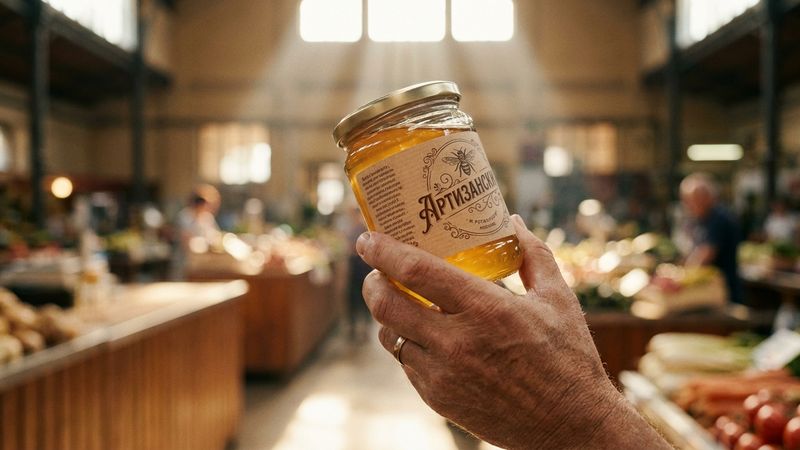
Mass production eliminates variation. That is its purpose. So when every item looks exactly the same, when the finish is too perfect, when there is no trace of a human hand, the product is almost certainly industrial, regardless of what the label claims.
The Relationship Test
The most reliable way to verify authenticity is also the simplest: talk to the person who made it. Farmers' markets and specialty shops that purchase from local producers create the conditions for these conversations. Online, look for makers who share their process, who show their workspace, who answer questions about sourcing and method.
A maker who cannot explain their process, who deflects questions about ingredients or timeline, who has no story beyond the label, is selling something else. Perhaps a fine product. But not an artisan one.
The word artisan may have been diluted by marketing, but the reality it once described still exists. It just requires a bit more attention to find.
Frequently Asked Questions
Q: What is the legal definition of "artisan" for food products?
A: There is no official legal definition or standard for "artisan" in most countries, including Bulgaria, Canada, and the United States. The term is unregulated, meaning any producer can use it regardless of their production methods. This makes consumer discernment essential.
Q: How can I tell if a product at a market is genuinely handmade?
A: Ask the seller specific questions about the production process: who made it, how long it took, where the ingredients came from. Genuine artisans can provide detailed answers about their methods, timelines, and sourcing. Vague responses or inability to discuss the process often indicate mass-produced goods.
Q: Are small imperfections in a product a sign of quality or poor craftsmanship?
A: In handmade products, subtle variations and minor imperfections are typically signs of authenticity, not defects. They indicate human involvement in the production process. Mass-produced items are designed for uniformity, so perfect consistency across multiple units often signals industrial manufacturing rather than artisan craft.
The Artisan