Terracotta walls, slatted wood, potted cacti catching the light through dual garage doors. The space at 4855 Broadview Road in Cleveland's Old Brooklyn neighbourhood announces itself before anyone explains what it is. This is Dahlia Coffee's second location, which opened in August, and the design choices are not decorative accidents.
Natalia Alcazar, who owns and roasts for Dahlia, grew up in Portland, Oregon, with parents from Michoacán, Mexico. The 1,200-square-foot cafe, previously home to Rebel Reserve (a coffee and vintage apparel shop), now carries that heritage in every surface.
I wanted to stick with the warm feel of my first store. It feels like a southwestern vibe, with mountains and cactus.
Natalia Alcazar
The Question Sofia's Craft Scene Shares
How do diaspora entrepreneurs build coffee businesses that scale without shedding their cultural roots? The question matters beyond Cleveland. In Sofia, roasters and baristas increasingly arrive with international training and heritage that shapes their approach.
Blue Bag Specialty Coffee, led by head barista Francisco Lopez, works with verified farms and small-batch roasting to build a specialty coffee culture rooted in sourcing integrity. The model echoes what Alcazar is doing across the Atlantic: growth that deepens identity rather than diluting it.
Roasting as the Root
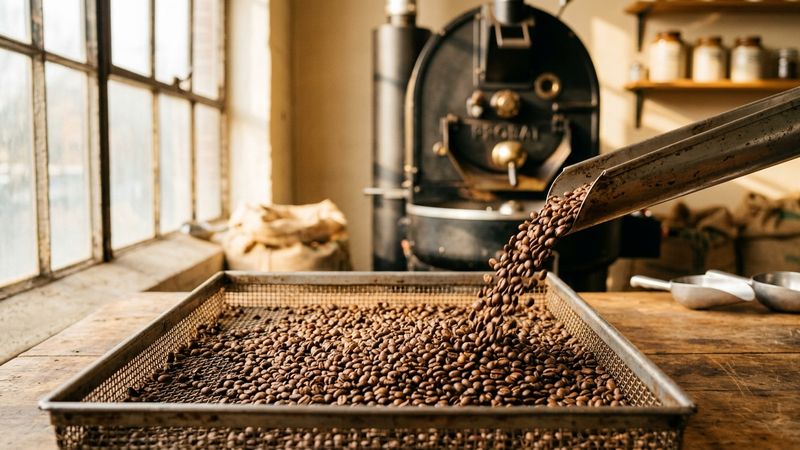
Alcazar roasts on a 10-kilogram Proaster CR-06 at First Crack in Cleveland. The machine is not large by commercial standards, but it suits her approach: Latin American coffees, roasted in small batches, served as drip and espresso. The cafes are the vehicle; roasting is the engine.
Her drinks menu makes this explicit. Alongside standard espresso offerings, Dahlia serves horchata lattes (the rice-and-cinnamon drink common across Mexico and Central America), dulce de leche lattes, cafe de olla (coffee brewed with piloncillo sugar and cinnamon, a traditional Mexican preparation), and mazapan lattes (flavoured with the crumbly peanut confection).
These are not novelty additions. They are the drinks Alcazar grew up with, translated into a specialty coffee context.
More Space, More Food, Same Direction
The new Old Brooklyn location is larger than Dahlia's existing Cudell cafe, which replaced the original Clark-Fulton spot inside the Pivot Center in . The extra square footage allows for an expanded food programme: breakfast sandwiches on Mexican bolillo bread, breakfast burritos, tortas. The first location still carries empanadas, which Alcazar describes as a big draw for that store.
The new shop allows us to do more breakfast and lunch items.
We're hoping to add more to the menu.
Natalia Alcazar
The expansion is not about scale for its own sake. It is about having room to do more of what Dahlia already does. Community events, markets, and latte art competitions are planned for the new space. Alcazar's stated goal is to return her focus to roasting and eventually open a dedicated Dahlia roastery.
Всяко зърно носи обещанието за пространство, където занаятът среща общността.
My main focus has been the coffee shops, but I would like to take the time to go back to my roots of where Dahlia started, which is roasting specialty coffee.
Natalia Alcazar
What Growth Looks Like When It Stays Rooted
The trajectory here is worth noting. Alcazar did not start with a roastery and add cafes. She started roasting, opened a cafe, moved to a better location, opened a second, and now plans to circle back to roasting as her primary focus. The cafes are not the destination; they are the infrastructure that makes the roasting sustainable.
This is a model that resonates beyond Cleveland. In cities where specialty coffee is still establishing itself, the question of how to grow without losing specificity is constant. Generic third place language does not answer it. Cultural specificity does. A horchata latte is not a gimmick; it is a statement about whose traditions belong in specialty coffee.
Dahlia Coffee's second location is at 4855 Broadview Road in Cleveland. The garage doors open onto the street. The terracotta walls stay warm.
Frequently Asked Questions
Q: What is cafe de olla and how is it different from regular coffee?
A: Cafe de olla is a traditional Mexican coffee preparation brewed with piloncillo (unrefined cane sugar) and cinnamon, often in a clay pot. The result is sweeter and more aromatic than standard drip coffee, with a distinctive spiced character that reflects regional Mexican coffee culture.
Q: What roasting equipment does Dahlia Coffee use?
A: Dahlia Coffee roasts on a 10-kilogram Proaster CR-06 at First Crack in Cleveland. This mid-sized roaster allows for small-batch production suited to Alcazar's focus on Latin American coffees.
Q: Where are Dahlia Coffee's locations in Cleveland?
A: Dahlia Coffee operates two cafes in Cleveland. The newer location, opened in August 2026, is at 4855 Broadview Road in the Old Brooklyn neighbourhood. The first location is in the Cudell area, having moved there in 2024 from the original Clark-Fulton spot inside the Pivot Center.
The Slowmade Letter: what happened in the city this week, gathered into one letter.
By subscribing you agree to receive the Slowmade Letter once a week at this address. You can unsubscribe with one click, at any time. How we handle your data
Analytics cookies
We use Google Analytics and Microsoft Clarity to understand which stories get read and how you move around the site. Nothing is recorded without your consent. The cookies needed to sign in always work. Learn more