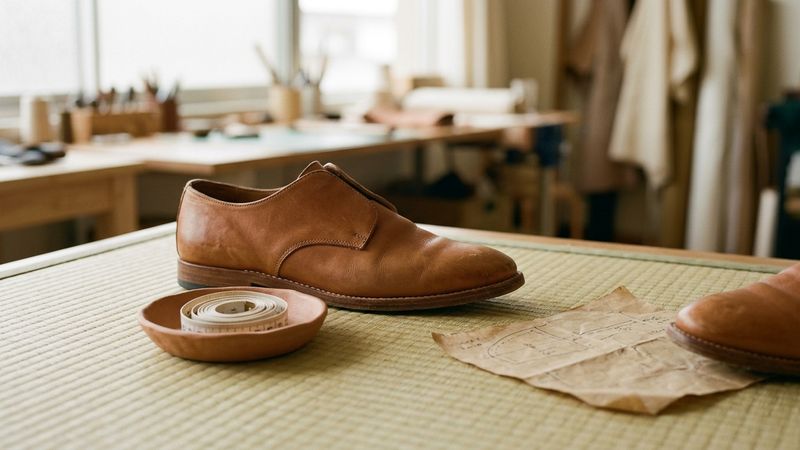
The smell of leather hits before the eye adjusts. In a workshop in Asakusa, Tokyo's historic shoemaking district, boxes line the walls and large tables serve double duty as workbenches and display surfaces. A craftsman bends over a last, stitching a sole with the kind of focus that makes conversation feel like intrusion.
This is Rendo, one of a handful of shoe ateliers still manufacturing in Tokyo. The scene could be from 1920 or 2026. The difference is that in 1920, there were hundreds of workshops like this. Today, according to Monocle's recent feature, only a small community remains.
The Parallel That Matters
Sofia's artisan economy faces the same pressure. Bulgaria has a fragmented shoemaking tradition, scattered makers, and the constant pull of cheaper production elsewhere. The question isn't whether Tokyo's model can be copied. It's whether the principles that kept these workshops alive translate to a city where craft survival is equally uncertain.
The answer is yes. Not because the products are similar, but because the strategies are universal: direct client relationships, willingness to adapt, transparency about process. These are the same principles that drive Sofia's specialty coffee roasters and bean-to-bar chocolate makers.
How Asakusa Became a Hub
Western-style shoemaking in Tokyo began in the late 1800s, when the Meiji government established a military-boot plant in Asakusa. The infrastructure followed: leather suppliers, tanneries, toolmakers, and specialized outworkers clustered around the factory. Craft doesn't emerge in a vacuum. It needs an ecosystem.
As workshops shifted production elsewhere, the "Made in Tokyo" label became rare. But those who stayed didn't just preserve. They innovated.
Four Models of Survival
Rendo Asakusa was founded by Teppei Yoshimi, who studied at London's Cordwainers Technical College before returning to Tokyo. His background in pattern-making shows in designs that pair British silhouettes with Japanese precision. But the real lesson is in his client relationships.
Teppei Yoshimi
Many of our customers have been coming here for years. Some come in for repairs, others for a new pair of shoes.
When the pandemic shifted demand toward comfort, Yoshimi launched the Tep_P collection, a casual line including the Tyrolean leather shoe that has found an enthusiastic following among international visitors.
Fysky Kichijoji takes the direct relationship further. Founded in 2022 by Yosuke Ide and Tetsu Ishiguro, the atelier operates entirely on a made-to-order model. Customers choose leathers, toe-cap styles, sole materials. The turnaround is three to four months.
Tetsu Ishiguro
Every customer works directly with us to create something personal, making the process itself part of the product.
Liberato Azumabashi shows how tradition can solve modern problems. Founder Hideyuki Nagasawa wanted to bring the benefits of tatami, the woven rush-grass mats used in traditional Japanese rooms, to leather footwear. The result: loafers, sandals, and mules with tatami insoles sourced from Kyushu, a region known for top-quality igusa (tatami rush).
Традицията не е ограничение - тя е суровина за иновация.
Hideyuki Nagasawa
They are meant to be worn barefoot.
Hender Scheme proves that artisan makers can scale without losing identity. Founded by Ryo Kashiwazaki 15 years ago, the brand now operates six locations across Tokyo, Osaka, Fukuoka, and Nagoya. Recent collaborations include a partnership with Italian solemaker Vibram on the UFO (Unidentified Footwear Object) sole unit and leather-wrapped furniture with Finnish design house Artek.
The Principles, Not the Products
What connects these four makers isn't style or price point. It's strategy:
Direct client relationships that don't depend on wholesale
Willingness to adapt when demand shifts
Sourcing integrity that can be traced and explained
Workshops that double as showrooms
These are the same principles that define Sofia's emerging craft economy. Roasteries like Blue Bag Specialty Coffee operate on direct sourcing and small-batch production. The owner-roaster relationship with clients mirrors what Yoshimi describes at Rendo.
What Would It Take?
Sofia's shoemakers, or those who might become shoemakers, face the same question Tokyo's survivors answered: How do you build a sustainable livelihood from craft in a city where cheaper options are always available?
The Tokyo model isn't about luxury or tourism. It's about choosing process over speed, relationship over transaction, adaptation over nostalgia. The smell of leather in a workshop is the same in Asakusa and Sofia. What happens after you step inside is a choice.
Frequently Asked Questions
Q: What made Tokyo's Asakusa district a shoemaking hub?
A: The Meiji government established a military-boot plant there in the late 1800s. Leather suppliers, tanneries, toolmakers, and specialized outworkers clustered around the factory, creating the ecosystem that craft production requires.
Q: How long does a made-to-order pair of shoes take at Fysky Kichijoji?
A: The turnaround is typically three to four months. Customers work directly with the founders to customize leathers, toe-cap styles, sole materials, and other details.
Q: What are tatami insoles and why are they used in Liberato shoes?
A: Tatami insoles are made from igusa, the woven rush grass traditionally used in Japanese floor mats. Liberato sources its igusa from Kyushu and uses it to provide natural breathability and comfort. The shoes are designed to be worn barefoot.
What made Tokyo's Asakusa district a shoemaking hub?
+
The Meiji government established a military-boot plant there in the late 1800s. Leather suppliers, tanneries, toolmakers, and specialized outworkers clustered around the factory, creating the ecosystem that craft production requires.
How long does a made-to-order pair of shoes take at Fysky Kichijoji?
+
The turnaround is typically three to four months. Customers work directly with the founders to customize leathers, toe-cap styles, sole materials, and other details.
What are tatami insoles and why are they used in Liberato shoes?
+
Tatami insoles are made from igusa, the woven rush grass traditionally used in Japanese floor mats. Liberato sources its igusa from Kyushu and uses it to provide natural breathability and comfort. The shoes are designed to be worn barefoot.
Slowmade Letter
Once a week. No rush.
The Slowmade Letter: what happened in the city this week, gathered into one letter.
By subscribing you agree to receive the Slowmade Letter once a week at this address. You can unsubscribe with one click, at any time. How we handle your data
Analytics cookies
We use Google Analytics and Microsoft Clarity to understand which stories get read and how you move around the site. Nothing is recorded without your consent. The cookies needed to sign in always work. Learn more