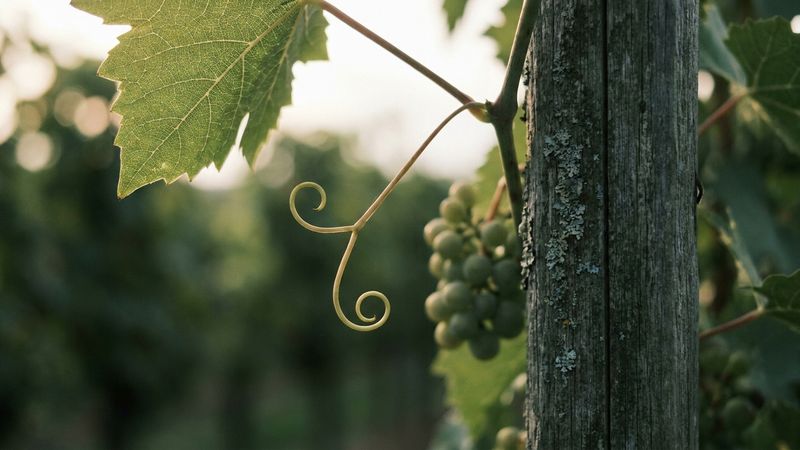
On the floor of a vineyard outside Alexandroupolis, something grows that will never be picked: a low cover crop, planted for the single purpose of keeping the ground from lying bare. The reason goes back to the summer of 2023. By early September, 170,000 hectares had burned across Greece. Ancient olive groves were reduced to charcoal, vineyards turned to ash, the Dadia Forest in Evros left smouldering. The Alexandroupolis fire alone consumed nearly 100,000 hectares, making it Europe's largest recorded wildfire since the 1980s.
For Bulgarian wine producers watching from across the border, this was not distant news. The Thracian Lowland shares the same climate trajectory: rising temperatures, erratic rainfall, increasingly dry soils. What Greek winemakers learned in 2023, Bulgarian vineyards may need to apply far sooner than anyone hoped.
The Loss That Changed Everything
Kiki Chatzisavva, a biologist turned winemaker at Hatzisavva Vineyards in Alexandroupolis, lost her entire 2023 production to the fires. Thirty thousand bottles. "Everything turned to carbon," she told Slow Food.
The Dadia Forest, which had sheltered her vineyards from harsh winds and temperature extremes, was partially destroyed. Her vines now face hotter, drier conditions with less natural protection. Displaced wildlife grazes on new growth. Disease and pest pressure have increased.
Yet Chatzisavva's response was not to abandon the land. She turned to the soil itself.
Soil Temperature: The Data That Matters
Cover crops have become Chatzisavva's primary adaptation tool. Her own measurements tell the story: bare ground reached 52°C during summer heat. Short grass brought that down to 34°C. Under cover crops, the soil registered just 27°C.
That 25-degree difference is not abstract climate science. It is the difference between vine stress and vine survival. Cover crops reduce evaporation, improve soil structure, and support the microbial life that helps roots access water. For Mediterranean-adjacent regions facing longer droughts, this is practical knowledge that translates directly.
Chatzisavva has also observed something unexpected: the indigenous Mavroudi of Thrace grape regenerated vigorously after the fires. Native varieties, adapted over centuries to local conditions, may prove more resilient than imported cultivars. She is now replanting more of them.
Four Generations of Dry Farming
Dimitris Georgas, fourth-generation winemaker at Georgas Family Winery in Spata, Attica, has not faced wildfire directly. But rising heat and water stress are pushing some of his varieties beyond their limits.
His response draws on techniques his family has refined over decades. Every two years, he cuts surface roots to encourage deeper rooting, forcing plants to seek moisture further underground. During winter, he opens the soil to capture rainfall. During summer, he covers it with seaweed mulch to retain what moisture remains. Biodynamic mineral sprays act as natural sunscreen for leaves.
None of this is high-tech. It is attentiveness. "Careful observation is a key element of adapting to the climate crisis,"Georgas explained.
The Network That Saved a Harvest
After the 2023 fires, Chatzisavva had no grapes.
She had a winery, equipment, knowledge, but nothing to process. Then a neighbouring producer donated eight tonnes of grapes. Volunteers arrived to help. She produced 12,000 bottles that year, despite losing everything she had grown.
Kiki Chatzisavva
Адаптацията към климатичната криза започва с търпение и внимателно наблюдение.
"I got so much love and support, it gave me strength to continue. This is where you see real solidarity."
This is the dimension of climate adaptation that spreadsheets miss. Individual producers can improve soil health and select resilient varieties. But when disaster strikes, survival depends on networks built before the crisis, trust that allows resources to flow where needed.
Bulgarian wine communities and craft food producers face the same question: what connections exist now that would hold under pressure?
What Bulgarian Producers Can Prepare
The Greek experience offers a blueprint, not a guarantee. Cover crops and dry-farming techniques require adaptation to local conditions. Native grape varieties need identification and propagation. Community networks need cultivation before they are tested.
Individual producer adaptation is necessary but not sufficient. Broader support, including water access policy and land management that reduces fire risk, matters too. Greek producers are proving that traditional knowledge combined with careful observation can buy time. But time is what climate change is taking away.
The eight tonnes that saved Chatzisavva's vintage came from a neighbouring producer who still had grapes to give. The open question is what mutual aid looks like in the season the neighbour has nothing left either.
Frequently Asked Questions
Q: What soil management techniques help vineyards survive extreme heat?
A: Cover crops such as legumes and grains reduce soil temperature significantly. Measurements from Greek vineyards showed 52°C on bare ground versus 27°C under cover crops. These plants also reduce evaporation and support microbial life that helps vines access water.
Q: Are native grape varieties more resilient to climate stress than imported cultivars?
A: Evidence from the 2023 Greek wildfires suggests yes. The indigenous Mavroudi of Thrace grape regenerated vigorously after fire damage, prompting winemakers to replant more native varieties adapted to local conditions over centuries.
Q: How did Greek wine producers survive the 2023 harvest loss?
A: Community solidarity proved essential. After losing her entire production, winemaker Kiki Chatzisavva received eight tonnes of donated grapes from a neighbouring winery and volunteer labour, allowing her to produce 12,000 bottles despite the disaster.
What soil management techniques help vineyards survive extreme heat?
+
Cover crops such as legumes and grains reduce soil temperature significantly. Measurements from Greek vineyards showed 52°C on bare ground versus 27°C under cover crops. These plants also reduce evaporation and support microbial life that helps vines access water.
Are native grape varieties more resilient to climate stress than imported cultivars?
+
Evidence from the 2023 Greek wildfires suggests yes. The indigenous Mavroudi of Thrace grape regenerated vigorously after fire damage, prompting winemakers to replant more native varieties adapted to local conditions over centuries.
How did Greek wine producers survive the 2023 harvest loss?
+
Community solidarity proved essential. After losing her entire production, winemaker Kiki Chatzisavva received eight tonnes of donated grapes from a neighbouring winery and volunteer labour, allowing her to produce 12,000 bottles despite the disaster.
Slowmade Letter
Once a week. No rush.
The Slowmade Letter: what happened in the city this week, gathered into one letter.
By subscribing you agree to receive the Slowmade Letter once a week at this address. You can unsubscribe with one click, at any time. How we handle your data
Analytics cookies
We use Google Analytics and Microsoft Clarity to understand which stories get read and how you move around the site. Nothing is recorded without your consent. The cookies needed to sign in always work. Learn more