July and August Fill the Jars: A Seasonal Calendar for Bulgarian Honey
Прочети на български
July and August account for the largest honey harvest in most beekeeping regions. For Bulgarian apiaries, this window is when sunflower fields across the Thracian Plain and Danubian lowlands fill supers with golden, thick honey that will sit on market tables through winter. But the calendar starts earlier, and the story is more specific than "summer honey."
Understanding the extraction schedule changes how you shop. Light, pale acacia honey appears in early summer. Darker, more aromatic wildflower and buckwheat honeys arrive in autumn. The jar you buy in December was likely pulled months earlier, and knowing which month tells you what bloomed.
The Bulgarian Calendar Is Not the American One
The localharvest.fyi seasonal guide maps US honey harvests from dandelion to goldenrod. Bulgarian beekeepers follow a different rhythm, shaped by Balkan latitude, elevation, and signature crops.
Acacia dominates May and June in Bulgaria. The white-flowering black locust trees that line roadsides and forest edges across the country produce a honey so pale it is almost water-clear, with a mild, floral sweetness that crystallises slowly. This is the honey that sells out first at farmers markets because the window is short and the flavour is delicate.
Sunflower honey follows in July and August, particularly from the vast agricultural plains of northern Bulgaria. It is thicker, yellower, and crystallises faster than acacia. Most "Bulgarian honey" sold abroad is sunflower honey, because the volume is large and the price is accessible.
Mountain apiaries in the Rhodopes, Pirin, and Stara Planina ranges operate on a different schedule. Higher elevation means later blooms. A beekeeper at 1,200 metres may not pull frames until late August, when lowland beekeepers have already bottled their summer harvest.
Month by Month: What Bulgarian Beekeepers Do
January through March: Colonies cluster. Beekeepers repair equipment, order supplies, and check hives on mild days. No extraction happens. What you buy now is honey from the previous season.
April: The first blooms appear: fruit trees, willows, dandelions. Bees build up rapidly, but beekeepers leave this nectar for the colonies. Brood-rearing requires energy.
May and June: Acacia season. In warm lowland regions, extraction can begin in late May. The honey is light, floral, and commands premium prices. Beekeepers who manage multiple apiaries may move hives to follow the bloom.
July and August: The main harvest. Sunflower, linden, and mixed wildflowers fill the supers. This is when most Bulgarian honey gets pulled. A beekeeper with forty colonies might extract twice during this window, producing distinct batches with different colour and flavour profiles.
September and October: Late-season honeys from goldenrod, aster, and buckwheat.
These are darker, stronger, and more aromatic. Beekeepers must balance extraction against winter stores: bees need honey to survive until spring, so not everything can be taken.
November and December: Bottling, labelling, and holiday markets. Extraction is over. What you buy now is what was pulled months earlier.
How to Shop Through the Year
The freshest local honey appears at farm stands and farmers markets within weeks of each pull. Colour and flavour follow the blooms the bees visited. An early-summer jar from acacia will be pale and mild. A late-autumn jar from buckwheat will be dark and assertive. That variation is a sign of real, place-based honey rather than a blended commodity.
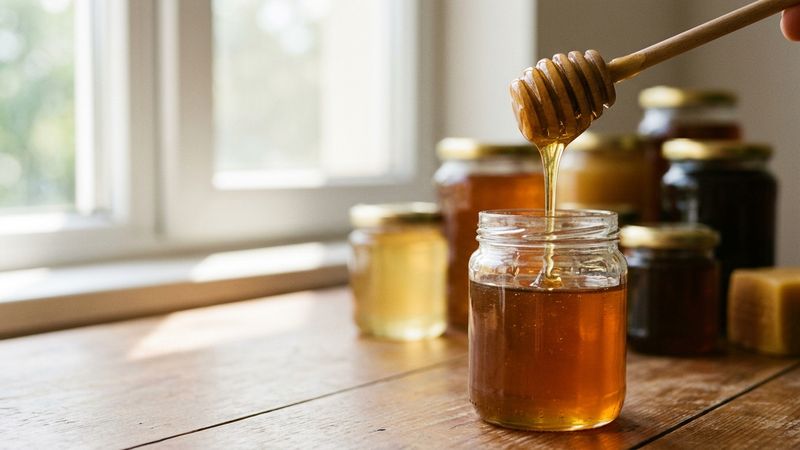
Harvest is not the same as bloom. Bees gather nectar, ripen it in the hive for days, and cap the cells with wax when the moisture is low enough. Beekeepers then pull frames, which can lag the bloom by a week or more. A honey named for a flower may reach the market weeks after that flower faded.
Honey stores well if kept properly. Buying extra jars in season is practical. Crystallisation is natural and reversible: gentle warming returns crystallised honey to liquid form without damaging flavour.
One safety note: infants under twelve months should never be given honey because of the risk of infant botulism, as the CDC explains.
The Beekeeper's Decision
By November, a Bulgarian beekeeper with three distinct harvests sits at the market table. The acacia is nearly gone. The sunflower is plentiful. The late wildflower, darker and more complex, draws curious buyers who want something different.
Each jar is a different colour and story. The calendar made them that way.
Frequently Asked Questions
Q: What is the best time to buy Bulgarian acacia honey?
A: Late May through June, immediately after extraction. Acacia honey is produced in a short window and sells out quickly at farmers markets. Buying within weeks of the pull ensures the freshest, most delicate flavour.
Q: Why does honey from the same beekeeper look different each time?
A: Colour and flavour follow the blooms the bees visited. An early-summer acacia pull will be pale and mild, while a September wildflower or buckwheat pull will be dark and aromatic. This variation indicates real, place-based honey rather than a blended product.
Q: Do Bulgarian beekeepers harvest honey in winter?
A: No. Winter is when colonies rely on stored honey to survive until spring. Beekeepers who sell honey in winter are selling honey they extracted months earlier, typically from the July, October harvest window.
The Artisan