
Salt Crystallises Slowly on an Island Two Miles Long
Прочети на български
A child scrambles over slippery rocks on Matinicus, the most remote year-round inhabited island in Maine. She peers into tide pools, watching what the ocean leaves behind when it recedes. The sun draws crystals from the water, white and jagged, forming without anyone's help. Decades later, that child returns home with a baby, a pandemic at her back, and a question: what if the salt she tasted as a girl could become something more?
Usha Beaudoin is a tenth-generation islander. For years, she worked as a medical assistant in Portland, accepting what she calls "the onus of adulthood": a respectable indoor profession that felt disconnected from anything she could touch.
I assumed your professional life had to be unsatisfying, like just working for the weekend.
Usha Beaudoin
Then came 2020. A baby. A global crisis. Beaudoin and her partner returned to Matinicus, an island two miles long by one mile wide, twenty-three miles from the nearest grocery store.
When There Is No Shop, There Is a Protocol
The salt farm was born from a soft pretzel. In those early pandemic months, Beaudoin's family made pretzels but had no salt to sprinkle on top.
Planning ahead is imperative out here.
Usha Beaudoin
So she gathered seawater and her mother's camp stove and began reducing the liquid. The result was sharp, not soft. Not like what she remembered from tide pools: crystal tender and flaky, dried slowly by the sun.
Beaudoin is a scientist by temperament. She contacted salt companies around the world, studied Mark Kurlansky's sprawling global history of the mineral, and through trial and error landed on the simplest method: seawater evaporated in a greenhouse over two to three weeks.
Inside the arched plastic structure, temperatures climb past 100 degrees Fahrenheit. Three long rows of mesh-covered tables hold thrice-filtered seawater. A gas-powered hose draws the water up the cliff face. Then the waiting begins.
There are quicker ways to get here, but none of them taste as good.
Usha Beaudoin
The Taste of Constraint
The salt that emerges is delicate, mineralized, and unique. Each jar is different because each batch is hand-harvested. Mass production demands uniformity; Matinicus demands character.
Bulgarian artisans in remote mountain villages and along the Black Sea coast have long understood this principle.
Distance from markets forces depth of knowledge. "Making do with what you have" is not hardship in these communities; it is a design principle. Beaudoin's method is not a lifestyle choice. It is an inheritance, shaped by geography and necessity.
The Island as Infrastructure
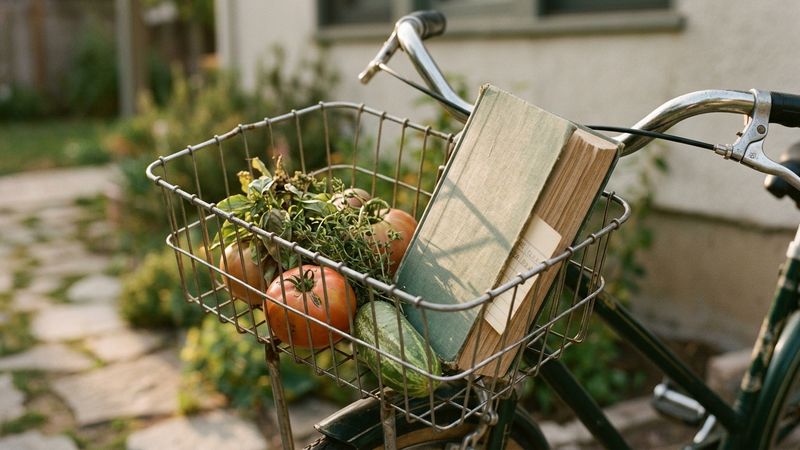
Beaudoin does not work alone. Her mother, partner, and six-year-old daughter Ruby all spend summers on the island, in a home that has been in the family for generations. They walk or ride bicycles on daily errands: the greenhouse, the post office, bingo at the Congregational church, story hour outside the little lending library.
Along the way, they forage. Rosa rugosa petals. Sour cherries. Wild chamomile. Blueberries and fireweed. At the shore, seaweeds: truffle seaweed and fluffy Irish moss. Some go into herbal tea. Others end up in jars of wild sea salt with smoked juniper or strands of earthy sea truffle.
The island community watches Ruby, picks up packages, checks the salt when Beaudoin is off-island. There is no convenience culture on Matinicus. No general store, no restaurant. The only place to buy something to eat is the bakery shed run by Eva Murray, the island's pilot and author, who sells baked goods and coffee popsicles.
There's an entire background behind the business, behind me. You have to think ahead. Have enough supplies, have extra, because the weather is always changing.
Usha Beaudoin
The Plane Departs
As the afternoon light shifts, a neighbour relays that the last plane is leaving. Beaudoin drives at island speeds, twenty miles per hour on dusty unpaved roads, to meet the pilot.
From the air, Matinicus shrinks to green patches among clean blue water. Beaudoin and Ruby wave hard, proud of their place in the world. The taste of salt lingers.
Matinicus Salt Farm ships from the island. Each jar is different. That is the point.
Frequently Asked Questions
Q: How long does it take to make sea salt using the slow evaporation method?
A: Beaudoin's process takes two to three weeks. Seawater is thrice-filtered and evaporated in a greenhouse at temperatures exceeding 100 degrees Fahrenheit. Faster methods exist, but she maintains they do not produce the same delicate, flaky texture.
Q: What makes hand-harvested sea salt different from mass-produced salt?
A: Each batch of hand-harvested salt is unique in crystal shape and mineral profile because it forms naturally without mechanical intervention. Mass production requires uniformity; slow evaporation produces irregular, flaky crystals with distinct character.
Q: Can sea salt be made at home without specialised equipment?
A: Beaudoin's first attempt used only seawater and a camp stove, though the result was too sharp. The key variables are filtration, temperature control, and time. A greenhouse or warm, dry space allows for the slow evaporation that produces tender, fleur de sel-style crystals.
The Artisan