Seeing Your Own Street for the First Time
Прочети на български
Repetition does the editing. A woman in a grey coat passes the same doorway she has passed for three years - 7:43 on a Tuesday morning, the same corner - and the mind keeps only what it needs to steer by: Tsar Shishman and Yanko Sakazov as a waypoint, the door as something to get past. What sits above it never makes the cut: limestone, and a date carved into it, . Nothing here has been forgotten. It was never looked at.
None of this is carelessness. It is what living in a city does to the places inside it: the route to work, the shortcut through Oborishte, the tram stop on Graf Ignatiev. Each of them was a place before it became a way through.
But something is shifting. In Chennai, a city of ten million on India's southeastern coast, organised walking communities have emerged with a simple premise: the city you think you know is still a stranger to you. The practice they have developed, documented in a recent report from DT Next, offers a model that resonates for Sofia residents navigating their own rapidly changing neighbourhoods.
The Philosophy of Deliberate Walking
Walking allows you to observe significant, often overlooked details, even on familiar paths. It fosters a connection with your surroundings, encourages pauses at intriguing spots, enables you to absorb the city's essence and, ultimately, helps you perceive it in a new light.
Ashmitha Athreya, head of operations at Madras Inherited
This is walking as deliberate practice, not exercise, not commuting, not tourism. When you walk to get somewhere, the street is an obstacle. When you walk to observe, the street becomes the destination.
Three distinct communities in Chennai have built on this principle. Madras Inherited focuses on heritage, conducting meticulously researched walks through neighbourhoods like Mylapore. The Chennai Photo Walk gathers photographers of all skill levels, emphasising that observation matters as much as the final photograph. And Madras Frames, which grew from seven participants to between 75 and 100 per walk, sends small groups to explore independently before regrouping to share interpretations of the same streets.
Every Neighbourhood Has Its Own Identity
The transformation these walks produce is not abstract. Tharun Bathini, a participant in Madras Inherited's walks, describes it plainly:
Earlier, I only knew Chennai through a few famous landmarks. The walks helped me realise that every neighbourhood has its own history and identity.
Tharun Bathini
This insight applies directly to Sofia, where rapid gentrification is reshaping districts faster than residents can process the changes. The Ottoman-era streets near the Central Mineral Baths, the Soviet-era housing blocks of Mladost, the pre-war apartment buildings of Lozenets: each carries a distinct architectural and social history that most Sofians pass without registering. Slowing down is not new to the city - craft spaces like Flow Cacao have built their approach around noticing origin, process and flavour. Doing the same with a façade is harder, because nothing about a façade asks you to.
What Chennai's walking communities demonstrate is that reconnection does not require expertise.
The Chennai Photo Walk explicitly welcomes participants of all skill levels, and its organisers note that many IT professionals come here to unwind from their stressful jobs. The walks attract hobbyists, startup founders, photographers, and people who simply want to look more closely at where they live.
Walking Memory
Perhaps the most compelling concept to emerge is what Madras Frames calls walking memory: the idea that a city is a living archive, and that residents who document it from their own perspectives contribute to a collective understanding no single observer could achieve.
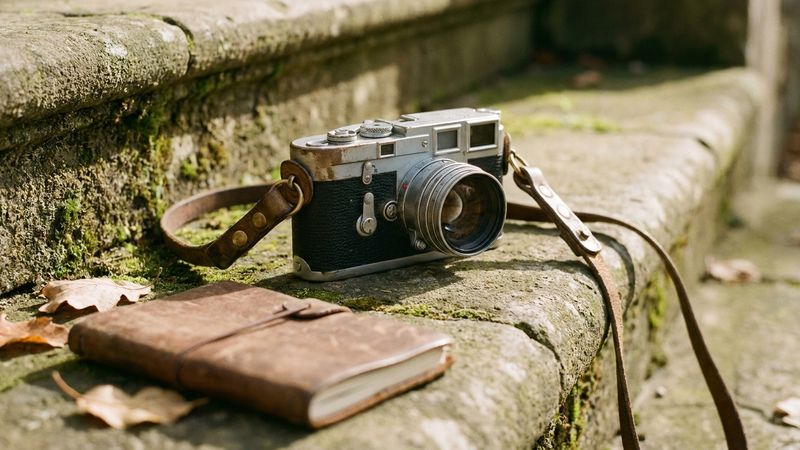
The photograph is only one part of the experience. When everyone comes back together, they share why they made a picture, what caught their attention and how they interpreted the same place differently. That's where conversations begin.
Mokesh Kumar, Madras Frames
An archive like that is built out of pauses. What the walks train is the willingness to stop on a path where nothing is expected to be new, and to let a detail that has always been there finally register.
Residents rush through their own neighbourhoods, and what they rush past is always within reach: the carved date above the doorway on Tsar Shishman, the courtyard garden visible only from a certain angle on Shipka, the morning light on Vitosha Boulevard before the shops open.
These details do not require a guide. They require only the decision to walk as if the street were unfamiliar. To look up. To pause. To let the city reveal what it has been holding in plain sight.
Frequently Asked Questions
Q: What is the difference between a heritage walk and a photo walk?
A: Heritage walks focus on historical research and storytelling, with guides providing context about architecture and neighbourhood history. Photo walks prioritise observation and documentation, encouraging participants to capture everyday details regardless of skill level. Both share the goal of slowing down to notice overlooked aspects of familiar streets.
Q: How large do walking communities typically grow?
A: Chennai's Madras Frames grew from 7 initial participants to between 75 and 100 people per walk. Communities that welcome all skill levels and emphasise curiosity over expertise tend to attract diverse participants including IT professionals, hobbyists, and startup founders.
Q: Can walking practices work in car-centric cities like Sofia?
A: Yes, though they require intentional effort. The key is treating walking as deliberate observation rather than transit. Even familiar commute routes reveal overlooked details when approached with the mindset of a first-time visitor. The practice begins with the decision to look up.
The Flaneur
Frequently asked questions
What is the difference between a heritage walk and a photo walk?
Heritage walks focus on historical research and storytelling, with guides providing context about architecture and neighbourhood history. Photo walks prioritise observation and documentation, encouraging participants to capture everyday details regardless of skill level. Both share the goal of slowing down to notice overlooked aspects of familiar streets.
How large do walking communities typically grow?
Chennai's Madras Frames grew from 7 initial participants to between 75 and 100 people per walk. Communities that welcome all skill levels and emphasise curiosity over expertise tend to attract diverse participants including IT professionals, hobbyists, and startup founders.
Can walking practices work in car-centric cities like Sofia?
Yes, though they require intentional effort. The key is treating walking as deliberate observation rather than transit. Even familiar commute routes reveal overlooked details when approached with the mindset of a first-time visitor. The practice begins with the decision to look up.