
Seoul's Hanok Village Was Built for Quiet. Now It Has Curfews.
Прочети на български
Bukchon Hanok Village, a residential quarter of around 900 traditional hanok houses in central Seoul, absorbs nearly 6.4 million tourists a year. Uniformed rangers patrol the streets. Signs implore visitors to "talk quietly please." There are curfews.
The village has become so overwhelmed that authorities treat it like a museum that happens to have people living in it. The very qualities that make these low-rise, wing-tipped houses calming are the same qualities that make them Instagram-worthy. And Instagram-worthy, at scale, destroys calm.
The Design That Enforces Stillness
Sofia has its own version of this tension. Pockets of traditional architecture survive in Oborishte, parts of the Old Town, and scattered through central neighbourhoods where low-rise houses with thick stone walls and interior courtyards still stand between Soviet-era apartment blocks. Most residents walk past them without noticing.
What makes a hanok naturally calming isn't nostalgia. It's physics. Traditional Korean houses are built from wood, clay, stone, and paper. Low doorways force you to duck, which forces you to slow down. Narrow alleyways discourage rushing. The ondol underfloor heating system attunes residents to seasonal rhythms, while wooden-floored maru halls provide summer cooling. The layout follows baesanimsu, a principle meaning "mountain in the back, water in the front," positioning homes in harmony with natural topography.
Traditional Bulgarian architecture shares similar principles. Thick stone walls create thermal mass that keeps interiors cool in summer and warm in winter. Courtyards function as microclimates. Low ceilings conserve heat. These aren't accidents of history. They're responses to climate and social life that happen to produce calm as a byproduct.
When Scale Breaks the Spell
Only around 4,500 hanoks remain in Seoul, a city of nearly 9.6 million people. The majority live in high-rise apartment blocks, or apateu, which proliferated after the 1960s. Many traditional buildings were already destroyed during the Korean War and Japanese occupation. What remains is concentrated in a few neighbourhoods, which concentrates tourism, which concentrates the problem.
The lesson isn't that tourism is bad. When intimate, human-scaled neighbourhoods are demolished and replaced with high-density towers, the remaining traditional spaces become pressure points. Everything that was once distributed across a city gets compressed into a few "authentic" zones. The result is rangers with curfews.
Sofia's traditional neighbourhoods are fragile and undermarketed, and the city's tourism stays concentrated around Alexander Nevsky Cathedral.
The Lived Experience of Intentional Design
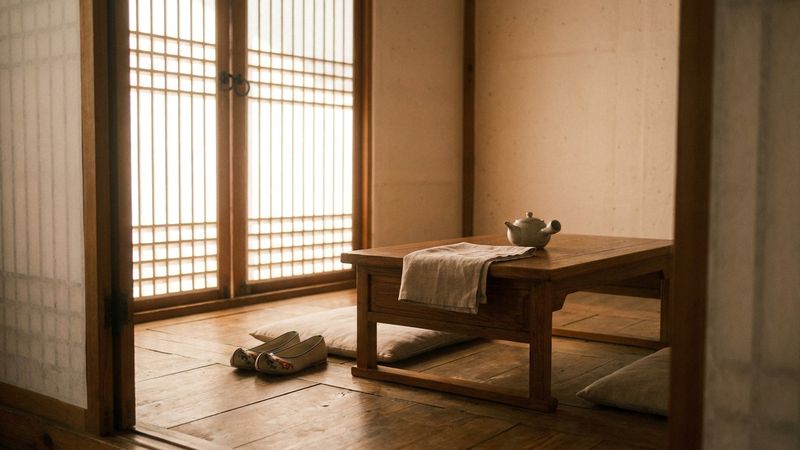
The writer who stayed in a restored hanok in Seoul's Anguk neighbourhood described returning from the neon glow of Seongsu, one of the city's trendiest districts, to find the nearby streets lined with hanok tea houses and cafes. The hanok had modern amenities: central heating, a heated toilet, a projector. But it also had a mattress close to the floor, a traditional square soaking tub for jok-yok (ritualised foot baths), and a low front door designed to minimise heat loss.
The point isn't rejecting modernity. Intentional design can allow modern comfort without sacrificing calm. The hanok's guide, Meggie Yu, noted that younger Koreans are increasingly choosing traditional homes over high-rise apartments, driven by "an enhanced passion for wellbeing" and a turn toward slow living. Locals take "healing trips" to countryside hanoks to relax and enjoy quiet and clean air.
Seoul's government has supported this shift with restoration grants and low-interest loans available since 2002, and recent regulatory loosening to allow renovation and new builds.
The Rhythm Already Exists
Sofia's emerging slow-living community - the specialty coffee culture, the craft workshops, the wellness spaces - is already seeking what traditional architecture provides, and doing it in modern cafes and studios.
The hanok stay wasn't an escape from the city. It was a discovery of a different rhythm within it. The streets were peaceful. The ritual of soaking feet and making tea replaced the scroll through notifications. The low doorway required attention. The silence required nothing.
The rangers and the curfews look like an admission that Bukchon has failed. They are the measure of something else: everything that was once spread across Seoul now presses on a few surviving streets built for quiet.
Frequently Asked Questions
Q: What design principles make traditional architecture naturally calming?
A: Traditional buildings like Korean hanoks and Bulgarian stone houses use natural materials (wood, clay, stone), low doorways that force slower movement, and seasonal adaptation systems like underfloor heating. These features create acoustic comfort, thermal regulation, and a human scale that reduces sensory overload.
Q: How has Seoul addressed overtourism in its traditional neighbourhoods?
A: Seoul deployed uniformed rangers to manage crowds in Bukchon Hanok Village, installed signs asking visitors to "talk quietly," and imposed curfews. Since 2002, the government has offered restoration grants and low-interest loans to hanok owners, and recently loosened regulations to allow renovation and new construction.
Q: Does Sofia have traditional architecture that could serve a similar function?
A: Yes. Pockets of traditional low-rise houses with thick stone walls and interior courtyards survive in Oborishte, parts of the Old Town, and scattered central neighbourhoods. These spaces share design principles with hanoks but lack coordinated preservation policies.
The Flaneur
Frequently asked questions
What design principles make traditional architecture naturally calming?
Traditional buildings like Korean hanoks and Bulgarian stone houses use natural materials (wood, clay, stone), low doorways that force slower movement, and seasonal adaptation systems like underfloor heating. These features create acoustic comfort, thermal regulation, and a human scale that reduces sensory overload.
How has Seoul addressed overtourism in its traditional neighbourhoods?
Seoul deployed uniformed rangers to manage crowds in Bukchon Hanok Village, installed signs asking visitors to "talk quietly," and imposed curfews. Since 2002, the government has offered restoration grants and low-interest loans to hanok owners, and recently loosened regulations to allow renovation and new construction.
Does Sofia have traditional architecture that could serve a similar function?
Yes. Pockets of traditional low-rise houses with thick stone walls and interior courtyards survive in Oborishte, parts of the Old Town, and scattered central neighbourhoods. These spaces share design principles with hanoks but lack coordinated preservation policies.