Sofia's Bread Awakening: What Milan's Artisan Bakeries Reveal About a City Finding Its Craft Voice
Прочети на български
The smell of sourdough starter drifts through a courtyard in Oborishte before eight in the morning. A few streets away, someone is pulling Japanese milk bread from an oven. Around the corner, a baker who left corporate law three years ago is scoring ancient-grain loaves with a razor blade. When did Sofia become a city where you could choose between three distinct bread philosophies before your first coffee?
The answer lies partly in what happened elsewhere. Milan's bakery scene underwent a documented transformation between 2018 and 2024, with a wave of younger bakers rejecting industrial production in favour of slow fermentation, ingredient transparency, and design-conscious spaces. As Monocle recently documented, the Lombard capital now has artisan bakeries on seemingly every corner, from Natalia Nikitina's Nordic-inspired Signor Lievito to the hidden courtyard of Slow Bread Lab, where husband-and-wife team Michele Dogati and Kaisli Kiuru bake bread "with the same love as when preparing something for their own family."
Sofia's bakers are not copying Milan. They are solving the same problem independently: how to build a food culture that reflects a city's growing appetite for intentionality.
The Sourdough Shift
"Slow bread" describes a specific practice: long fermentation (often 24 to 48 hours), organic or heritage grains, and transparency about sourcing. In Milan, Silvia Cancellieri's Tondo bakery calls itself a "radical oven" and teaches bread-making courses alongside selling loaves made from buckwheat and ancient grains.
Sofia's equivalent is emerging across the city. Bread & Butter on ul. Tsar Shishman has built a following for its sourdough loaves and croissants, with visible fermentation schedules and grain sourcing posted for customers who want to know. The approach is educational without being preachy: here is what we do, here is why it takes longer, here is what you taste as a result.
A sourdough loaf that takes two days to make costs more than a supermarket baguette, but the bakers are building viable businesses by attracting customers who understand the difference. The Saturday morning queue is its own validation.
Design as Philosophy
Milan's new bakeries treat interior design as integral to the experience. Pan, founded by Alice Yamada and Yoji Tokuyoshi, features sage-green drapes inspired by Japanese noren curtains, designed by Studio Wok. Signor Lievito's space includes terracotta tiles and a Foglio wall light by Tobia Scarpa. The design is philosophy made visible.
Sofia's artisan bakeries are applying the same principle. Minimal aesthetics, visible production, material choices that signal intentionality. The counter where you order is often the same surface where dough is shaped. The oven is not hidden. You see the process because the process is the point.
Roasteries like Aroma Coffee have already established this model in Sofia, treating roasting as a visible craft discipline with sourcing and technique central to the customer experience. Artisan bakeries are applying the same philosophy to fermentation and grain selection.
The Founder Profile
Milan's wave was driven by career-switchers.
Yamada's quote captures the motivation:
"This is the kind of space that you can find in New York, London or Tokyo. But it was missing from Milan."
Alice Yamada
She built what she wanted to exist.
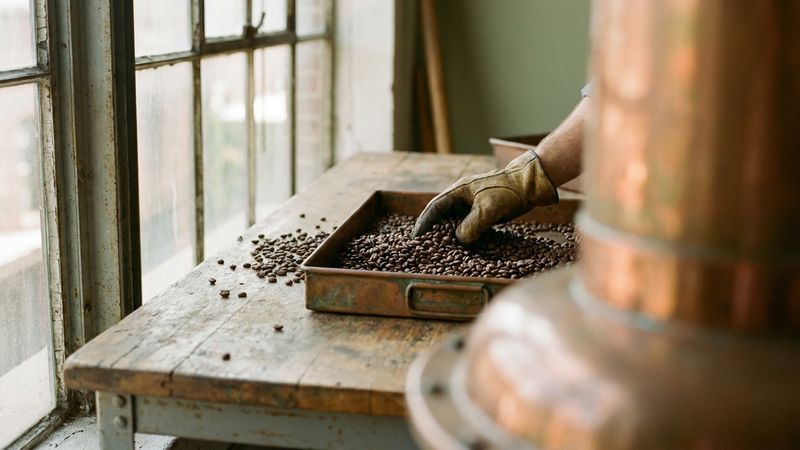
Sofia's bakers share similar trajectories. The lawyer who left a firm to learn fermentation. The architect who spent a year in Copenhagen studying bread. The IT consultant who started baking during the pandemic and never went back. The pattern is consistent: deliberate pivot, personal philosophy, business built around craft rather than scale.
"I wanted to make something I could hold. Code disappears. Bread you can touch."
Sofia baker
What This Means
This is not a return to the past. Bulgarian bread traditions are rich, but the new wave is not about recreating баница (the layered filo pastry served at celebrations) or погача (the round ceremonial bread). It is about intentional modernity: choosing slow fermentation because it produces better bread, not because it is traditional.
Two new bakeries are reportedly opening in Lozenets before autumn, both founded by bakers who trained abroad and returned. The density is increasing. Sofia is becoming a city where the question is not "where can I find good bread?" but "which kind of good bread do I want today?"
That shift, quiet as it is, changes how a city thinks about food.
Frequently Asked Questions
Q: What is slow fermentation and why does it matter for bread?
A: Slow fermentation refers to dough rising over 24 to 48 hours, rather than a few hours with commercial yeast. This extended process develops complex flavours, improves digestibility, and creates the characteristic open crumb structure of artisan sourdough.
Q: Where can I find artisan sourdough bakeries in Sofia?
A: Bread & Butter on ul. Tsar Shishman is one established option, known for sourdough loaves and croissants with visible sourcing information. The scene is expanding, with new bakeries opening in neighbourhoods like Oborishte and Lozenets. Popular loaves often sell out by mid-morning.
Q: How does Sofia's artisan bread scene compare to Milan's?
A: Both cities experienced a similar shift: younger bakers rejecting industrial production in favour of slow fermentation, local grain sourcing, and design-conscious spaces. Milan's transformation began around 2018; Sofia's is happening now. The difference is timing, not philosophy.
The Artisan