
Sofia's Moment-by-Moment Philosophy: Finding Intimacy in a Growing City
Прочети на български
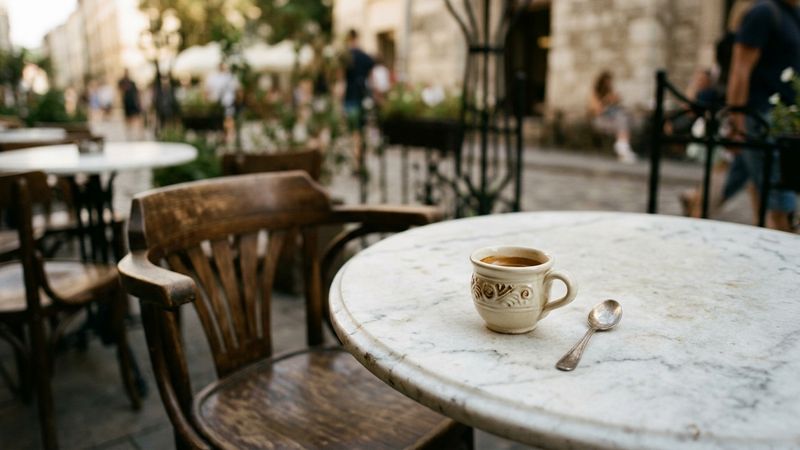
The table by the window at DABOV on ul. Tsar Shishman catches the morning light around 8:15. Not bright, not dim, but soft enough that the person reading there hasn't looked up in twenty minutes. Outside, a woman walks past with a paper bag from the bakery two doors down. Then nobody. A full minute of nobody.
Sofia is a city of nearly 1.3 million people, expanding steadily as tech companies, creative studios, and regional finance operations settle into its centre. The construction cranes visible from Vitosha Boulevard tell one story. The unhurried espresso at the corner café tells another. Both are true at the same time.
Monocle's recent guide to Mexico City describes a capital of nearly 22 million that somehow manages to feel intimate in the right corners. The observation lands differently when you're sitting in Oborishte on a Tuesday morning, watching a barista arrange cups with no particular urgency. Sofia is not Mexico City. But the paradox is the same: a city in motion that rewards those who know how to pause.
The Corners That Still Breathe
Oborishte, Lozenets, Iztok. These are not tourist destinations. They are residential neighbourhoods where the rhythm of the day remains visible. Morning coffee at 8. A second coffee around 11, often with a colleague who happened to be passing. Lunch that stretches past 2pm because the conversation went somewhere unexpected.
In Sofia, specialty roasteries like Blue Bag work with the same philosophy of intentionality: small batches, verified farms, a focus on the ritual of the cup rather than volume. The approach mirrors what the city itself offers to those willing to slow down.
The Monocle guide notes that in Mexico City, there's little separation between work and pleasure. Long lunches double as meetings. Walk into any of Sofia's studio-cafés in Lozenets around 1pm and you'll see the same thing: laptops open, but also wine glasses, and conversations that drift between project deadlines and weekend plans.
Design Behind Discreet Façades
Outstanding food served at unassuming counters, serious design tucked behind discreet façades. The Monocle description of Mexico City could be lifted directly and applied to Sofia's quieter streets. The best bakeries don't announce themselves with neon signs. The galleries worth visiting are often in residential buildings, up a flight of stairs, behind a door that looks like it leads to someone's apartment.
This is not a city that performs its culture loudly. Discovery requires curiosity, and curiosity requires time. The city rewards both, but only if you're willing to move moment by moment rather than landmark to landmark.
A Rhythm That Doesn't Apologise
What does Sofia's rhythm actually feel like?
It feels like the waiter who doesn't bring the bill until you ask for it. It feels like the shopkeeper who closes for an hour in the afternoon because the sun is good and the terrace is empty. It feels like the friend who suggests meeting at 7pm and arrives at 7:20 without apology, because the walk took longer than expected and the evening light was worth stopping for.
The Mark It Leaves
The Monocle guide ends with a phrase that stays: Mexico City has a way of leaving a mark, subtle, smoky and always worth coming back to. Sofia's mark is different. Less smoky, perhaps. More mineral, like the water from Vitosha that still runs through the city's fountains.
A city this size, growing this fast, could easily lose its intimate corners. The fact that it hasn't is not an accident. It's a practice, maintained by the people who still take their coffee slowly, who still walk home through the park instead of taking the metro, who still treat a long lunch as a reasonable use of a Tuesday afternoon.
The practice is learnable. It requires only the willingness to move moment by moment, and to notice what happens when you do.
Frequently Asked Questions
Q: What neighbourhoods in Sofia are best for experiencing the city's slower rhythm?
A: Oborishte, Lozenets, and Iztok are residential neighbourhoods where daily rituals remain visible. Morning coffee routines, extended lunches, and evening walks are common, and the pace is noticeably slower than in the commercial centre.
Q: How does Sofia compare to other European capitals for remote work and creative professionals?
A: Sofia functions as a regional hub for tech, finance, and creative industries, with a growing number of studio-cafés that blur the line between work and leisure. The cost of living remains lower than Western European capitals, and the culture of long, informal meetings suits freelancers and entrepreneurs.
Q: What is the "moment-by-moment" approach to experiencing a city?
A: It means prioritising intentional pauses over landmark-hopping: choosing a single café and staying for two hours, walking through a neighbourhood without a destination, allowing conversations to extend past their scheduled end. The approach rewards curiosity and attention rather than coverage.
The Flaneur