
The Coffee Repeats, the Person Never Does: Alexandra Fileva of Urban Embassy
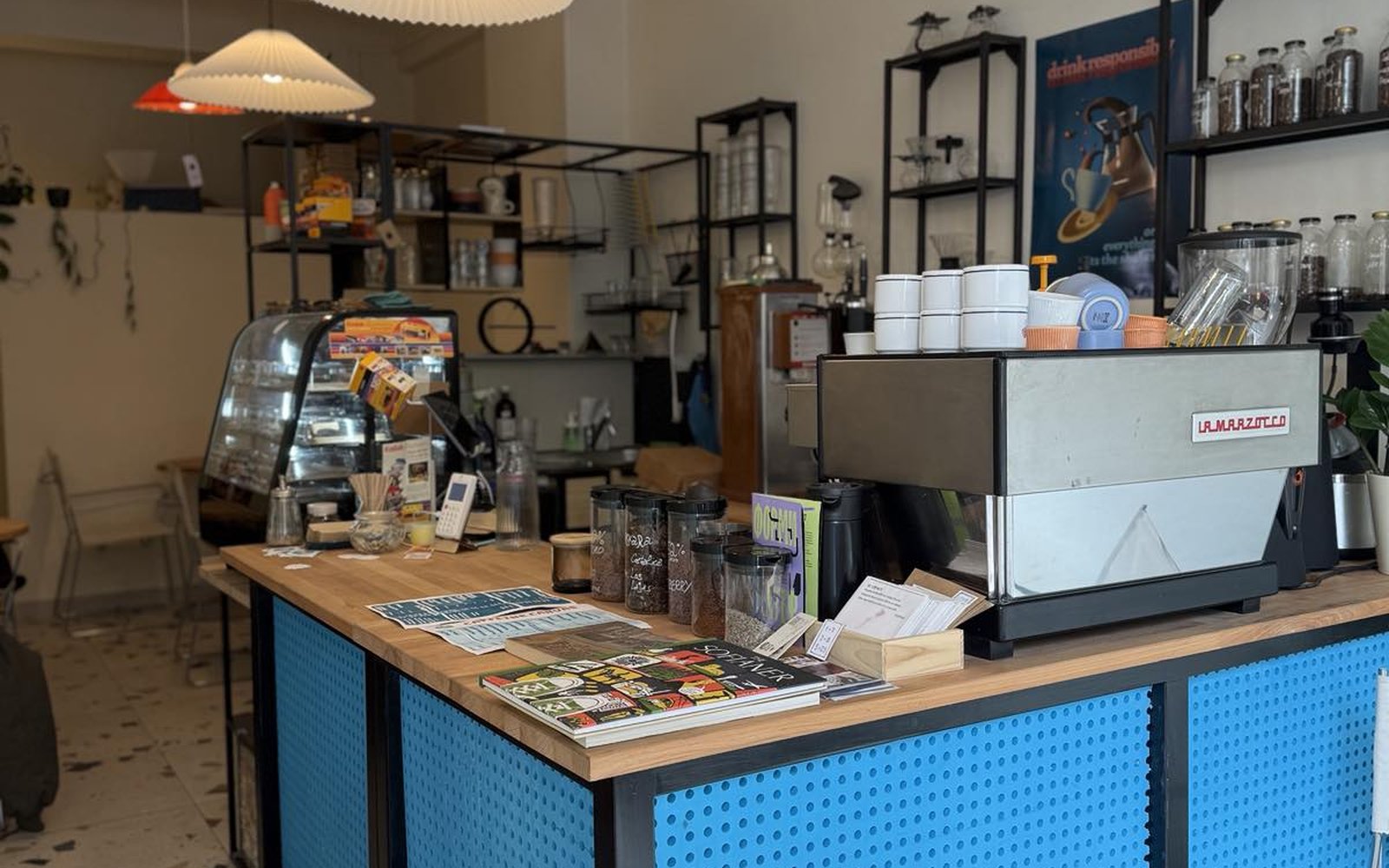
The espresso recipe behind the bar does not change between the first order and the last one. Same dose, same seconds, same grinder, dialled in that morning. The only variable is the person standing on the other side - and at Urban Embassy that variable is treated as the work itself rather than a side effect of it.
Alexandra Fileva talks about five years behind the bar as construction rather than tenure. Urban Embassy will be among the participants at Good Coffee Festival in Sofia this September. What follows comes from a Slow Made City conversation ahead of the festival - ten short questions, none of them about turnover or locations.
The same coffee, a different person
The first question was what serving coffee every day teaches you about people. The answer began with stories and landed somewhere far more precise.
"Everyone has their own story and we are glad we get to be part of it, even if only for a few minutes a day. Coffee is a ritual people increasingly invest time and attention in, and they want it done well."
ALEXANDRA FILEVA, URBAN EMBASSY
Those few minutes are literal. An espresso extracts in 25-30 seconds and the order takes roughly as long to place, and that is the entire window in which the person behind the bar has the attention of the person in front of it. Everything after that depends on whether they come back tomorrow.
"Urban Embassy brings together people who are complete opposites. Different characters, ages, professions, interests and stories, who somehow meet around one shared thing: good coffee."
ALEXANDRA FILEVA, URBAN EMBASSY
That is an observation about the bar, not about the coffee. A flavour profile does not gather people; a room does, by serving that profile the same way for long enough to become a fixed point. Five years at one address will do that.
The end of the answer is the sentence that arranges the other nine questions: "The coffee can be the same every time, but the person in front of you never is."
The bean or the person - both, but not equally
Asked which of the two weighs more, most people in the trade give a diplomatic answer. This one was diplomatic and specific at once.
"Both. We believe quality is a combination of a good product, knowledge and care. And above all of wanting to be better than you were the day before."
ALEXANDRA FILEVA, URBAN EMBASSY
The order of it holds up in the craft. The bean sets the ceiling - a roaster cannot climb above what arrived from the farm, and a barista cannot climb above what arrived from the roastery. What stays in the hands of the person at the machine is the distance between that ceiling and the cup that actually comes out.
That distance is measured in a handful of parameters: a dose of around 18 grams held to within half a gram, extraction in the region of 25-30 seconds, milk stopped near 60-65 °C before it loses its sweetness. None of them is a creative decision. All of them move through the day, with the humidity, with the batch, with how many times the group has run in the last hour.
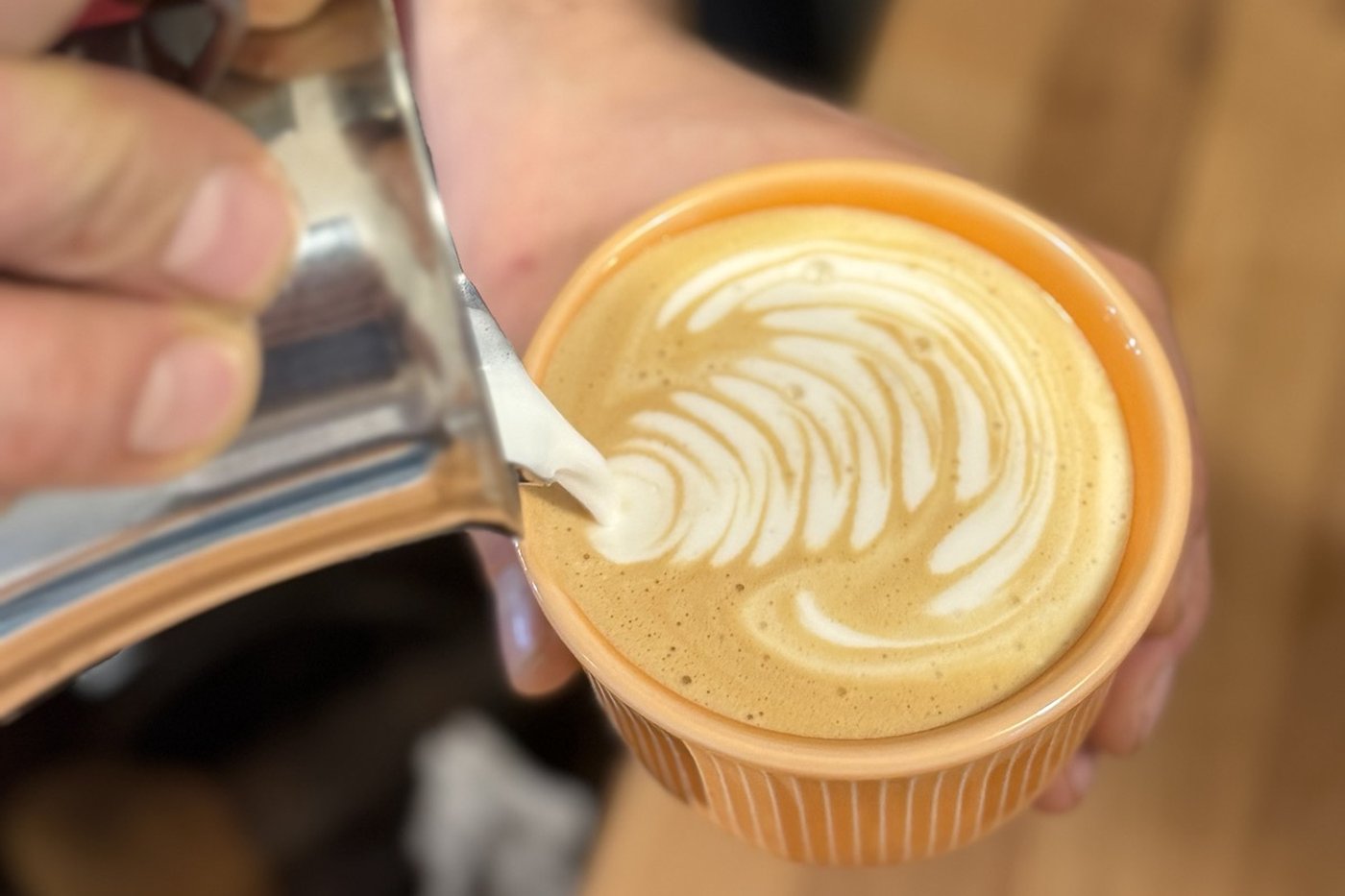
Milk is the only ingredient made on the spot, from scratch, every single time. The bean arrives finished, the water is whatever the water is, and the texture is built in the moment - which accounts for half the difference between two cups off the same grinder.
A definition of bad coffee that never mentions taste
The answer to what counts as bad coffee walked straight past flavour without touching it.
"Bad coffee is coffee with no care and no idea behind the product. It shows, no matter how good the coffee itself is."
ALEXANDRA FILEVA, URBAN EMBASSY
The definition is a practical one. An expensive lot poured through an unwashed jug, into a room-temperature cup, off a grinder nobody has touched since morning, makes a worse drink than a modest blend dialled in with attention. The first happens more often, because it is harder to see.
The next question was whether there are mornings when even she does not feel like making coffee. The answer was unusually frank for someone who sells hospitality.
"Of course. There are days when you don't want to talk, don't want to smile and just want five more minutes in bed. But that is exactly when coffee starts doing its job. You make the first one, you take a sip and you carry on."
ALEXANDRA FILEVA, URBAN EMBASSY
The first coffee of the day is also the first dial-in.
The group is cold, the grinder still holds yesterday's grounds, and the shot that comes out gets weighed and poured away. Ritual and technique occupy the same gesture - which is why it works on the days when nothing else does.
What never goes on the menu
Asked what would never make it onto the menu at any price, the answer was one sentence, followed by the reasoning behind it.
"Anything we don't believe in ourselves. We would not add a drink just because it sells or because it is fashionable."
ALEXANDRA FILEVA, URBAN EMBASSY
A menu is an editorial decision with a till underneath it. Every season brings a few drinks that sell themselves - the syrups, the sweet latte variants, whatever is moving that year. Turning them down is a bill someone has calculated and decided to pay.
"Selling coffee is not enough for us. We have spent five years building coffee culture. We want to show people good coffee, make it more accessible and easier to understand, and build a community around it."
ALEXANDRA FILEVA, URBAN EMBASSY
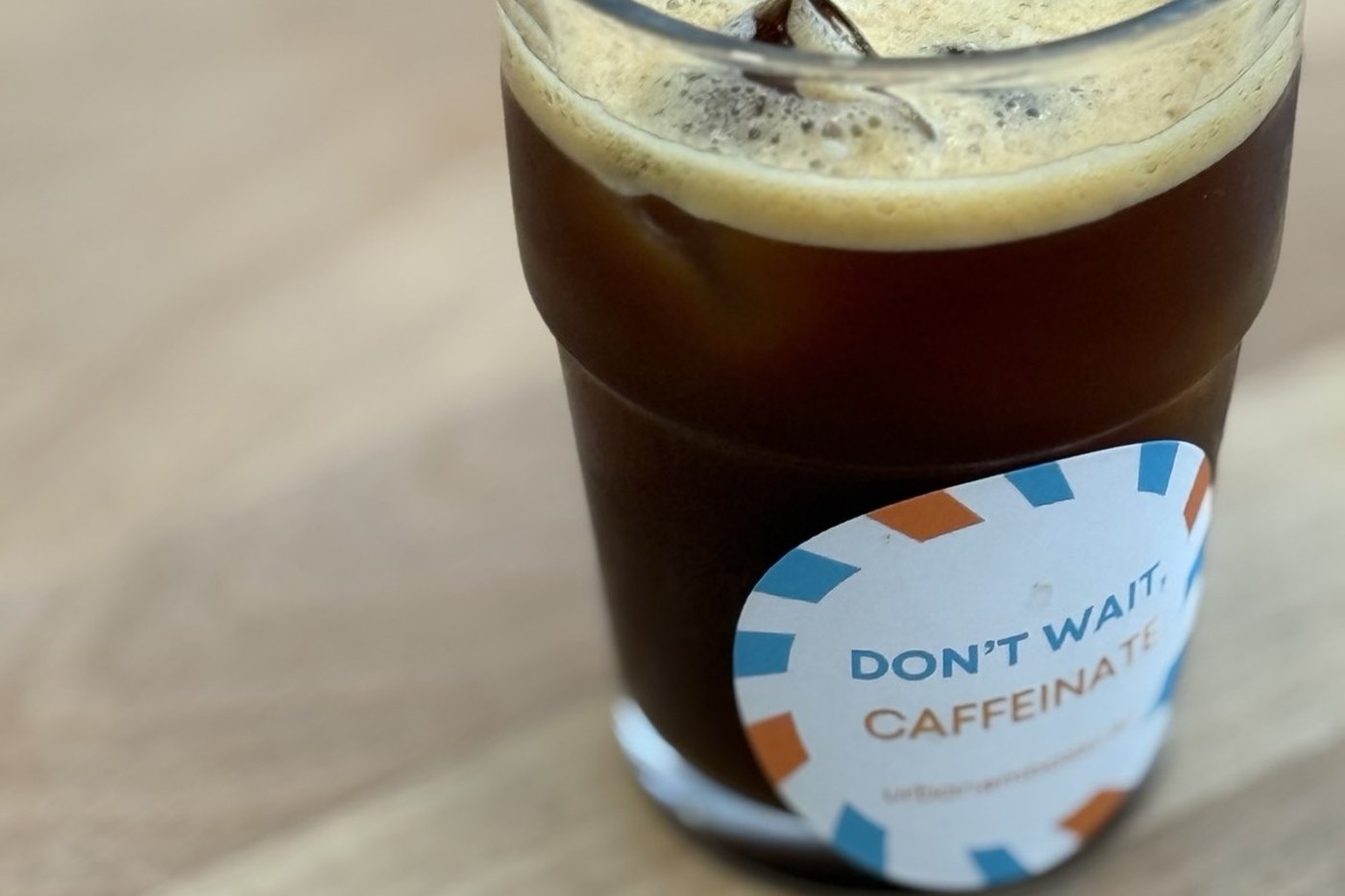
The sticker on the glass reads "DON'T WAIT, CAFFEINATE". The joke is about caffeine, not about the work behind it - this is the same bar that turns down a drink it could sell. One is tone, the other is a decision, and they sit together without friction.
Espresso teaches both
Asked whether espresso teaches patience or speed, the answer refused to choose - and then explained the refusal.
"Both. Speed, so you can see and understand what needs improving or what is off. And patience, so you can get to know the coffee."
ALEXANDRA FILEVA, URBAN EMBASSY
Technically that is exact. Espresso gives almost instant feedback - change the grind setting and the next shot is already different, so within half a minute you know whether you were right. Patience lives on the other scale: freshly roasted beans want somewhere between 5 and 14 days of rest before they behave predictably, and by the time you know a batch properly it is running out.
"It is a bit like a series of dates with someone. First you get to know each other, then you start noticing the small quirks. Coffee is the same."
ALEXANDRA FILEVA, URBAN EMBASSY
The same logic applies to the people on the other side. Asked when a customer last changed her mind about something, the answer moved the question: sometimes what matters is not that someone changes your mind, but that they light the spark of curiosity in you. The conversation stretches across days - a question gets asked, an answer gets researched behind the bar, and the following week it picks up where it stopped.
Ninety-nine in a hundred
The question was what she forgives coffee but not people. The answer was one word.
"Everything. We think it matters far more not to accumulate negativity, and to keep trying to be better than yesterday's version of yourself."
ALEXANDRA FILEVA, URBAN EMBASSY
Then came the arithmetic: 99% of people return respect with respect, and the remaining 1% is also part of working with people. One per cent sounds like nothing until it is converted into faces - one such conversation in every hundred orders, and five years of orders is not a number you count by hand.
"We take feedback even when it is not what we want to hear, because that is often where there is the most to learn."
ALEXANDRA FILEVA, URBAN EMBASSY
That line came from the question about what her coffee would say about her if it could talk. The first word was curious. The second useful part of the answer was the admission that not everything works out - something the trade rarely says out loud, because it reads as weakness.
What is left after twenty years
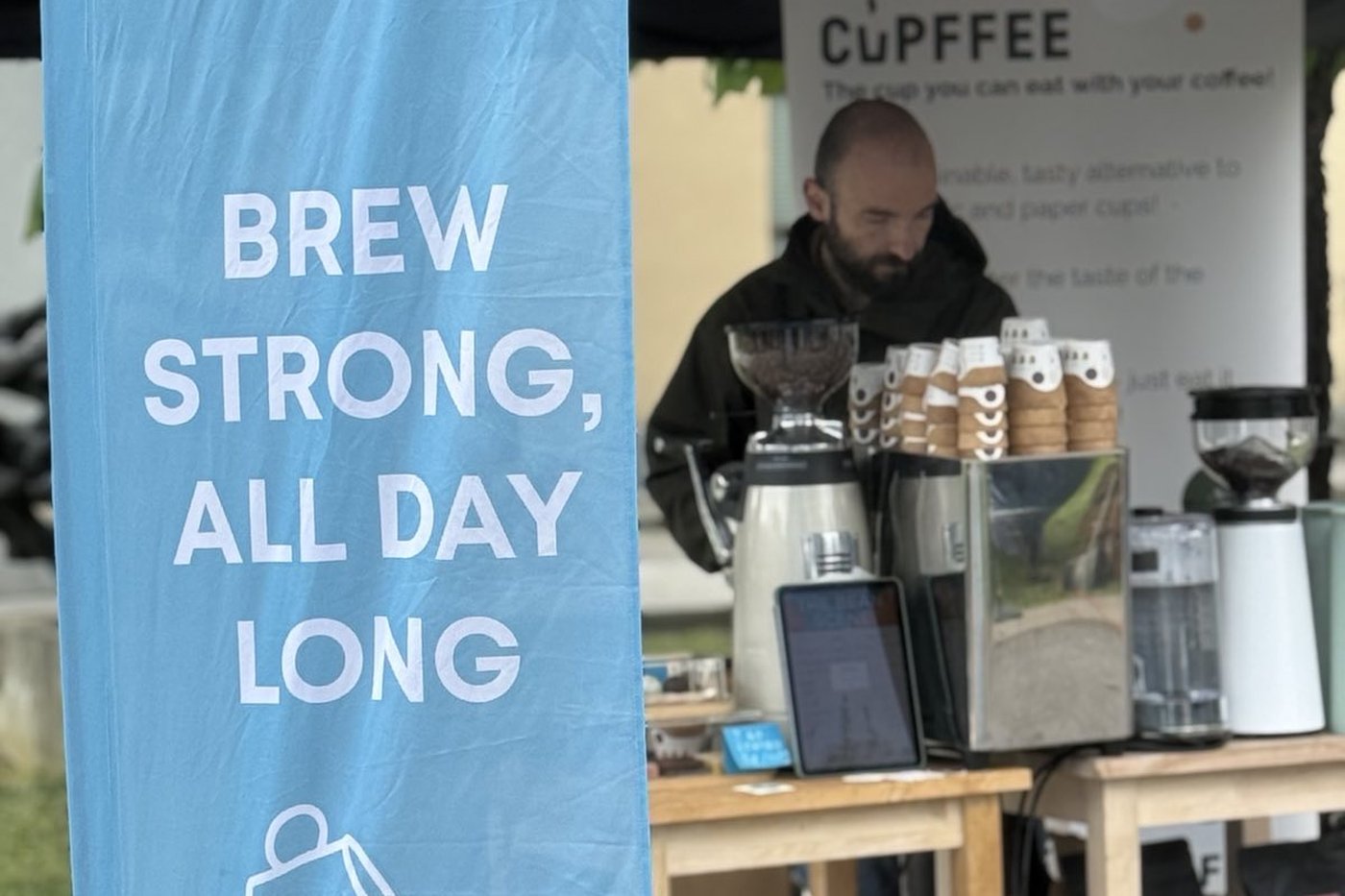
The last question was what would remain of the café in twenty years, beyond the memory of the coffee. The answer named no drink at all.
"We hope the people remain. There is already a community around Urban Embassy - people who come back, who know each other, who meet, talk and share an interest in coffee."
ALEXANDRA FILEVA, URBAN EMBASSY
The culture she describes has no finish line by definition; it changes along with the people inside it. Which is why the measure of success after twenty years is someone else's sentence rather than her own: I met these people there, I started understanding coffee there, I had my first good coffee there.
At the festival in September, order something you have never had and ask why it is on the menu. The answer takes half a minute, has been behind that bar for five years, and costs nothing.
The Barista
Frequently asked questions
What is Urban Embassy?
A specialty coffee bar that has been running for five years and is among the participants at Good Coffee Festival in Sofia this September. Alexandra Fileva describes those five years as building coffee culture and a community around it, something for which selling coffee alone is not a sufficient goal.
What counts as bad coffee, according to Alexandra Fileva of Urban Embassy?
Coffee with no care and no idea behind the product. In her words it shows no matter how good the raw material is: an expensive lot poured through an unwashed jug, off a grinder nobody has touched since morning, makes a worse drink than a modest blend dialled in with attention.
What matters more to coffee quality, the bean or the barista?
Both, but not equally. The bean sets the ceiling: a roaster cannot climb above what arrived from the farm, and a barista cannot climb above what arrived from the roastery. What stays in the hands of the person at the machine is the distance between that ceiling and the cup that actually comes out.
Does espresso teach patience or speed?
Both, on two different scales. The feedback is almost instant - change the grind setting and the next shot is already different, so within half a minute you know whether you were right. Patience lives on the other scale: freshly roasted beans want somewhere between 5 and 14 days of rest before they behave predictably.
Which parameters does a barista actually control?
The dose (around 18 grams held to within half a gram), the extraction time (25-30 seconds) and the milk temperature, stopped near 60-65 °C before it loses its sweetness. All three move through the day, with the humidity, with the batch, and with how many times the group has run in the last hour.
What will never go on the Urban Embassy menu?
Any drink the team does not believe in themselves, no matter how well it sells or how fashionable it is. Every season brings a few that sell themselves; turning them down is a bill someone has calculated and decided to pay.