The Corner That Couldn't Stay: What Cities Lose in the Upgrade

The bacon is still sizzling at Star on 18. The deep-fat fryer still seethes with golden fries. The laminated menu still offers everything from cereal to the diet delight chicken and spinach. But the blue and yellow booths on the corner of Manhattan's 10th Avenue and 18th Street are serving their final weeks.
Nearly a century of breakfast, and it ends not with a bang but with a property valuation.
As Monocle reports, this pre-fabricated railroad car diner, the kind once made in New Jersey and trucked to whatever empty corner of New York would have it, is closing because its prime location became too valuable to hold. The High Line, that elevated railway transformed into one of the city's most beloved walkways, sits directly opposite. What was once an advantage is now a death sentence. Property in Chelsea is at a premium. Star on 18 is not.
The Sofia Mirror
Walk through Lozenets on a Tuesday morning. The neighbourhood is changing, not dramatically, not overnight, but in the way cities always change: one lease at a time. A family-run café becomes a co-working space. A corner shop becomes a boutique. The regulars who used to gather there scatter to other corners, or stop gathering at all.
Star on 18 was what urban sociologists call a third place, neither home nor work, but somewhere in between. Bus drivers sat next to High Line staff. Tourists rubbed shoulders with families.
We get all types.
Betty Gioulis, owner of Star on 18
Her parents came from Greece. They had another diner in Midtown called Starlight, which they gave to someone else. Starlight closed. Now Star on 18 is closing too.
The Invisibility of Erasure
Here is the thing about losing these places: it happens so gradually that you barely notice. Phil, a regular at Star on 18, called it one of those last, stubborn holdouts. But there was no fanfare around its end. Few people knew the doors were closing. Betty is already eyeing an opportunity in Long Island City.
We'll see. If it comes off, maybe it'll be a new Star.
Betty Gioulis
Change in cities can happen too gradually to discern with the naked eye.
In Sofia, this happens quietly too. A beloved corner café closes, and the neighbourhood absorbs the loss without ceremony. The places where strangers became neighbours, where a bus driver might sit next to a tourist, where a morning ritual was shared across class lines, disappear one by one.
Only three diners of Star on 18's type remain in Manhattan. The number is not the point. The point is what those places represented: affordability, diversity, spontaneity. The mess of urban life, undesigned and unpolished.
What Gets Erased
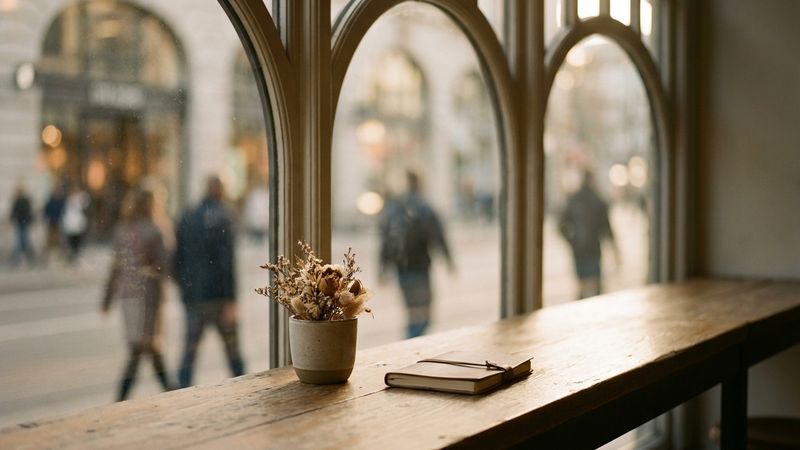
Premium neighbourhoods are clean, curated, and in many ways better, safer, more beautiful, more functional.
The High Line is a genuine urban achievement. But premium neighbourhoods are also monocultures: young professionals, tourists, people with disposable income.
What disappears is the laminated menu. The grill sounds. The mixing. The places where you didn't have to perform your taste or justify your presence. The places where you could just eat breakfast.
Star on 18 was not a museum piece. It was a working place where people ate eggs and read the paper and didn't think about whether the experience was worth documenting.
The Question We're Not Asking
Sofia's own transformation is still in progress. The old bazaar areas, the small cafés on side streets, the corner establishments that have been there for decades, they are not yet gone. But the same forces are at work. Property values rise. Rents rise. Old businesses cannot compete.
What would it take to intentionally preserve mixed-use, mixed-income neighbourhoods? Is it possible under market capitalism? Or is the best we can do to notice what we are losing before it vanishes?
The answer is not clear. But the question is worth asking, before the corner disappears, and we forget it was ever there.
Frequently Asked Questions
Q: What is a "third place" and why does it matter for cities?
A: A third place is a social environment separate from home (first place) and work (second place), cafés, diners, pubs, barbershops. These spaces enable unplanned encounters across class and background, which is essential for social cohesion in urban areas.
Q: How does the High Line relate to Star on 18's closure?
A: The High Line, an elevated railway transformed into a popular walkway, dramatically increased property values in Chelsea. Star on 18's location, once an advantage, became a liability as the land beneath it became more valuable than the business itself.
Q: Are there similar neighbourhood changes happening in Sofia?
A: Yes. Neighbourhoods like Lozenets are experiencing gradual transformation as property values rise, with family-run cafés and corner establishments being replaced by co-working spaces, boutiques, and premium retail, following the same market logic visible in cities worldwide.
The Flaneur