
The Cup You Didn't Think About
Прочети на български
The coffee is the same. The grind, the water temperature, the extraction time: identical. And yet something shifts when you pour it into a different vessel. The aroma arrives differently. The sweetness lands somewhere else on your tongue. The whole experience tilts, almost imperceptibly, toward something better or worse.
This is not imagination. It is neuroscience.
In Sofia, where specialty coffee culture has matured rapidly over the past decade, roasters and baristas obsess over every variable: origin, processing method, roast profile, water chemistry. Cafes like Blue Bag Specialty Coffee work with verified farms and peak-ripeness beans, treating every stage of the coffee journey with precision. But as the city's coffee community refines its craft, a quieter conversation is emerging: what about the vessel itself?
The Science Nobody Mentions
In 2018, Brazilian neuroscientist Dr. Fabiana Carvalho published research demonstrating that cup shape influences how we perceive aroma, sweetness, and acidity in coffee. This was not opinion or marketing. It was measurable, repeatable, neurological fact. The cup is not a passive container. It is an active participant in flavor perception.
The wine industry understood this decades ago. Sommeliers select specific glass shapes for specific wines: smaller bowls concentrate the delicate aromatics of white wines, while wider openings allow light reds to breathe. Craft breweries design glassware for each style. Specialty coffee, younger in this conversation, is only now catching up.
Norwegian roaster Tim Wendelboe, one of the most respected names in specialty coffee, now serves his coffees in cups designed to highlight each bean's unique characteristics. His approach draws on research showing that aroma and sweetness are perceived more intensely when drinking from round or bulbous shapes. At the 2023 World Barista Championship, runner-up Daniele Ricci used espresso cups with an elevated back rim and lowered front rim to enhance what scientists call the retronasal experience: directing aromatic compounds toward the nose as the liquid enters the mouth.
These are not aesthetic choices. They are functional ones.
What Actually Matters
The variables that shape your coffee experience through cup design are surprisingly specific.
Rim width determines how the liquid meets your lips and where it lands on your tongue. Narrower openings concentrate aromatics, making them ideal for fragrant coffees. Wider rims spread the liquid across more of the palate, which can enhance perception of sweetness and acidity.
Material and weight affect heat retention.
A thin porcelain cup loses temperature quickly; a heavier stoneware body holds warmth longer. For someone who drinks slowly, deliberately, this difference matters.
Internal curves influence milk flow. Cups designed for lattes and flat whites often feature subtle interior geometry that helps baristas create consistent microfoam distribution and latte art.
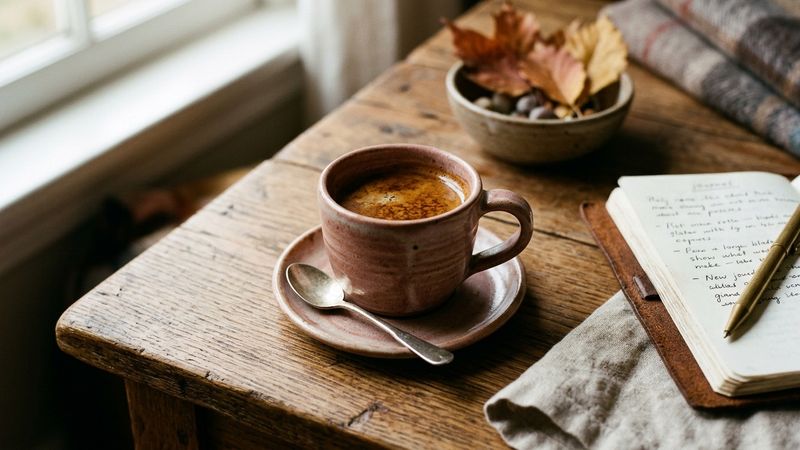
Color is perhaps the strangest variable. Research suggests that pink cups can enhance sweetness perception, while green and yellow may predispose drinkers to detect higher acidity. The brain, it turns out, does not separate what it sees from what it tastes.
The Pause That Follows
There is a practical argument for paying attention to cup design: better flavor perception, optimal temperature, improved latte art. But there is also something less measurable.
A cup that fits well in the hand, that has weight without being heavy, that feels considered rather than incidental, invites a different kind of attention. It asks you to notice. In a city where mornings are often rushed, where the coffee is grabbed and the door is already closing, the right cup can transform five minutes into something deliberate.
This is not about buying expensive ceramics. It is about choosing vessels that make you want to slow down. The difference between a cup you drink from and a cup you hold, notice, and return to is not price. It is intention.
The next time you pour your morning coffee, pay attention to what you pour it into. The rim against your lip. The weight in your palm. The way the aroma rises or disperses. The cup is the final point of contact between the coffee and you. If it is poorly designed, if the rim is too thick or the material too thin, if it feels wrong in your hand, it can diminish everything that came before.
And if it is right, it can make you stay a moment longer.
Frequently Asked Questions
Q: How does cup shape affect coffee flavor perception?
A: Research by neuroscientist Dr. Fabiana Carvalho shows that cup shape influences how we perceive aroma, sweetness, and acidity. Narrower openings concentrate aromatics, while wider rims spread liquid across more of the palate, enhancing sweetness and acidity perception.
Q: What cup material is best for keeping coffee warm?
A: Heavier materials like stoneware retain heat longer than thin porcelain or glass. For slow, deliberate drinking, a cup with more thermal mass will maintain optimal temperature throughout the experience.
Q: Does cup color really change how coffee tastes?
A: Studies suggest it does. Pink cups have been shown to enhance sweetness perception, while green and yellow may predispose drinkers to detect higher acidity. The brain integrates visual and taste information simultaneously.
The Flaneur