
The Cups That Tell You Where You Are

At 7:42 in the morning, a hand reaches for a cup. Not yet filled, not yet warm. The gesture comes before the coffee does, before the water boils, before the day has properly announced itself. Somewhere in Lozenets, in a kitchen with November light just starting to reach the window, the cup is already on the counter. The day has not begun, but the ritual has.
This is how time works in a city. The clock on the wall measures hours. The vessels we set down beside us measure something else.
The First Cup as Threshold
The morning coffee is not about caffeine. Or rather, it is about caffeine in the same way a wedding is about paperwork: technically true, entirely beside the point. The first cup marks a transition. Sleep ends. Work begins. The cup is a container for that shift, a physical object that says: now.
In Sofia's working neighbourhoods, this moment happens thousands of times each morning, in apartments and offices and cafes near tram stops. The liquid inside matters less than the act of reaching for it. The day has a shape now. It started when the cup was set down.
The Glass That Appears Without Being Chosen
Then there is the water. Unlike coffee, it arrives without ceremony. A glass appears on the desk, part of the day's infrastructure, as unremarkable as the chair or the keyboard. Nobody announces they are about to drink water. Nobody photographs it. It is simply there, refilled at intervals that follow no schedule, marking time in a way that goes unnoticed until you notice it.
This piece is part of “The First Ingredient”, the season in which Slow Made City writes, together with Devin, about water as the largest and least-examined ingredient in every cup of coffee. Water is also this: a marker of time that asks nothing of you, that structures the day without demanding attention. A hand reaches, lifts, sets down. The screen stays lit. The task continues. Something has shifted, even if only the position of the glass.
The Eleven O'Clock Checkpoint
There is an hour in the middle of the morning when the city pauses. Around eleven, the second cup appears. Coffee again, or water, or something warm that gives the hands something to hold.
This is a cultural rhythm, not a biological need. The morning has reached its halfway point, psychologically if not mathematically. The first tasks are done or abandoned. The next ones have not yet begun. In office districts across Sofia, this pause happens in kitchens and corridors, at desks and in cafes on the corner. The cup is a checkpoint, a small container that says you are here, in the middle of the day, and the day is moving.
The Afternoon Return
After lunch, the ritual shifts. The cup that appears now is about returning. Back to the desk, back to the task, back to the second half of the day.
Coffee may return, or water. The choice matters less than the act. The vessel signals back to work. The day is being ordered by these small containers, not fuelled by them. Each cup is a punctuation mark in a sentence that started at 7:42 and will end sometime after dark.
The Final Pause
As the day closes, there is often a last cup.
Sometimes tea, sometimes something that has gone cold while the final task stretched longer than expected.
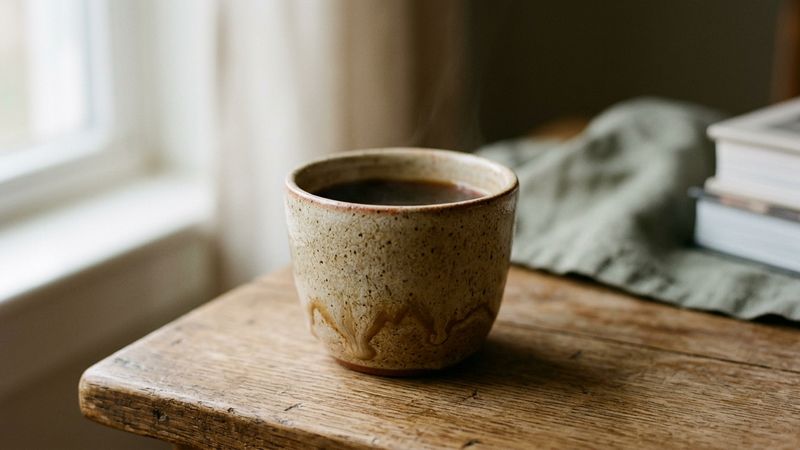
This cup is a closing bracket. It signals acknowledgment: the day has a shape, and this is where it ends. The cup is set down, perhaps for the last time. The screen dims. The chair is pushed back. Tomorrow, the sequence will repeat. The hand will reach for the cup before the water boils, before the light has fully reached the window.
What the Cups Actually Measure
The clock tells you what time it is. The cup tells you where you are. The morning cup says beginning. The eleven o'clock cup says middle. The afternoon cup says return. The final cup says almost done.
Tomorrow, at a desk or a cafe counter or a kitchen table, the cup will appear again. The hand will reach. The day will have its shape.
Frequently Asked Questions
Q: What makes a beverage ritual different from simply drinking coffee or water?
A: A ritual involves the act of marking time, not just consuming liquid. The gesture of reaching for a cup, setting it down, and pausing creates a psychological checkpoint in the day. The beverage itself is secondary to the transition it signals.
Q: How do workplace beverage rituals structure a day without being consciously planned?
A: These rituals operate as infrastructure rather than decisions. The morning cup signals the start of work, the mid-morning cup marks a halfway point, and the afternoon cup signals return after lunch. Each cup becomes a punctuation mark that gives the day shape without requiring deliberate scheduling.
Q: Why do people use cups rather than clocks to mark time during a workday?
A: Clocks measure hours objectively, while cups mark where you are in the day's rhythm. A cup at eleven feels different from a cup at seven because of what it signals about the work already done and the work still ahead. The physical act of reaching and setting down creates a pause that a glance at a clock does not.
The Flaneur