The Empty Front Row: Singapore's Hungry Ghost Month
Прочети на български
Burnt Joss Paper and the Opening of the Gates
One row. Through the seventh lunar month - to - every getai stage in Singapore's Chinatown leaves its front row of seats empty. Those seats are reserved for spirits. Nothing else in the neighbourhood is empty: burnt joss paper mixing with char kway teow from a nearby hawker stall, incense threading through humid air, the particular sweetness of fruit offerings left on makeshift altars. The gates of the underworld are believed to open, and spirits roam among the living.
A Pause With a Date on It
A month-long interruption of ordinary urban time is a strange thing to find in a shopping district, and stranger still when the dates come from the lunar calendar rather than the retail one. Anyone who has lived through a Bulgarian Orthodox fasting period, or watched red-and-white martenitsi appear on every wrist for Baba Marta on as if by collective agreement, will recognise the principle: the calendar itself becomes a form of resistance against the flattening of commercial time.
Song Stages for the Living and the Dead
The most visible entry point to the festival is getai, temporary platforms erected on empty lots around Kreta Ayer. According to Chinatown Singapore's festival guide, performances run nightly from around 8pm, free and open to anyone. The entertainment mixes Hokkien dialect songs, Mandarin pop covers, comedy sketches, and theatrical skits. LED screens back the performers. The crowd swells after dinner.
This is not museum culture. It is communal in the way Sofia's seasonal markets are communal, anyone can walk up, anyone can watch, the ritual survives because it remains accessible.
The Older Layer
Before getai became dominant, the Hungry Ghost month belonged to wayang, Chinese opera. Some troupes still perform near temples and clan associations. The performances are long, stylised, sung in dialect. The music comes from a live ensemble: erhu, gongs, clappers, suona. Shows typically run from 7:30pm past 10pm. Bring a fan and insect repellent.
Wayang audiences tend to be smaller and older, but the performances are free. Like Bulgarian folk music or Orthodox liturgical traditions, it survives because the community keeps it available during specific seasons, not because it has been packaged for tourists.
Objects Made With Care
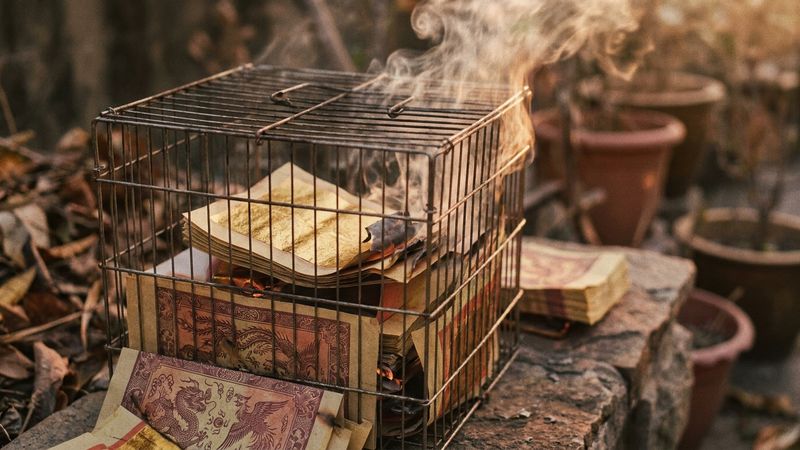
Throughout the month, small altars appear outside shops and temple gates holding fruit, rice, tea, joss sticks. In the evenings, metal cages are wheeled onto the street for burning joss paper. People burn paper effigies of houses, cars, phones, clothing, so their ancestors can use them in the afterlife.
The craftsmanship is worth a closer look. Miniature suits. Paper iPhones. Detailed paper houses. They are sold at shops around Chinatown Complex and along New Bridge Road. This is how ritual stays embodied and local, through objects made with care, not consumed digitally.
Etiquette as Respect
The customs of the month are social contracts.
Do not step on offerings placed on the ground, even if they look like rubbish. Do not kick the metal cages used for burning. Avoid whistling at night, which is believed to attract spirits. The rules are simple. Following them is a matter of respect.
What the Festival Teaches
The main festival day falls on . Key locations include Kreta Ayer Square, Smith Street, Chinatown Complex, and temples along South Bridge Road. Nearest MRT stations: Chinatown (NE4/DT19), Maxwell (TE18), Telok Ayer (DT18).
But the lesson is not about visiting Singapore. It is about what happens when a community decides that seasonal ritual matters enough to schedule it, announce it, and make it public. Getai schedules are posted on community notice boards and temple bulletins. Auction dinners sell out weeks in advance. The tradition survives because people actively maintain it.
The smell of incense and burnt paper. Empty chairs waiting. Dialect songs drifting across a humid night. These are not relics. They are choices, made again, every year, by a community that refuses to let the city's commercial rhythm erase what matters.
The instruction that holds all of it together is short enough to pass along without ceremony: Do not sit there. Do not move the chairs. The dead are guests, and the living make room.
Frequently Asked Questions
Q: When is the Hungry Ghost Festival 2026 in Singapore?
A: The festival runs from 13 August to 11 September 2026, covering the entire seventh lunar month. The main festival day is 27 August 2026, the 15th day of the seventh month.
Q: What is getai and how can visitors attend?
A: Getai are free, open-air song stage performances held nightly from around 8pm during the festival. Visitors can attend any public performance but should never sit in the front row, which is reserved for spirits.
Q: What should visitors avoid doing during the Hungry Ghost Festival?
A: Do not step on offerings placed on the ground, sit in the front row at getai performances, whistle at night, disturb the metal cages used for burning joss paper, or open an umbrella indoors. These customs are taken seriously by the community.
The Flaneur
Frequently asked questions
When is the Hungry Ghost Festival 2026 in Singapore?
The festival runs from 13 August to 11 September 2026, covering the entire seventh lunar month. The main festival day is 27 August 2026, the 15th day of the seventh month.
What is getai and how can visitors attend?
Getai are free, open-air song stage performances held nightly from around 8pm during the festival. Visitors can attend any public performance but should never sit in the front row, which is reserved for spirits.
What should visitors avoid doing during the Hungry Ghost Festival?
Do not step on offerings placed on the ground, sit in the front row at getai performances, whistle at night, disturb the metal cages used for burning joss paper, or open an umbrella indoors. These customs are taken seriously by the community.