
The Glass That Arrives Before the Menu

A hand sets it down. The sound is brief, almost inaudible against the hum of the espresso machine, but the eye catches it: a small glass of water, placed beside the demitasse, condensation already forming on the outside. The gesture takes less than a second. The decision behind it took longer.
In specialty cafés across Sofia, from the counters near Vitosha Boulevard to the neighbourhood spots in Lozenets, this small glass appears with quiet regularity. It is not a bottle. It is not a carafe left on the table for self-service. It is a specific object, chosen for a specific purpose, and its size, material, and placement are not accidents.
This article is part of The First Ingredient by Devin, a season exploring water as the least-examined ingredient in coffee. The small glass is where that attention becomes visible.
Why the Glass Is Small
The smallness is the first thing a newcomer notices. Compared to the water glasses at a restaurant table, this one looks almost ceremonial. But the size solves a problem that has nothing to do with ceremony.
A small glass fits in the hand alongside a demitasse. It empties in two or three swallows, which means the water stays cold for as long as it exists. It does not sit on the counter growing warm while the customer lingers. As Coffeedesk's exploration of espresso service notes, the tradition of serving water with espresso likely began when cafés roasted their own beans and wanted customers to taste the coffee without interference from whatever they had eaten before.
The constraint is the point. The glass enforces a rhythm: it arrives, it is used, it disappears.
What Glass Does That Plastic Cannot
Glass conducts temperature differently than plastic. When cold water sits in a glass, the exterior chills quickly, and the hand registers that chill immediately. Research on thermal conductivity in drinkware shows that glass has a thermal conductivity of approximately 1.1 W/mK, high enough to transfer cold to the fingertips. The sensation is part of the experience: the glass feels cold because the water is cold, and that honesty matters in a context where sensory precision is the whole point.
Then there is the rim. The edge of a glass, when finished properly, meets the lip without friction. Plastic rims have a different texture, a slight drag that registers subconsciously. The sound of ice against glass is sharper and cleaner. The water itself is visible through the material, its clarity on display. None of this is luxury. It is sensory honesty.
The Edge and the Base
A glass that gets used hundreds of times a day cannot be delicate. The rim needs to be thick enough to resist chipping but thin enough to feel comfortable against the lip. The base needs to sit flat on a wet counter without sliding. The weight needs to be substantial enough that the glass does not tip when set down quickly, but light enough that it does not demand attention.
These are glassmaker's decisions, not brand decisions.
The craft is in the proportions: a base slightly heavier than the walls, an edge that is rolled or fire-polished to remove sharpness, a diameter that fits comfortably in a palm. The glass is a working object, and the work that goes into it is invisible precisely because it succeeds.
Wearing and Washing
Glass breaks. It chips. It clouds over time from minerals and dishwasher heat. A café that chooses glass over plastic is choosing an object that requires replacement, that demands care, that will eventually fail.
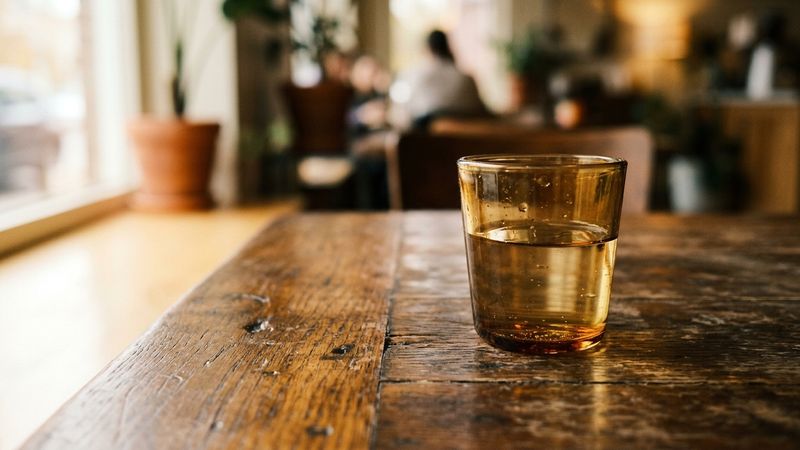
A plastic cup lasts longer. But it does not communicate the same thing. The choice to use glass, knowing it will need to be replaced, is a choice to prioritise the experience of the moment over the convenience of permanence.
The Sequence
The glass arrives at a specific point in the service. In some cafés, it comes before the espresso, an invitation to clear the palate. In others, it arrives alongside the coffee, a companion rather than a prelude. The sequence communicates something about how the café understands the relationship between water and coffee.
The glass empties. It gets picked up. It goes to the wash. Tomorrow, the same ritual repeats.
Frequently Asked Questions
Q: Why do specialty cafés serve water in small glasses rather than larger ones?
A: The small size ensures the water stays cold for the brief time it exists on the counter. It also signals that the water is a palate cleanser, not a beverage to linger over. The glass empties in two or three swallows, matching the rhythm of espresso service.
Q: What is the difference between glass and plastic for serving water at a café?
A: Glass conducts temperature more effectively, so the exterior feels cold when the water is cold. The rim meets the lip more smoothly than plastic, and the water's clarity is visible through the material. These sensory details matter where taste precision is the priority.
Q: Should the water be drunk before or after the espresso?
A: Traditionally, the water is drunk before the espresso to cleanse the palate. However, some customers drink it after. The sequence is personal preference, though the original purpose was preparation, not recovery.
The Artisan