
The Glass That Arrives First
Прочети на български
At 7:15, before the espresso machine hums, the glass arrives. Small. Room temperature. It sits to the left of the cup that will come next.
This is not a health recommendation or a hydration strategy. It is something simpler: a sequence. The water comes first because someone decided it would come first, and that decision, repeated across mornings, became the shape of the hour.
The Order of Two Glasses
In Sofia's specialty coffee bars, the ritual appears without announcement. At Blue House Cafe on ul. Stratsin, a barista sets down a small glass before pulling the shot. The customer does not ask for it. The glass simply appears, positioned slightly to the left, waiting.
This article is part of the Balance rubric, a Devin residency.
When two objects sit on a counter in a particular order, they create a before and an after. The glass of water is the before. The espresso is the after. Between them: a pause that belongs to neither, a few seconds where the day has not yet started moving at full speed.
What Happens in the Pause
Watch someone who drinks water before their coffee. They do not gulp it. They do not check their phone while drinking. The glass is too small for distraction, too deliberate for multitasking.
Some look out the window. Some look at nothing in particular. Some simply wait, the glass already empty, before reaching for the cup.
The pause is not meditation. It is just a few seconds where the sequence demands attention. The water says: not yet. The coffee says: now.
In Italian bar culture, the tradition of serving water with espresso has roots in a practical concern: clearing the palate before tasting the coffee. In Naples, the glass is considered essential, a sign of proper coffee etiquette. In Piedmont and Liguria, nearly every cafe offers it. The custom spread because of what it signals: that the coffee deserves a clean start.
The sequence matters more than the substance.
The Size of the Glass
The glass is small. Always small. Not a tumbler, not a mug, not a bottle. A shot glass, or something close to it.
A large glass would require time, would become its own event.
A small glass is a gesture, a punctuation mark. It takes three seconds to drink. It takes no effort to finish.
The smallness communicates intention. This is about order, not thirst.
Predictability as Care
Mornings are chaotic by nature. The alarm, the shower, the search for keys, the calculation of how late is too late. Into this chaos, the glass of water introduces a single predictable moment.
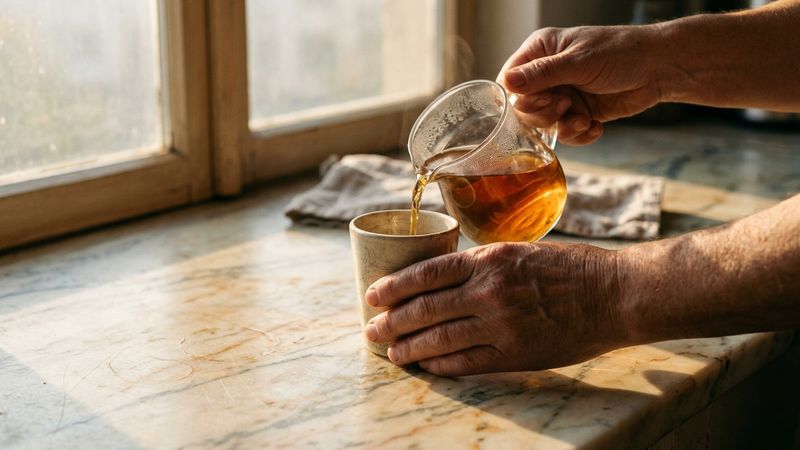
The water will be there. The water will come first. The water will be finished before the coffee begins.
Predictability, in a morning, is a form of care for the hour. The sequence says: this is how we begin. There is an order here, even if everything else is uncertain.
At a working desk, the ritual translates. The laptop opens. The emails wait. But before the first click, the glass. Room temperature. Small. Finished in three seconds.
The coffee that follows tastes the same as it would without the water. The morning feels different. The morning has a shape.
Recognition, Not Invention
This is not a new habit or a trend. It is something that has existed quietly, in kitchens and cafes and offices, for longer than anyone can trace.
What changes is the naming of it. When someone says "I always drink water before my coffee," they are describing a recognition. The habit was already there. The words make it visible.
The glass and the cup sit side by side on the counter. One is empty. One is full.
Frequently Asked Questions
Q: Why is water traditionally served with espresso in Italian cafes?
A: The tradition originated as a way to cleanse the palate before tasting the coffee, ensuring the espresso's flavour profile could be fully appreciated. In Naples and northern Italian regions like Piedmont and Liguria, the practice remains standard at most bars. The water is meant to be consumed before the coffee, not after.
Q: Does the temperature of the water matter for this ritual?
A: Room temperature water is most common in this context. Still water at room temperature is considered gentler on the palate than chilled or sparkling alternatives, allowing for a cleaner transition to the coffee's flavour.
Q: Is this habit common in Sofia's specialty coffee scene?
A: The practice appears in some specialty coffee bars in Sofia, though it is not universal. Cafes with Italian-influenced service or those emphasising the tasting experience are more likely to offer water alongside espresso. The habit also exists in home kitchens and offices as a personal morning ritual.
The Flaneur