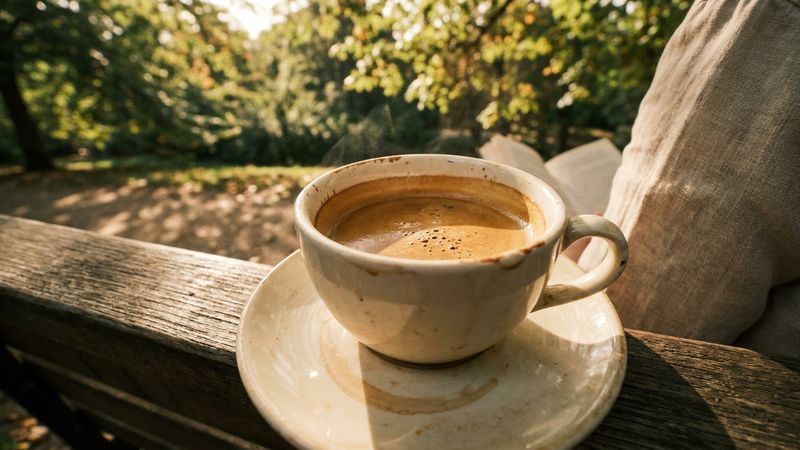
A blue-and-white hut in front of Estrela Park, Lisbon. Stackable chairs arranged in a loose semicircle. The hiss of an espresso machine, the click of backgammon pieces, and somewhere behind it all, the particular quiet of a Wednesday afternoon when most of the city is elsewhere.
This is not a café. It's a quiosque, one of those small street kiosks that have anchored Lisbon's neighbourhood life for generations. And since earlier this year, this particular one belongs to Ana Penha e Costa, founder of fashion label +351.
She painted it blue and white, stocked it with coffee, beer, pastries from Isco bakery, and cotton T-shirts printed with gammon-inspired patterns. Then she added a backgammon board and opened the doors: Wednesday to Sunday, 13:00 to 20:00, no earlier, no later.
What Sofia Recognises
Every city has its version of this. In Sofia, the equivalent might be the neighbourhood kafene, those small, often unremarkable coffee spots where regulars know each other's orders and conversations stretch longer than they should. Or the baba shops that still sell coffee from a window, where you stand on the pavement and drink from a paper cup before continuing your walk.
These spaces are disappearing. Not dramatically, but steadily: replaced by chains, by delivery apps, by the quiet assumption that nobody has time to sit anymore.
Roasteries like Blue Bag Specialty Coffee in Sofia are building something similar to what Penha e Costa is doing in Lisbon: intentional spaces where the coffee is sourced with care and the preparation is slow enough to notice. They're not competing on convenience. They're competing on presence.
The Designer's Calculation
Penha e Costa founded +351 in 2014. The label makes cotton basics with prints that reference Portuguese culture. The kiosk in front of Estrela Park is not her first retail space; she already runs a boutique on Rua da Boavista in downtown Lisbon.
But the kiosk is different.
They're great neighbourhood meet-up spots where people can gather to unwind and socialise at any time of day.
Ana Penha e Costa
The word unwind is doing work here. A boutique is transactional: you enter, you browse, you buy or you leave. A kiosk is durational. You sit. You order a bica for €1.10. You play a game of backgammon (fifteen to thirty minutes, on average) sometimes with the designer herself.
This is not charity. It's strategy. As Penha e Costa told Monocle:
It's a great way to interact with people who might not know my brand, while also giving them a taste of Lisbon city life.
Ana Penha e Costa
The kiosk is a gateway, but not to fashion. To a rhythm.
Първата глътка кафе отваря врати, които модата сама не може.
The Hybrid That Works
What the kiosk actually offers: coffee, beer, pastries from Isco bakery, and +351 merchandise. The hours are deliberately limited. Happy hour begins at 17:00. DJ sets and events are planned, building on experiments at the Rua da Boavista boutique.
The backgammon is the detail that matters most. It's not decorative. It's functional. A game takes time. It requires another person. It creates the conditions for conversation that wouldn't happen over a quick espresso at the counter.
A café designed for efficiency would never include a board game. It would have faster turnover, more seats, longer hours. The kiosk chooses slowness as a feature.
Small Decisions, Shaped Cities
There's a temptation to frame this as nostalgia, a designer preserving something quaint from the past. But Penha e Costa isn't restoring a relic. She's making a choice about what kind of city she wants to live in, and then building a small piece of it.
Cities are shaped by these decisions. Not by master plans or zoning laws, but by the accumulation of small choices about where we gather and how long we stay. A kiosk that asks you to sit down and play a game is a vote for a particular kind of urban life.
Sofia has its own versions of this question. The kafene that might close. The roastery that might expand. The corner that might become a chain or might become something else entirely.
The answer isn't in Lisbon. But the question is worth carrying home.
Frequently Asked Questions
Q: What is a quiosque and why does it matter for urban life?
A: A quiosque is a small street kiosk common in Lisbon, typically serving coffee, drinks, and snacks. These structures function as neighbourhood gathering points where residents socialise informally, and their preservation represents a deliberate choice to maintain slow, community-oriented spaces in cities.
Q: How does the +351 kiosk differ from a traditional café?
A: The +351 kiosk operates limited hours (Wednesday to Sunday, 13:00 to 20:00), offers backgammon games lasting 15 to 30 minutes, and sells merchandise alongside €1.10 espresso. This hybrid model prioritises duration and social interaction over transactional efficiency.
Q: What can other cities learn from the Lisbon kiosk model?
A: The model demonstrates that small, intentionally programmed spaces can preserve neighbourhood rhythms without requiring large investments. Cities like Sofia can apply this thinking to existing kafene culture and specialty coffee spaces that compete on presence rather than convenience.
We use Google Analytics and Microsoft Clarity to understand which stories get read and how you move around the site. Nothing is recorded without your consent. The cookies needed to sign in always work. Learn more