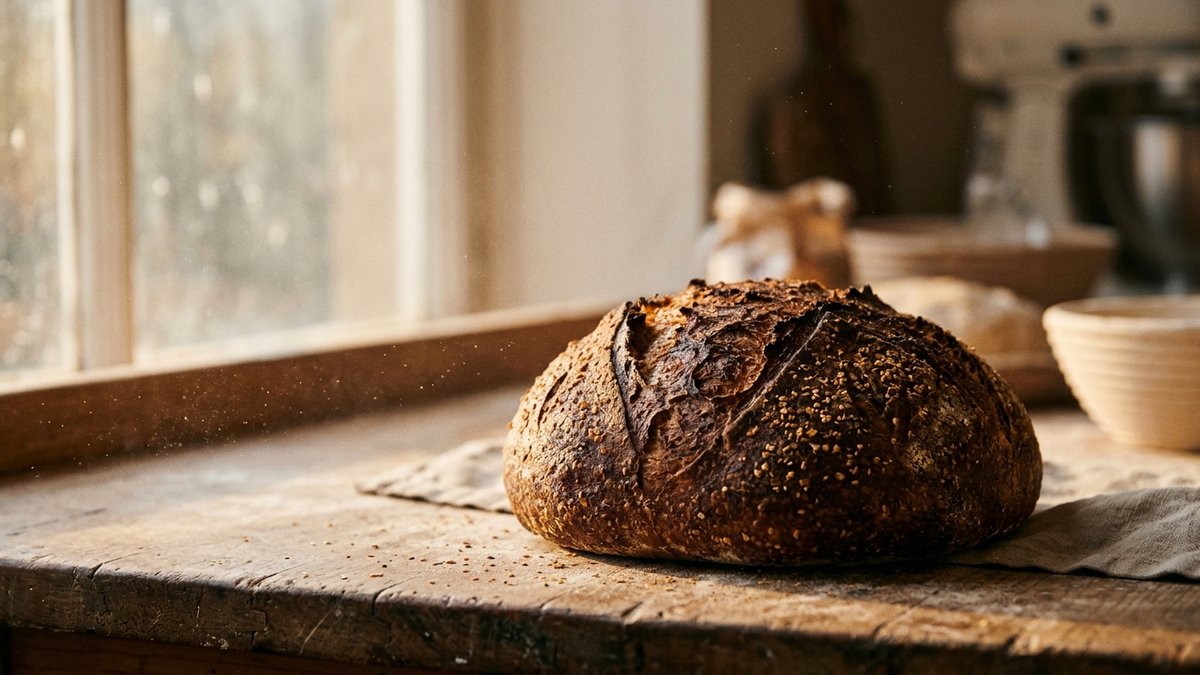
A bread the colour of wet clay sits on a wooden counter in Chattanooga, Tennessee. It weighs about as much as a rugby ball. Its crust is flecked with bran, its crumb dense and naturally sweet. This is Rouge, and it carries a question that travels further than the 2,000 miles its flour used to cross.
Erik Zilen, the baker behind Niedlov's Bakery & Café, spent years ordering organic flour from Central Milling in Utah. The grain was harvested, cleaned, and milled by dozens of hands he would never meet. One day, he stopped and asked: Can we bake a loaf of bread that is entirely local? Grown on a local farm, milled by local hands, baked by our own bakers?
The Distance We Don't See
Sofia's craft food scene faces the same invisible geography. A specialty coffee roaster sources green beans from Ethiopia, roasts them in-house, and calls the result "local." A chocolatier imports cacao from Ecuador, tempers it in a workshop on ul. Tsar Shishman, and sells it at the Saturday market. The craft is local. The raw material is not.
The question Zilen asked in Chattanooga is the same question Sofia's artisans are beginning to ask: What would change if we insisted on knowing every hand that touched our food?
The answer, as The Food Section reports, is that you discover what your community is actually capable of.
Finding the First Link
Zilen needed a farmer willing to grow organic grain in a region where most heirloom varieties were replaced with high-yield strains after World War II. He found Murray Brett at Dayspring Farms in Georgia, who grows Rouge, a pre-WWII French wheat variety. Brett called one spring day: I'm bringing you 1,000 pounds of Rouge next week.
The grain needed milling. Zilen found Ron and Cynthia Shaffer at Red Clay Farm, who own a Tyrolean stone mill wrapped in Austrian pine. They bought it on eBay in 2016. It arrived from Spokane without instructions. A legally blind neighbour with a modified tractor helped lift the 750-pound machine through a doorway with a quarter-inch clearance on either side.
A stone mill grinds everything together, bran, germ, endosperm, producing whole wheat flour, more nutritious, nothing discarded. Steel mills remove the bran and germ for white flour. Zilen began travelling to the Shaffers twice a month, producing a 50-pound bag every half-hour.
The Unglamorous Work
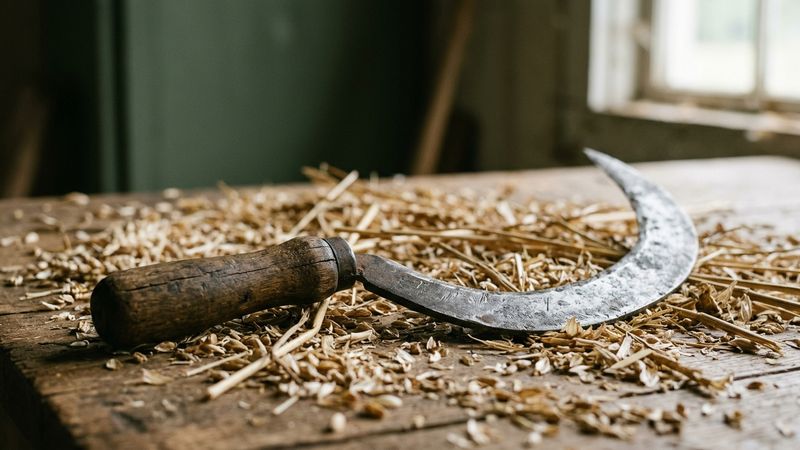
David Cook, the journalist who documented Zilen's project for Food as a Verb, decided to attempt his own loaf. He is 50 years old, holds two degrees, and had never baked bread from scratch. He sowed Appalachian White wheat in a school garden, harvested it with a scythe and hand sickle, and cleaned it by dancing on a blue tarp.
The cleaning was improvised: rakes, shovels, eventually tap-dancing on the grain like Chubby Checker.
A box fan separated the wheat from the chaff. A hawk watched from a nearby elm, crying out as if alarmed.
Cook's grain was gritty. His flour was semi-brown. His bread was dry as Dune.
Erik Zilen
We'll put some lipstick on it. Lots of sugar. Maybe muffins. Or dog treats.
Два диплома не подготвят ръцете за танца, който храни.
The loaf was accidentally left on a counter and sliced up. One baker asked, "Oh, Erik, why'd you do this?"
To Cook, it tasted unconditionally good.
What the Process Teaches
Niedlov's now bakes a dozen Rouge loaves per day. Each loaf takes at least 36 hours: leaven, salt, water, fermentation, refrigeration, shaping, molding, cutting, stenciling, baking.
Sofia's craft scene is not there yet. But the question is alive. Roasters like Aroma Coffee source green beans from known origins and roast in-house, a parallel commitment to traceability, even when the raw material crosses continents. The same tension exists in bean-to-bar chocolate, in artisan bakeries, in small-batch preserves.
The Rouge is baking. The story is not finished.
Frequently Asked Questions
Q: What is the difference between stone-milled and steel-milled flour?
A: Stone mills grind the entire grain, bran, germ, and endosperm, together, producing whole wheat flour that retains more nutrients. Steel mills separate and remove the bran and germ, resulting in white flour with a longer shelf life but less nutritional value.
Q: How long does it take to produce a single loaf of Rouge bread?
A: At least 36 hours. The process includes preparing the leaven, mixing with salt and water, fermentation, refrigeration, shaping, molding, cutting, stenciling, and baking.
Q: Why did post-WWII agriculture replace heirloom grain varieties?
A: High-yield varieties were introduced to increase production efficiency and meet growing food demands. Heirloom grains like Rouge, which offer distinct flavours and nutritional profiles, were largely abandoned in favour of strains optimised for volume rather than heritage.
The Slowmade Letter: what happened in the city this week, gathered into one letter.
By subscribing you agree to receive the Slowmade Letter once a week at this address. You can unsubscribe with one click, at any time. How we handle your data
Analytics cookies
We use Google Analytics and Microsoft Clarity to understand which stories get read and how you move around the site. Nothing is recorded without your consent. The cookies needed to sign in always work. Learn more