
The Question That Separates Craft from Costume
Прочети на български
How to Identify Genuine Artisan Products in Sofia's Markets
A jar of honey sits on a wooden shelf at Zhenski Pazar, Sofia's oldest market. The label says "artisan." The price says €12. The vendor, when asked where the bees forage, shrugs and changes the subject.
Three stalls down, another jar. No label at all, just a handwritten tag with a village name: Gabrovnitsa. The woman behind the table describes the acacia groves, the altitude, the late spring harvest. The price is €8.
The word "artisan" has become a costume anyone can wear. In Sofia's expanding craft scene, where farmers' markets have multiplied across Lozenets, near Zaimov Park, and beyond, the term appears on everything from sourdough to soap. Some of it is genuine. Some of it is marketing dressed in burlap.
The difference is not always visible. But it is always discoverable.
Can They Trace It?
A true artisan can tell you where their raw materials come from, and why those materials specifically.
This is not about reciting a country of origin. A chocolate maker working with cacao should know the farm or cooperative, the fermentation method, the harvest season. A baker should know their flour source: which mill, which variety, why that one.
In Sofia, Blue Bag Specialty Coffee works with the same farms season after season. Head barista Francisco Lopez can explain not just the origin of each bean, but the ripeness stage at harvest and why that matters for the final cup. This level of detail, and the willingness to share it, is a marker of genuine craft.
The test is simple: ask. Vague or defensive answers tell you something. Specific and enthusiastic answers tell you more.
Do They Have Limits?
Mass production hides behind artisan aesthetics, but it cannot hide its scale.
Real artisan products have natural constraints. Batch sizes are smaller because the process demands attention. Seasonal availability exists because ingredients have seasons. Prices stay consistent because the maker is not running promotional cycles to move volume.
When a "craft" bakery offers forty different products, available year-round, with frequent sales, the arithmetic does not add up. A sourdough starter requires daily feeding. A wheel of cheese needs months of aging. Bean-to-bar chocolate involves fermentation, roasting, grinding, and tempering. These processes cannot be rushed without changing the product.
Constraints are not weaknesses. They are signatures.
Is the Maker Present?
Artisans are not hiding behind brands. They appear at markets. They answer questions. They open their workshops, even if only occasionally. The person who made the thing is not a mystery.
When a product has beautiful packaging, a compelling origin story, and no human face attached to it, that is worth noticing.
Process stories without process details are marketing.
Process Over Aesthetics
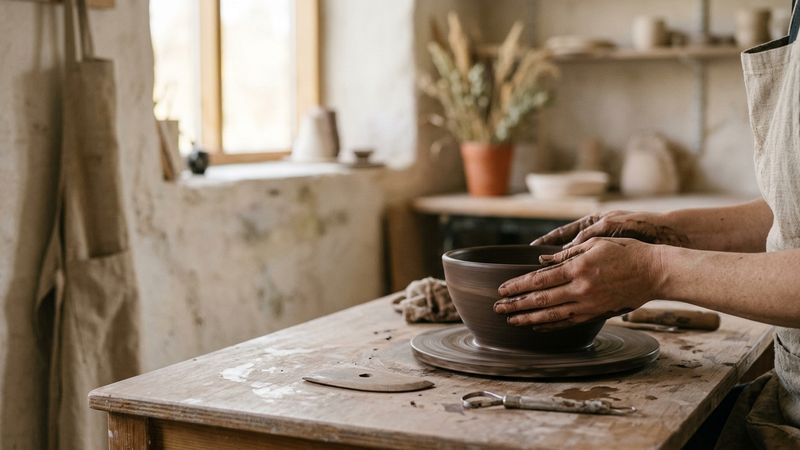
The most reliable artisan products are often the least photogenic.
A jar with a handwritten label. Bread wrapped in paper, not branded packaging. Chocolate in plain foil. The investment went into the making, not the presentation.
Some genuine artisans also have beautiful packaging. But when the packaging is the most impressive thing about the product, when the Instagram presence is polished but the sourcing story is vague, the priorities are visible.
The Trade-Off Is Real
Artisan products cost more. This is not a moral failing in the consumer who hesitates at the price.
The cost reflects time, attention, and constraints that industrial production has optimised away. A bar of bean-to-bar chocolate at €6 or €7 represents hours of work that a factory bar does not. The question is not whether the price is justified in the abstract. The question is whether you want to pay for that process.
What changes with knowledge is the ability to choose consciously. To know when you are paying for craft and when you are paying for a label. To recognise that the €12 honey with the shrug is not the same as the €8 honey with the story.
The skill is not expertise. It is curiosity, and one more question.
Frequently Asked Questions
Q: What is the easiest way to tell if a product is truly artisan?
A: Ask the seller where the raw materials come from and why they chose them. A genuine artisan will answer with specifics: a farm name, a region, a reason. Vague or defensive answers suggest the "artisan" label is marketing rather than method.
Q: Does expensive always mean artisan?
A: No. Price alone is not a reliable indicator. Some mass-produced products carry premium prices for branding, while some genuine craft products are modestly priced. Look for process transparency and natural production constraints, not just the number on the tag.
Q: Are there protected standards for the term "artisan" in Bulgaria or the EU?
A: In most contexts, "artisan" is not a legally protected term. Unlike designations such as PDO (Protected Designation of Origin) or organic certification, anyone can use "artisan" on a label without meeting specific criteria. This is why asking questions matters more than trusting the word itself.
The Artisan