
The Same Seed, a Different Cup

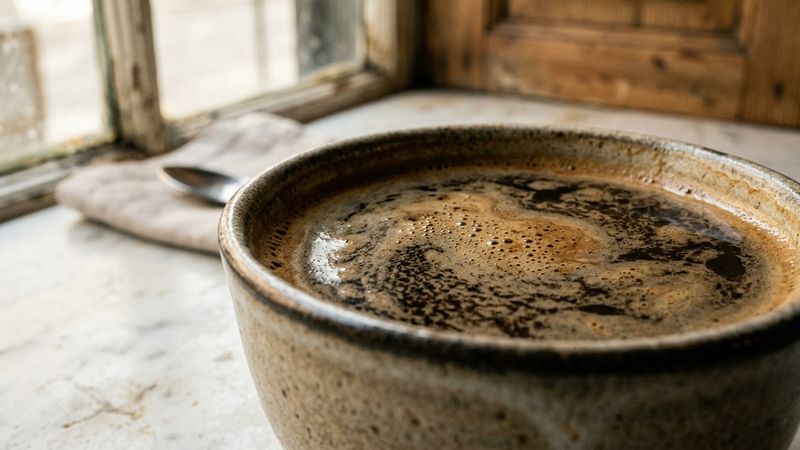
Steam rises from a cup set down on a marble counter. The colour is amber at the edges, darker toward the centre. The first smell carries something bright, almost citrus, with a faint floral note underneath. This is not a description of a roast or a brewing method. It is a description of a place.
That place has weather, altitude, soil that drains in a particular way and rain that falls in a particular pattern. Before any roaster touched this coffee, before any barista pulled the shot, the cup was already being written by geography.
Altitude as a Pacemaker
The relationship between elevation and flavour is thermodynamic. Every 100 metres of elevation reduces mean temperature by roughly 0.6°C. Cooler nights mean slower ripening. Slower ripening means more time.
Inside the cherry, this extra time allows sugars to accumulate and organic acids to form without degrading. Research on coffee grown at different altitudes shows that fatty acid content increases with elevation, while alkaloid content decreases. The result is a denser bean with more aromatic precursors locked inside.
When a bag lists elevation in metres above sea level (MASL), it describes pace. A coffee grown at 1,800 metres ripened more slowly than one grown at 1,000 metres. That slower pace is audible in the cup: brighter acidity, more complex aromatics, a cleaner finish.
Rainfall and the Water Cycle
Rain is not a single event. It is a rhythm. Consistent rainfall supports healthy flowering and fruiting, but the pattern matters as much as the volume. A distinct wet season followed by a dry season creates stress and recovery cycles that concentrate flavour compounds in the fruit. Too much rain dilutes those compounds. Too little, and the plant struggles to develop the cherry at all.
The same variety grown under different rainfall patterns will taste different. The cup carries the memory of that year's weather.
Shade and Light as a Dial
Full sun or filtered canopy: this is energy allocation.
A coffee plant under full sun directs more energy toward fruit production. The cherries ripen faster, the yields are higher, but the flavour profile tends toward simpler, heavier notes. A plant under shade grows more slowly, allocating energy to roots and leaves as well as fruit. Shade cover is considered one of the major parameters defining coffee terroir, affecting growth rate and the balance of sweetness and body in the final cup.
Shade-grown coffees often exhibit more nuanced acidity and a lighter body. Sun-grown coffees tend toward earthier, more robust profiles. Neither is better. They are different instruments.
Soil as a Library
The ground beneath a coffee tree is not inert.
It is a library of minerals, microbes, and organic matter.
Volcanic soils, rich in minerals, often produce coffees with bright acidity and complex flavours. Clay soils, which retain water and nutrients differently, yield cups with heavier body and earthier notes. Soil mineralogy determines nutrient availability, and those nutrients become the building blocks of flavour compounds. Potassium, phosphorus, nitrogen: these are the raw materials the plant uses to build the sugars and acids that end up in the cup.
Reading the Label
A coffee's origin is not a place name. It is the intersection of conditions at a specific moment: this year's rainfall, this altitude, this soil, this amount of shade. That is why the same farm tastes different year to year. That is why a country name alone tells almost nothing.
When a label lists elevation, processing method, and harvest year, it offers a framework for prediction. A washed coffee from a high-altitude region with volcanic soil and distinct seasons will likely carry bright acidity and floral notes. A natural-processed coffee from a lower elevation with clay soil will lean toward fruit and body.
The cup is a document of conditions. Learning to read those conditions is how the label stops being decoration and starts being information.
Frequently Asked Questions
Q: What does MASL mean on a coffee bag?
A: MASL stands for Metres Above Sea Level, indicating the elevation at which the coffee was grown. Higher elevations (typically above 1,500 MASL) produce denser beans with brighter acidity and more complex aromatics due to slower cherry ripening in cooler temperatures.
Q: Why does the same coffee variety taste different from different farms?
A: The same variety responds to its environment. Differences in altitude, soil composition, rainfall patterns, and shade cover all affect how the plant develops sugars and acids. Two farms growing identical varieties produce different cups because their terroir conditions differ.
Q: How can I use origin information to predict what a coffee will taste like?
A: Look for elevation, processing method, and harvest year. High-altitude coffees (1,800+ MASL) tend toward bright acidity and floral notes. Lower elevations often produce heavier body and chocolate tones. Volcanic soil regions typically yield more complex cups. Washed processing emphasises clarity; natural processing emphasises fruit.
The Artisan