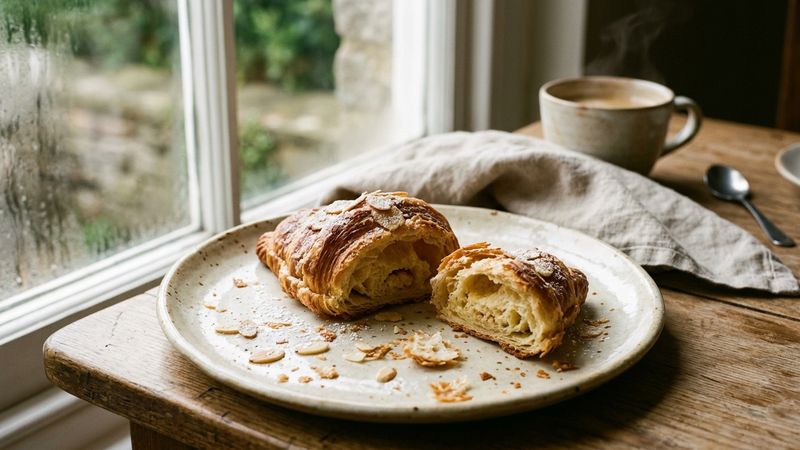
The light through the window at 7:30 a.m. is never quite the same twice, but the table is. Third from the door, angled toward the street, close enough to hear the espresso machine but far enough to think. The waiter doesn't ask anymore. He brings the flat white, sets it down, moves on.
This is not about coffee. This is about knowing where you belong in a city that doesn't stop moving.
Coming Full Circle
When perfumer Frédéric Malle was asked to choose his "last meal" for Monocle, he didn't pick a Michelin-starred restaurant. He chose Café de Flore in Paris's St-Germain-des-Prés, a place he's been visiting since childhood.
It's like a second home, my little oyster.
Frédéric Malle
Malle, whose grandfather founded Christian Dior's perfume division and who launched Editions de Parfums Frédéric Malle in 2000, now lives in New York. But when imagining a final morning, he wanted to return to where he started.
I loved the idea of having my last meal where I started, coming full circle.
Frédéric Malle
He has two preferred seats. One at the corner of the terrace facing the street. The other inside, to the left, next to Marie Hélène at the till. He knows exactly where he sits and why.
The Neutral Setting
In Sofia, the same ritual plays out in different light. The neighborhoods of Oborishte and Lozenets have their own corner tables, their own regulars who arrive before the city accelerates. The cafes are smaller than Parisian institutions, more intimate, less performative. But the logic is identical.
Malle articulated something that anyone with a chosen seat understands:
If you're in a place that you're so comfortable with that it's part of you, then it is a neutral setting. The place erases itself and the people stand out more as a result.
Frédéric Malle
His uncle, the filmmaker Louis Malle, directed Le Feu Follet, which includes a scene filmed at Café de Flore about a man's final day in St-Germain. Frédéric hadn't consciously made the connection until the interview. Some rituals run deeper than we realize.
Craft Over Spectacle
Café de Flore offers two croissants: one from Bonbonnière de Buci, a nearby bakery, and another from Dalloyau. Malle always asks for the Dalloyau.
I like the idea of being committed to one side.
There's so much egg in there it's almost perverse.
Frédéric Malle
Вярността към един избор е форма на лукс, който малцина си позволяват.
He doesn't come for the food. He admits it's "quite basic, French snacks, essentially." He often orders saucisse de Francfort for breakfast, "to the great disgust of my friends." The point isn't prestige. The point is knowing what you want and why.
In Sofia, specialty coffee roasters like Blue Bag work with the same philosophy. Head barista Francisco Lopez sources from verified farms and roasts small batches for peak flavor, not volume. You choose based on what the thing is, not what it represents.
The Frame That Holds
Malle described Café de Flore as "an incredible frame for great moments." He wouldn't plan whom to invite to his last meal.
Since I always run into people I know, I'd leave it up to chance to decide.
Frédéric Malle
This is the gift of a chosen place. It becomes a frame for whatever happens inside it. The conversation, the silence, the stranger who sits at the next table and says something you remember for years.
In a city that moves fast, choosing a cafe and a seat and a ritual is a small act of defiance. It says: I know who I am, and this place knows me.
The light shifts. The espresso machine hisses. Outside, someone walks past with a dog. Then nobody. A full minute of nobody.
You're already where you need to be.
Frequently Asked Questions
Q: Why do people return to the same cafe and seat every morning?
A: A familiar place removes the friction of decision, allowing the mind to settle. As Frédéric Malle explained, when a space becomes part of you, it acts as a "neutral setting" where the place erases itself and the moments stand out more clearly.
Q: What makes a morning cafe ritual different from simply grabbing coffee?
A: A ritual involves intentional repetition: the same table, the same order, the same time. It's not about efficiency but about creating a frame for the day. The choice of what to order matters less than knowing why you choose it.
Q: How does Sofia's cafe culture compare to Parisian cafe traditions?
A: Sofia's specialty cafes in neighborhoods like Oborishte and Lozenets are smaller and more intimate than Parisian institutions. But the core logic is the same: regulars claim specific tables, and the ritual of return creates belonging in the city.
The Slowmade Letter: what happened in the city this week, gathered into one letter.
By subscribing you agree to receive the Slowmade Letter once a week at this address. You can unsubscribe with one click, at any time. How we handle your data
Analytics cookies
We use Google Analytics and Microsoft Clarity to understand which stories get read and how you move around the site. Nothing is recorded without your consent. The cookies needed to sign in always work. Learn more