
Twenty-Three Degrees

The Geography That Writes Your Cup
Twenty-three degrees north and south of the equator. That is the boundary. Outside this band, coffee will not grow commercially. Inside it, roughly 40 countries produce the beans that fill cups from Sofia to São Paulo. The constraint is not tradition or preference. It is physics.
The coffee belt exists because the Coffea arabica plant requires a narrow set of conditions to produce fruit worth harvesting. According to NOAA Climate.gov, the optimal temperature range for arabica sits between 18°C and 21°C, with tolerance up to roughly 24°C. Sustained heat above that threshold damages the plant. Frost kills it. The tropics provide the warmth; altitude provides the cooling. Together, they create the only climate on Earth where the cherry ripens slowly enough to develop the sugars that make coffee taste like something.
Two Measurements, One Climate
Latitude determines how much sun a place receives and how long its growing season lasts. Altitude determines temperature: higher ground is cooler ground. Neither measurement works alone.
A farm at 1,200 metres near the equator experiences different conditions than a farm at 1,200 metres at 15 degrees north. The first sits in cooler air year-round; the second may be too warm for quality arabica despite the elevation. This relationship explains why agronomist Leonardo Henao identifies a daytime temperature between 17°C and 23°C as the key factor in optimising coffee metabolism and sugar storage. Outside this band, the plant is effectively dormant. Inside it, the chemistry of ripening proceeds at the pace that produces complexity.
For roasters like Spetema, sourcing from places means reckoning with what geography has already decided. The roaster's job is to preserve or enhance what latitude and altitude wrote into the bean before it ever left the farm. The skill is real. But the raw material sets the ceiling.
Why Slowness Writes the Cup
A coffee cherry that ripens fast produces a seed with less developed sugars and acids. A cherry that ripens slowly produces a seed with more accumulated compounds. This is not opinion. It is the difference between a seed and a seed.
VEA Group's research explains the mechanism: cooler temperatures slow the chemical reactions inside the fruit, stretching the maturation period. The wider temperature swing at altitude, where thin air holds less heat overnight, means sugars produced during the day are less rapidly consumed by the plant's respiration at night. More accumulates in the seed.
The result is a denser bean with more complex chemical composition. When roasted and brewed, these compounds translate to the layered characteristics that distinguish a cup with presence from a cup that simply tastes like coffee.
The Map Is Not Even
Geography is not uniform. Some regions at the same latitude require higher altitude than others because of ocean currents, local weather patterns, or soil that holds heat differently. A steep east-facing slope receives gentler morning sun than a west-facing slope baking in afternoon heat. Two farms on the same mountain, at the same elevation, can produce noticeably different cups.
This is why the taste of a place is always an average.
A single growing region might contain 500 smallholders at different altitudes, different exposures, different microclimates, all called by one name on a bag. The name tells you something. It does not tell you everything.
What Geography Leaves in the Cup
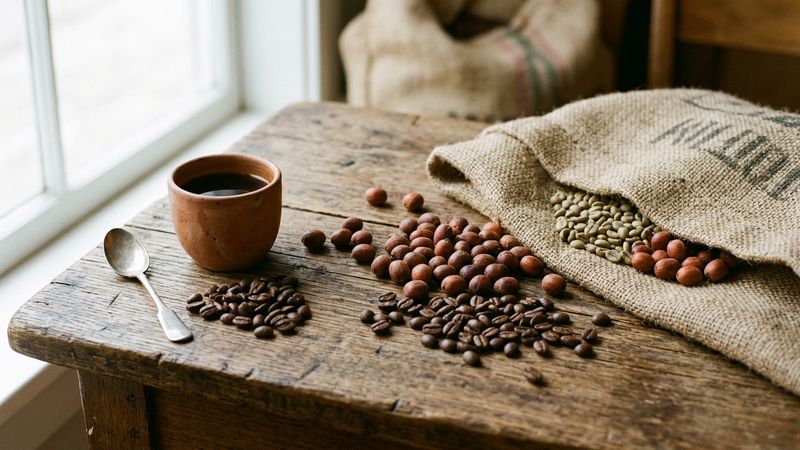
The coffee in front of you carries the geography of its origin in its composition before it carries anything else. The roast profile, the grind size, the water temperature: these are translations of what geography already encoded. They can clarify or obscure, but they cannot invent.
This is why freshness matters. A bag roasted last week preserves the geography better than a bag roasted three months ago. The volatile compounds that carry the signature of slow ripening at altitude degrade over time. According to NOAA projections, suitable coffee-growing land may shrink significantly by 2050 as temperatures rise and the narrow band of viable conditions shifts upward on mountainsides that eventually run out of mountain.
The taste you notice, or do not notice, is geography speaking. You do not need to know the name of the place to understand that something in that cup came from a specific latitude and altitude, and that specificity is why it tastes like anything at all.
Frequently Asked Questions
Q: What is the coffee belt and why does coffee only grow there?
A: The coffee belt is the equatorial region between approximately 25 degrees north and 30 degrees south latitude. Coffee grows here because the Coffea arabica plant requires temperatures between 18°C and 24°C, consistent rainfall, and no frost. This narrow climate band provides the conditions for slow cherry ripening, which develops the sugars and acids that create complex flavour.
Q: Why does high altitude coffee taste different from low altitude coffee?
A: Higher altitude means cooler temperatures, which slow the ripening of the coffee cherry. Slower ripening gives the seed more time to accumulate sugars and organic acids, producing a denser bean with more complex chemical composition. When roasted and brewed, these compounds translate to brighter acidity and more layered flavours.
Q: Does the altitude number on a coffee bag guarantee quality?
A: No. Altitude is a proxy for temperature, not a quality grade. What matters is whether the farm's combination of latitude and altitude creates the 17°C to 23°C daytime temperature range optimal for arabica. A farm at 1,100 metres in one country may produce excellent coffee while the same elevation elsewhere is too warm.
The Barista