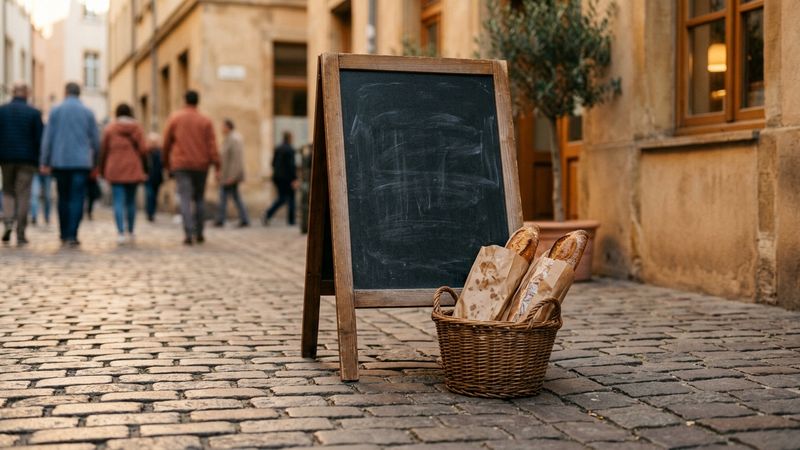
A postman stops mid-route on ul. Tsar Shishman. Not to deliver, but to talk. The shopkeeper leans against the doorframe, unhurried. Across the street, someone is nursing a flat white at a table that barely fits on the pavement. It is 10:30 on a Tuesday, and nobody seems to be going anywhere in particular.
This is not Valencia. This is Lozenets, Sofia, on an ordinary morning. And the scene matters more than it might appear.
The Pressure That Arrives Before the Chains
Sofia is growing. According to National Statistical Institute data, the capital added over 20,000 residents in 2025 alone. Rents in central neighbourhoods have climbed steadily, and international brands are circling. The question is not whether change is coming, but what survives it.
Valencia faced the same inflection point a decade ago. As Monocle recently documented, the Spanish city has since become a magnet for creative entrepreneurs, many of whom left Barcelona and Madrid specifically because the pace there had become unsustainable.
Paula Romero, founder of lifestyle brand Perenne
Barcelona moves fast; if you don't keep up, you get left behind. Valencia moves at a leisurely pace and lets you be first at something.
Sofia's Lozenets and Oborishte already have this quality. The question is whether anyone is paying attention.
Craft as Competitive Advantage
What drew makers to Valencia was not cheap rent or government incentives. It was the presence of something harder to manufacture: neighbourhood character. Jewellery designer Candela Blasco built her brand, Candela en Rama, on three pillars: Mediterranean identity, craftsmanship, and ceramics. Her Sembra collection, shaped like grains of rice, references a local wedding tradition.
Candela Blasco
Locals identify with it so strongly, but visitors also find it beautiful because they feel it captures the essence of what Valencia is all about.
Sofia has equivalent traditions waiting to be claimed. Ceramics from Troyan. Metalwork from the Rhodopes. The rose oil that built an entire valley's economy. These are not relics. They are competitive advantages, if makers choose to use them.
In Sofia, roasteries like Blue Bag work with the same principle: building direct relationships with farms, roasting in small batches, and partnering with neighbourhood cafés rather than chasing scale. It is the same ethos that drew entrepreneurs to Valencia. The difference is that Sofia's makers are doing it without the city having been named World Design Capital or European Green Capital. They are doing it because the neighbourhood still allows it.
The 15-Minute City Already Exists
Valencia's walkability is often cited as a reason for its success. Forty-eight percent of trips there are made on foot. The city functions as a 15-minute city, where daily needs are reachable without a car.
Sofia's central neighbourhoods already function this way.
Oborishte, Lozenets, and parts of Vitosha are dense with bakeries, cafés, pharmacies, and small shops. The infrastructure for street-level life exists. What does not yet exist is the recognition that this infrastructure is an asset worth protecting.
Laura Albiach, owner of Valencia shoe shop Ona Negra
Инфраструктурата на ежедневието съществува - липсва само волята да я опазим.
People don't just come here to shop. There's a real sense of trust.
That trust is built on repetition: the same faces, the same conversations, the same postman stopping to chat. It is built on slowness.
What Protection Looks Like
Valencia's lesson is not that Sofia should copy its fashion week or its tech hub. The lesson is simpler: neighbourhood character is not a byproduct of development. It is a choice. It requires landlords who do not price out independent tenants. It requires planners who protect pedestrian streets. It requires residents who choose the local shop over the chain, even when the chain is more convenient.
Sofia has the seeds. The morning ritual on Tsar Shishman. The roastery that knows its farmers by name. The ceramicist working in a courtyard studio. The question is whether the city, collectively, will choose to water them.
Designer Jaime Hayon, who settled in Valencia fifteen years ago, put it plainly:
Jaime Hayon
For a long time, Valencia was sold quite badly. In the past ten years, there's been a big shift in how things are perceived.
Sofia is still being sold quite badly. That could change. But only if someone decides it should.
Frequently Asked Questions
Q: What is "vida de barrio" and why does it matter for independent businesses?
A: "Vida de barrio" is a Spanish term meaning "neighbourhood life," describing the close-knit community atmosphere where daily interactions happen on foot, between familiar faces. For independent businesses, it creates repeat customers, trust, and word-of-mouth that chains cannot replicate.
Q: How did Valencia attract creative entrepreneurs away from larger cities?
A: Valencia offered a slower pace, lower rents than Barcelona or Madrid, and room to be "first at something." Entrepreneurs cited the ability to experiment without the pressure of keeping up with a fast-moving market, plus strong local craft traditions to build upon.
Q: What can Sofia residents do to protect neighbourhood character?
A: Choose independent shops over chains when possible, support local makers who source and produce locally, and advocate for planning decisions that protect pedestrian streets and mixed-use zoning in central neighbourhoods.
The Slowmade Letter: what happened in the city this week, gathered into one letter.
By subscribing you agree to receive the Slowmade Letter once a week at this address. You can unsubscribe with one click, at any time. How we handle your data
Analytics cookies
We use Google Analytics and Microsoft Clarity to understand which stories get read and how you move around the site. Nothing is recorded without your consent. The cookies needed to sign in always work. Learn more