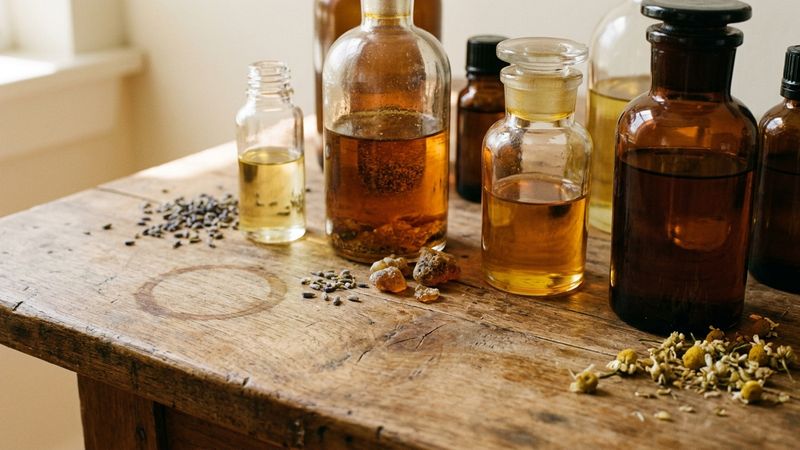
The bottle holds maybe 30 millilitres. Joshua Smith mixed it by hand in his Edmonton studio, the same way he has done since 2014. He produces roughly 200 bottles a year, each retailing at about €140. Before perfume, he worked as a forester. The scents carry names like Eros Fig and Fruit Thieves.
This is not a hobby. This is a business model.
A recent survey by Monocle profiles twenty-five independent perfume houses operating outside the industrial fragrance system. They share a pattern: small batches, natural ingredients, direct sales, and stories that justify premium pricing. The economics work. The question for Sofia's artisan community is whether the same principles translate to Bulgarian craft.
The Numbers Behind Natural
Frances Shoemack, founder of New Zealand's Abel, puts the industry's material reality bluntly: roughly 95 per cent of fragrance ingredients derive from fossil fuels. Abel uses only natural materials. One of them, iris butter, costs €10,000 per kilogramme. The brand spends more on perfume than on packaging.
This is not idealism. It is positioning. When Beckielou Brown launched Altra in the UK in 2022, she built the entire line from botanical ingredients, hand-blended in small batches. The brand's rising star, Ghst Flwr, combines tropical fruit and saffron. Altra sells direct to consumers and through a selective wholesale network across Europe and North America.
In Sofia, Aroma Coffee operates from the same playbook. Owner Georgi Gagov roasts from green beans sourced directly, controlling every step of the process. The model is identical: scarcity, transparency, and origin story justify premium pricing. A Bulgarian perfumer could apply the same logic to rose absolute or local botanicals.
The Kickstarter Path to Eight Million
Tanya Gonzalez Chandhok and Faye Harris Wood, both Estée Lauder veterans, founded Eauso Vert in 2022. They raised $32,900 through Kickstarter, backed by 178 supporters. Today, the San Francisco and London-based brand is valued between $6 million and $8 million.
Hans Hendley, who launched his eponymous brand in 2014, takes a different route. He develops every formula, compounds every batch, fills every bottle, and ships every order himself.
Trying to overscale would destroy the spirit of what has made us successful.
Hans Hendley
The intimacy creates loyalty. When stock sells out, customers wait.
Neither approach requires retail gatekeepers. Both require intentionality.
Specificity Sells Globally
Gabar, founded in London in 2021 by Myanmar-born Phway Su Aye and Susan Wai Hnin, makes unisex fragrances rooted in childhood memory: earthy jungle, still lakes, warm air, sesame, wild fig, smoked nuts. Sales have doubled every year. The brand now has 49 global stockists, from Hong Kong's Lane Crawford to Stockholm's Fablab.
We wanted to create something culturally rooted but completely at home in New York, London, Paris or Bangkok.
Четиринадесет съставки вместо пет - така миризмата става разказ.
Phway Su Aye
The pattern repeats. Jijide, an Italian-Chinese house founded in 2016, invites different perfumers to create scents that juxtapose Eastern and Western cultures. L'Unperfect, a Portuguese brand founded in 2019, builds each of its four perfumes from a personal story, using 14 to 17 natural ingredients per scent. The standard commercial fragrance uses roughly five to seven.
Bulgaria's Valley of the Roses is not a limitation. It is the asset. A Sofia-based perfumer with access to Bulgarian rose absolute, lavender from the Rhodopes, or wild herbs from the Balkans has a story that no synthetic house can replicate.
The Model, Not the Product
Brazil is the world's second-largest scent market. By 2027, demand for premium fragrance lines there is projected to reach €1.1 billion. Amyi, a Brazilian niche brand founded in 2019 and led by three women, makes all 25 of its fragrances domestically. The founders describe perfume as artistic expression.
The lesson is not that Bulgarian makers should copy these brands. The lesson is that the principles transfer: natural ingredients command premium pricing when the story is clear; direct sales and selective wholesale avoid retail gatekeeping; cultural specificity is a global asset, not a local constraint.
What would a Sofia-made indie perfume brand look like? The raw materials exist. The craft tradition exists. The question is whether someone will bet on process, quality, and care the way these twenty-five houses have.
Scale is optional. Intentionality is not.
Frequently Asked Questions
Q: How do independent perfumers justify premium pricing without luxury marketing budgets?
A: They invest in ingredients rather than packaging and advertising. Abel, for example, uses iris butter at €10,000 per kilogramme and spends more on perfume than on bottles. The story of sourcing and process becomes the marketing.
Q: Can a small perfume brand succeed without retail distribution?
A: Yes. Eauso Vert launched via Kickstarter with $32,900 from 178 backers and is now valued at $6-8 million. Hendley operates as a one-man brand, handling every step from formulation to shipping. Direct-to-consumer sales combined with selective wholesale partnerships avoid retail gatekeeping.
Q: What makes cultural specificity an advantage for niche fragrance brands?
A: Gabar's Myanmar-rooted scents have 49 global stockists and sales doubling yearly. L'Unperfect builds each perfume from personal memory using 14-17 natural ingredients. Specificity creates differentiation that synthetic mass-market brands cannot replicate.
The Slowmade Letter: what happened in the city this week, gathered into one letter.
By subscribing you agree to receive the Slowmade Letter once a week at this address. You can unsubscribe with one click, at any time. How we handle your data
Analytics cookies
We use Google Analytics and Microsoft Clarity to understand which stories get read and how you move around the site. Nothing is recorded without your consent. The cookies needed to sign in always work. Learn more