What UK Artisan Chocolate Makers Teach Sofia's Emerging Craft Scene
Прочети на български
Wherever specialty coffee takes hold, craft chocolate is supposed to follow: same shelves, same customers, same appetite for knowing where a thing came from. At the Oxford Chocolate Festival, one stall was small and its queue patient. A man in a flour-dusted apron was explaining to a child why his chocolate discs tasted different from the ones in supermarkets. The answer involved muscovado sugar, water ganaches, and a factory that used to sit behind a Michelin-starred pub in Marlow. The lesson unfolding at that stall was one Sofia's emerging chocolate makers would do well to study.
Not the recipes. The rigour.
The Sofia Connection
Sofia has specialty coffee roasters with international credentials. Aroma Coffee holds SCA-certified roasting status. Dabov sources high-scoring lots from Ethiopia and Colombia. The infrastructure for craft beverages exists. But chocolate? The scene is still forming.
Flow Cacao, a family-owned cacao roastery in Sofia, works with single-origin Latin American beans, roasting for ceremonial cacao and drinking chocolate rather than finished bars. The craft discipline mirrors what UK makers demonstrate: full transparency about bean origin, harvest, and roasting process. What Sofia lacks is not ambition but the knowledge-sharing networks and festival culture that accelerate craft development elsewhere.
What Bean-to-Bar Actually Means
The term gets thrown around loosely. At the Oxford festival, Duffy Sheardown's Dark Star Chocolates demonstrated what it requires: sorting and cleaning raw cacao beans, roasting them in-house, grinding, conching, tempering, and moulding. Every step under one roof. No outsourced couverture, no pre-processed chocolate liquor.
Single-origin production adds another layer. Beans from one harvest, one region, one country. Like wine, the flavour shifts year to year with growing conditions. Duffy's wife explained the challenge: writing tasting notes becomes difficult when each batch carries subtle variations. Customers expecting identical flavour profiles sometimes complain on forums.
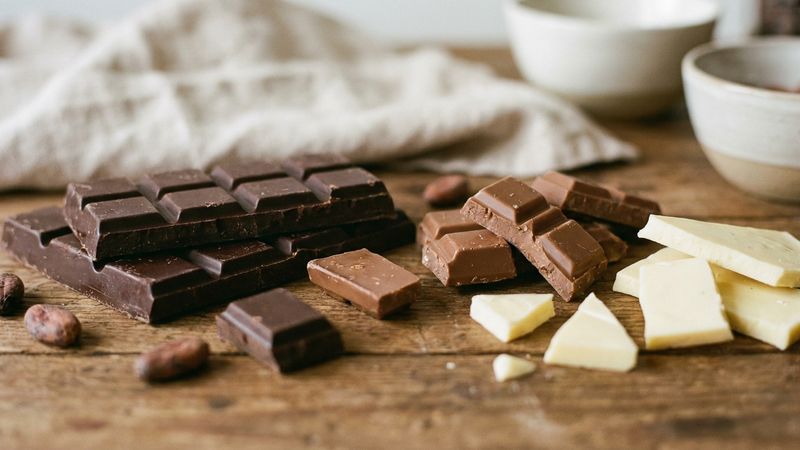
The Honduras Indio Rojo bar on display was made from criollo beans, which represent roughly five percent of global cocoa production according to the International Cocoa Organization. Native to Central and South America, criollo is the rarest and lowest-yielding variety. The bar cost £5.50, roughly €6.50. Not cheap, but the maker could explain exactly why.
Transparency as Competitive Advantage
Damian Allsop's stall offered a different lesson. His water ganaches, made by blending chocolate with water and fresh herbs rather than cream, contained no dairy at all. The result: a cleaner, fruitier taste that showcases the chocolate itself. His basil ganache sent one visitor into visible raptures.
The salted caramel used muscovado sugar, giving it a dark molasses note. Allsop had previously supplied petit fours to the Hand and Flowers in Marlow, a detail he shared freely. This is the craft maker's advantage: the ability to explain every decision, every ingredient, every partnership.
Festival pricing reflected this transparency.
Bags of misshapes sold for £3.50, roughly €4, containing over a dozen chocolates. No shipping costs, no middlemen. The maker stood behind the product, literally, answering questions about process and sourcing.
A Design Principle, Not a Trend
The festival's other stalls shared a philosophy. Outsider Tart displayed rustic wooden crates piled with brownies and cookies, generous slices without unnecessary decoration. Big Yum's Swerve pretzels combined salted crunch with swirled chocolate coating.
Intentional flavour combinations, quality ingredients, minimal ornamentation. Sofia's craft ecosystem already understands this. The specialty coffee shops, the artisan bakeries, the craft beer bars all operate on the same logic. Chocolate makers entering this space have a template to follow.
What Sofia's Makers Can Learn
The UK festival model itself offers a lesson. Direct maker-to-customer conversation builds trust faster than any website. Sofia's farmer markets at Zhenski Pazar and the weekend markets in Oborishte already provide this infrastructure. What they lack is a critical mass of chocolate makers ready to use it.
The investment required for bean-to-bar production is significant: roasting equipment, melangers for grinding, tempering machines, and the knowledge to operate them. But the specialty coffee scene proved that Sofia's consumers will pay for craft when the process is visible and the quality is real.
So here is a four-word question worth asking at any counter: which harvest is this? A maker who can answer will name the region, the country and the year - and will have had that answer ready long before anyone thinks to ask.
Frequently Asked Questions
Q: What is bean-to-bar chocolate production?
A: Bean-to-bar means a single producer controls every step from raw cacao beans to finished chocolate: sorting, cleaning, roasting, grinding, conching, tempering, and moulding. This differs from chocolatiers who buy pre-processed chocolate and shape it into products.
Q: Why does single-origin chocolate taste different each year?
A: Like wine, cacao flavour depends on growing conditions, harvest timing, and fermentation. Single-origin chocolate uses beans from one region and one harvest, so variations in weather and soil affect each batch differently.
Q: Where can I find artisan chocolate makers in Sofia?
A: Flow Cacao works with single-origin Latin American beans for ceremonial cacao and drinking chocolate. Sofia's farmer markets, particularly at Zhenski Pazar on Saturdays, occasionally feature small-batch producers. The scene is still emerging compared to specialty coffee.
The Artisan
Frequently asked questions
What is bean-to-bar chocolate production?
Bean-to-bar means a single producer controls every step from raw cacao beans to finished chocolate: sorting, cleaning, roasting, grinding, conching, tempering, and moulding. This differs from chocolatiers who buy pre-processed chocolate and shape it into products.
Why does single-origin chocolate taste different each year?
Like wine, cacao flavour depends on growing conditions, harvest timing, and fermentation. Single-origin chocolate uses beans from one region and one harvest, so variations in weather and soil affect each batch differently.
Where can I find artisan chocolate makers in Sofia?
Flow Cacao works with single-origin Latin American beans for ceremonial cacao and drinking chocolate. Sofia's farmer markets, particularly at Zhenski Pazar on Saturdays, occasionally feature small-batch producers. The scene is still emerging compared to specialty coffee.