
A Cardboard Box from Bengaluru Changed Everything
Прочети на български
Green coffee beans arrived in a care package from India during the pandemic. Piyush "Pi" Jessani's mother had sent them to Virginia, tucked among other comforts from home. That box set off a chain of events that ended with Jessani opening Richmond's first cafe dedicated exclusively to Indian specialty coffee.
The story matters beyond Richmond. Across Europe and North America, diaspora coffee professionals are asking the same question: how do we elevate our home country's specialty coffee on the global stage? In Sofia, where the specialty scene is still defining its identity, the question takes a different form. Bulgarian roasters work with Ethiopian, Colombian, and Kenyan beans. But how many build an entire business around a single overlooked origin? Jessani's model offers one answer.
The Constraint as Strategy
Pi's Coffee opened its brick-and-mortar location on June 24, 2026, at 123 E. Main St. in Richmond's Monroe Ward Historic District. The 1,800-square-foot storefront carries the same blue-and-white palette from Jessani's mobile truck onto a century-old facade.
I wanted my cafe to feature coffee only from India, cutting out a niche for my business.
Piyush Jessani
The constraint is deliberate. Green arabica and robusta beans come primarily from South India Coffee Company, an importer specialising in Indian origins. Jessani roasts them himself on a 5-kilo Coffee-Tech Engineering roaster at the back of the cafe.
This commitment to single-origin roasting mirrors a global trend among specialty roasters. In Sofia, Aroma Coffee owner Georgi Gagov similarly focuses on sourcing and roasting quality green beans with precision, demonstrating how regional roasters across continents are building identity through origin specificity rather than variety.
Bartending Taught Him to Taste
Jessani moved to the United States from Bengaluru at age seven. He studied engineering, then worked as a bartender. The bartending years proved unexpectedly useful.
I was able to foster an appreciation for wines and learned how to pick up on the notes and the delicate nature of that flavor, which helped me in learning how to differentiate in the natural flavors of coffee. It allowed me to be able to see coffee in a different way, providing a new and unique approach to my specials menu.
Piyush Jessani
That approach shows in the drinks. The Gulab Jamun latte combines cardamom and rose. The shaken Thundai Latte uses almond and spices. Both draw from Indian culinary tradition rather than the standard specialty coffee playbook.
At the bar, a Nuova Simonelli Appia compact espresso machine paired with a Fiorenzato F64 Evo Pro grinder supports these drinks.
Jessani also uses the espresso machine to replicate South Indian filter coffee, bridging tradition and specialty craft through equipment designed for neither.
The Family Ecosystem
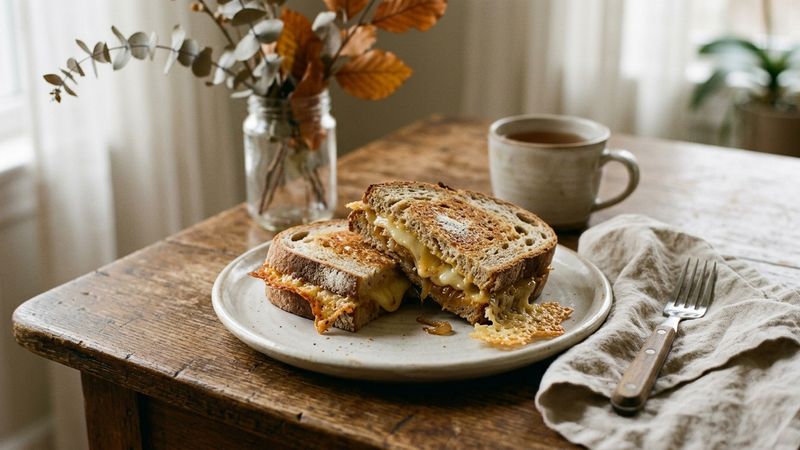
The cafe is not just coffee. Jessani's mother, Kajal "Kay" Jessani, owns Khushbu, a catering business. Pi's makes sandwiches in-house, including a chicken tikka grilled cheese and Bombay Aloo panini. Khushbu supplies dishes like chana masala and saag paneer.
The partnership is not incidental. The same care package that contained green coffee beans came from his mother. The business that grew from those beans now operates alongside her catering company. The cafe becomes a family project, not just a solo venture.
We're trying to make our cafe feel like a home. Beyond that, we want to introduce more of my country and story to Richmond, Virginia.
Piyush Jessani
What Overlooked Origins Need
India produces roughly 300,000 metric tonnes of coffee annually, according to the International Coffee Organization. Most of it goes to instant coffee production or blends. Specialty-grade Indian coffee remains a small fraction of global specialty consumption. Jessani's model suggests one path forward: diaspora entrepreneurs who know both the origin and the destination market, who can translate between cultures.
He announced the cafe on , Pi Day, a nod to his nickname. The timing was deliberate, the symbolism clear. He wants to feature more coffee farms, perhaps explore India's wine culture.
I don't know where we will go, but I know that I'll have fun doing it.
Piyush Jessani
The care package that started everything contained beans, not instructions. What Jessani built from them is a template: how to turn a personal connection to an overlooked origin into a business that elevates both.
Frequently Asked Questions
Q: What makes Indian specialty coffee different from other origins?
A: Indian coffee, grown primarily in the southern states of Karnataka, Kerala, and Tamil Nadu, often features lower acidity and fuller body than East African or Central American coffees. The country produces both arabica and robusta, with specialty-grade lots still representing a small fraction of total production.
Q: How does Pi's Coffee source its green beans?
A: Pi's Coffee sources green arabica and robusta beans primarily from South India Coffee Company, an importer specialising in Indian origins. Jessani roasts all beans on-site using a 5-kilo Coffee-Tech Engineering roaster.
Q: What equipment does Pi's Coffee use for espresso?
A: The cafe uses a Nuova Simonelli Appia compact espresso machine paired with a Fiorenzato F64 Evo Pro grinder. Jessani also uses this setup to replicate traditional South Indian filter coffee.
The Artisan