
A Retired Medic, a Jar of Pickles, and the Craft Revival That Crosses Continents
Прочети на български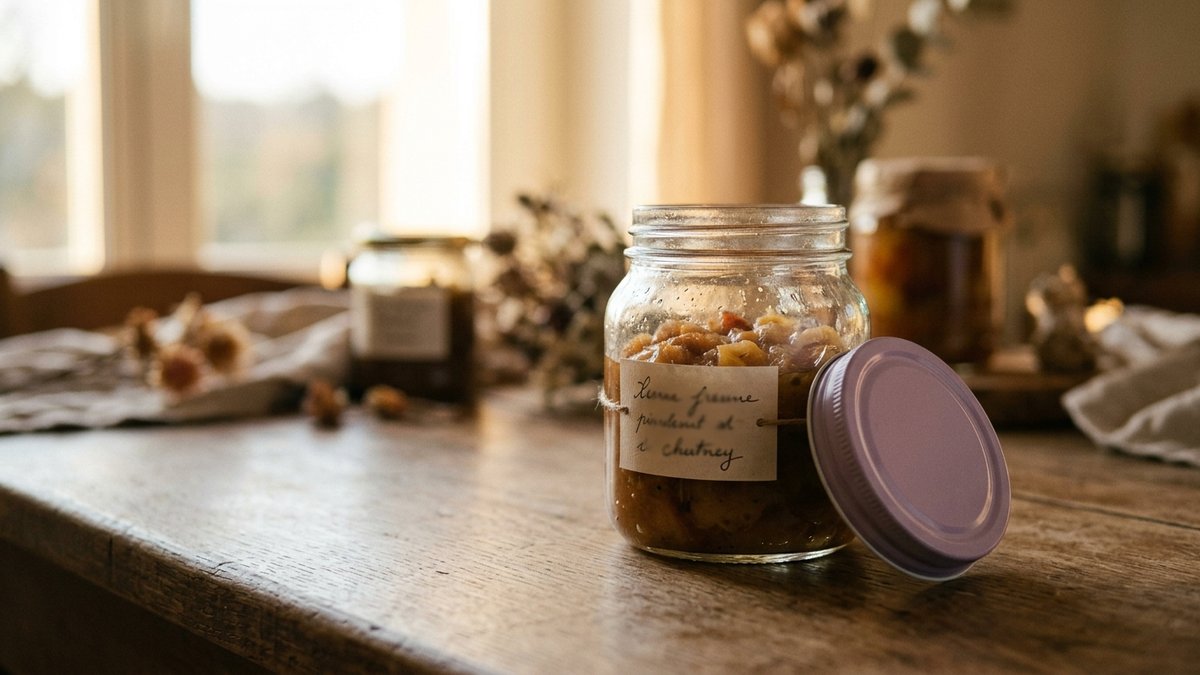
The lid comes off with a soft pop. Inside: strips of bittergourd marinated with thyme, lemon, and goji berries. No harshness, no excessive salt, just a clean, zesty bite that makes you wonder why preserved vegetables ever needed to taste like a sodium emergency.
This is the work of Allan Yeo, a former medical professional who spent decades in occupational safety and food hygiene before finally doing what he'd wanted to do since childhood: make food. His daughter Audrie, who worked fifteen years in film, now handles marketing. Together, they run Pick A Pickle, a Malaysian artisan label producing over 1,000 jars of fermented and preserved goods each month from a converted home kitchen.
The story matters beyond Southeast Asia. In Sofia, as across Eastern Europe, fermentation traditions run deep. Bulgarian turşu, the mixed vegetable pickles that appear on winter tables, share DNA with preservation practices from the Balkans to the Black Sea. Yet few of these traditions are being revived with the intentionality the Yeos bring to their work.
The Long Road from Rig to Kitchen
Allan's path took decades. He started as a medical assistant, moved into occupational safety, then worked on an offshore oil rig in Terengganu handling food hygiene for the crew. Trading recipes with colleagues scratched the itch, but the longing for his own place never faded.
I had always wanted to fulfil my childhood dream of working in F&B. After retirement I thought, 'Why not get a little place just to pass the time?'
Allan Yeo
The skills came from his mother. Growing up in Pekan, Pahang, Allan helped in the kitchen while his father ran a sundry shop. Unsold vegetables were brought home and pickled the traditional Teochew way.
I learnt by helping her. From there, I developed my interest in food.
Allan Yeo
What makes second-career makers different from hobbyists is the discipline they bring. When Pick A Pickle sent products for nutritional studies in 2024, it was a natural step, not a marketing afterthought.
Seventy Percent by Hand
Pick A Pickle produces over 1,000 jars monthly, but 70% of the process remains handmade. Commercial slicers handle some tasks, but the core work stays manual. This is quality control, not romantic inefficiency. When you hand-slice vegetables, you see each piece.
The trade-off is real: equipment limits capacity, and the Yeos cannot yet source jars directly or scale to industrial volumes.
The health innovation is equally deliberate. Traditional Teochew pickling relies heavily on salt. Allan reduced salt content by 90%, using refrigeration instead.
I use our fridge as the preservative, since everyone has one.
Allan Yeo
The result leaves room for complementary flavours: thyme and goji with bittergourd, lemon with papaya, regional spices with kedondong.
Reviving What Was Fading
Some of Pick A Pickle's work is explicitly preservationist. Jeruk kedondong, a traditional treat made from the kedondong fruit, was fading from younger generations' memory. Allan is working to bring it back.
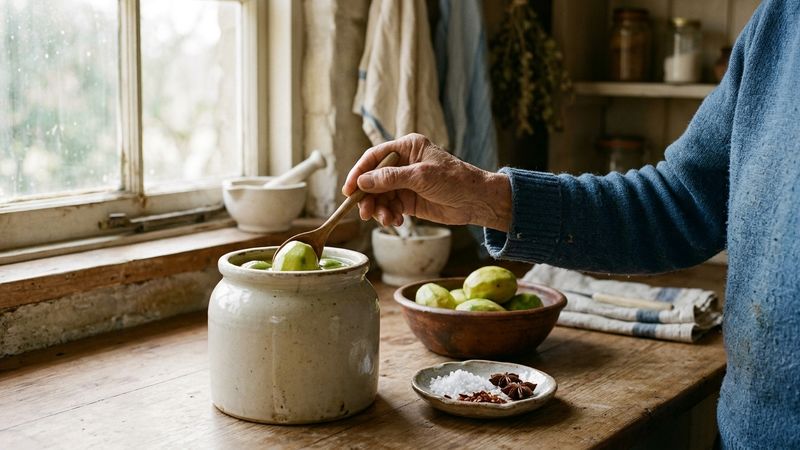
He also adapted sambal hitam Pahang, a regional sauce, by swapping belimbing bulu for kedondong, making it safe for people with kidney issues. Most products are vegetarian and vegan-friendly because the traditional recipes already were.
The customer response suggests this approach builds genuine community. Regulars order ten jars of pickled garlic at a time. Singaporean visitors coordinate deliveries with business trips. Customers in Hong Kong and the United States have asked for international shipping, which Pick A Pickle cannot yet provide.
What's interesting now is we actually have a fan club.
Allan Yeo
What Sofia's Makers Might Recognise
The Yeos' trajectory, from apartment batches to home kitchen to planned commercial space, mirrors the path many Sofia makers face. The constraints are familiar: certification requirements, equipment costs, the tension between handmade quality and sustainable volume.
What Pick A Pickle demonstrates is that heritage revival can be a business model. The 2024 turning point, when nutritional studies and consignment deals moved the operation from hobby to serious enterprise, shows what happens when craft meets intention.
Food really is our love language. My dad and his siblings can spend the entire day chatting about what to eat and where to get it.
Audrie Yeo
The next batch is already being prepared. The jars will be filled by hand, lidded in lilac, and sent to customers who remember what these flavours meant before they almost disappeared.
Frequently Asked Questions
Q: What makes artisan fermentation different from industrial preservation?
A: Artisan fermentation typically uses traditional techniques with fewer additives and lower salt content. Pick A Pickle reduces salt by 90% compared to traditional methods and relies on refrigeration, allowing more complex flavour profiles.
Q: How do second-career makers approach craft food differently?
A: Makers who transition from regulated industries often bring process discipline and documentation habits. Allan Yeo's background in occupational safety led Pick A Pickle to pursue nutritional studies and certifications as standard practice.
Q: Can heritage food techniques be adapted for modern dietary needs?
A: Yes. Pick A Pickle adapted sambal hitam Pahang by substituting ingredients to make it kidney-friendly, and most products are vegetarian and vegan-friendly. Traditional recipes often accommodate dietary restrictions more easily than industrial alternatives.
The Artisan