Honey, Moisture, and a Race Against Time: One Maker's Approach to Craft Chocolate
Прочети на български
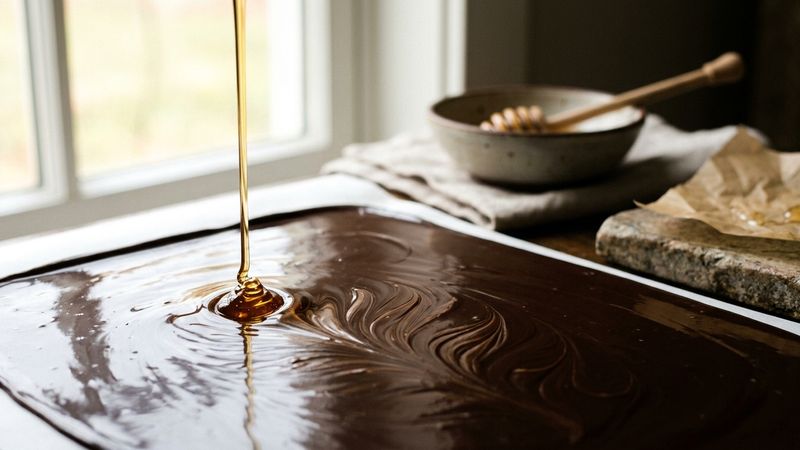
The cocoa butter goes in at a precise moment. Too early, and the texture suffers. Too late, and the honey has already begun to seize the mixture. Ryouga Kasper, working in a borrowed kitchen in Lynchburg, Virginia, knows this window well. He has about ninety seconds to combine honey with tempered chocolate before moisture turns the batch into something unusable.
This is the constraint that defines Hachimitsu Chocolates, the bean-to-bar operation Kasper founded after deciding he wanted to keep eating chocolate while eliminating processed foods from his diet. The name means honey in Japanese, a reference to his mother's heritage and to the only sweetener the company uses.
The Parallel to Specialty Coffee
For anyone familiar with Sofia's specialty coffee scene, the logic will sound familiar. Direct sourcing. Farm visits. Understanding fermentation as a craft variable, not an industrial afterthought. The questions Kasper asks about his Ecuadorian cacao are the same ones roasters ask about Ethiopian or Colombian lots: What's the soil composition? How long was the fermentation? Who benefits from the price paid?
In Sofia, makers like Flow Cacao work with identical principles, sourcing single-origin cacao from Latin America and treating origin knowledge as the foundation of quality. The craft chocolate movement and the specialty coffee movement share more than aesthetics. They share a conviction that transparency about sourcing is not marketing, but methodology.
Twice a Year to Ecuador
Kasper travels to Ecuador roughly twice per year. The trips are not photo opportunities. He examines soil, humidity, drying practices, and sanitation standards. He pays attention to fermentation protocols, which determine whether the finished chocolate will carry floral notes, citrus, berries, or the banana hints characteristic of his current cacao.
Ryouga Kasper
I want to make sure they're getting paid market rate. We pay our supplier market rate plus premium for his cocoa beans, so that there's no really like middlemen taking the cut out of that.
This is not the same as fair trade certification, which involves third-party auditing and standardised criteria. Direct trade is a relationship, not a label. It requires ongoing presence and verification. For small-batch makers, the cost of those trips is significant. The alternative, purchasing pre-processed chocolate ingredients without knowing their origin, is cheaper but defeats the purpose.
Ninety Seconds Before the Seize
Most chocolate makers work with refined sugar, which contains no moisture. Honey does. During tempering, the controlled crystallisation process that gives chocolate its characteristic snap and gloss, moisture is the enemy. It causes the mixture to thicken and harden prematurely.
Kasper's solution is speed. Once the honey enters the tempered chocolate, he has a narrow window to combine the ingredients and pour them into moulds. The margin for error is small. This is why craft production is harder than industrial production: constraints force mastery, not just intention.
The current range includes dark chocolate, blueberry dark chocolate, milk chocolate, and banana milk chocolate.
Seasonal varieties planned for the coming months include an 80% dark, sea salt dark, and rose dark.
A Borrowed Kitchen, a Shared Trade
Hachimitsu operates out of subleased kitchen space at Sweet Indulgence Bakery. This arrangement, common among small food producers, reflects how craft businesses often depend on shared infrastructure. Kasper also collaborates with Parable Chocolate, another Lynchburg maker, exchanging ideas and techniques.
The company sells at local farmers markets, online, and through retail locations including Montview Market at Liberty University. A recent agreement with a retail broker will expand distribution along the East Coast.
Ethics and Taste, Not Either-Or
Ryouga Kasper
I don't want to make something healthy for the sake of being healthy. I also want it to taste good.
This is the tension that separates craft production from wellness marketing. Ethics and taste must coexist, not compete. A chocolate bar sweetened with honey and made from directly sourced cacao is not automatically better than one made with refined sugar and commodity beans. It is better only if the maker understands the variables well enough to produce something worth eating.
The craft chocolate movement, like the specialty coffee movement, is not about purity. It is about knowledge: knowing where ingredients come from, how they were produced, and what happens when you combine them under specific conditions. The rest is execution.
Frequently Asked Questions
Q: What is bean-to-bar chocolate?
A: Bean-to-bar means the maker controls the entire process from raw cacao beans to finished chocolate, rather than purchasing pre-processed chocolate ingredients. This allows control over sourcing, roasting, and flavour development.
Q: Why does honey create problems in chocolate production?
A: Honey contains moisture, while chocolate does not. During tempering, moisture causes the mixture to thicken and harden prematurely, giving makers a very short window to combine ingredients and pour into moulds.
Q: How is direct trade different from fair trade certification?
A: Direct trade is a relationship between maker and farmer, often involving farm visits and negotiated premiums. Fair trade is a third-party certification with standardised criteria. Direct trade requires ongoing verification; fair trade relies on auditing bodies.
The Artisan