The prayer call rises over the Medina at 4:30 a.m. By 7, the souks are already a wall of sound: vendors calling, motorbikes threading through pedestrians, the clatter of copper being hammered into shape. And somewhere in Guéliz, the newer part of the city, a barista is pulling the first shot of the day into a quiet room where the only sound is the hiss of steam.
Sofia knows this tension. The city's own café culture sits at a similar inflection point, caught between the thick Turkish-style coffee of neighbourhood spots and the pour-over rituals of places like Blue Bag Specialty Coffee. What Marrakech offers is not a template to copy, but a mirror: how do you build spaces for slowness in cities that never stop moving?
The Geography of Quiet
Most visitors stay in the Medina, the historic walled city where riads hide behind unmarked doors. But specialty coffee has not taken root there. The scene lives in Guéliz, the French-built New Town where wide boulevards create a different rhythm.
Traditional Moroccan coffee culture centres on nous nous, equal parts strong coffee and steamed milk, served in small glasses at cafés where conversation is the point. Mint tea remains the social lubricant of choice. These rituals are not being replaced. They are being joined by something else.
Traditionally, classic cafés have dominated the landscape. In Marrakech, the development of a more contemporary, independent coffee shop culture really began to take shape around four or five years ago, when we decided to open Kartell Kollektiv. At the time, we were among the first, if not the very first, independent third-wave coffee shops in the city.
What makes Marrakech's specialty scene worth studying is how each space has answered the same question differently: what does intentional pause look like here?
Gless Coffee, opened , sits on the border between Medina and Guéliz. The blue-tiled espresso bar anchors a room designed for lingering. The seasonal menu changes constantly: an iced popcorn caramel latte with popcorn-infused oat milk, matcha sourced directly from Japan, filter coffee options rare for the city.
HeiBai Specialty Coffee, which opened in opposite the Ibrahim al Khalil Mosque on Route de Safi, takes the opposite approach. White walls, simple wooden furniture, and a partnership with Intro Coffee Roasters in Tangier. Filter coffee here is not an afterthought but a deliberate choice, a drink that asks you to sit with it.
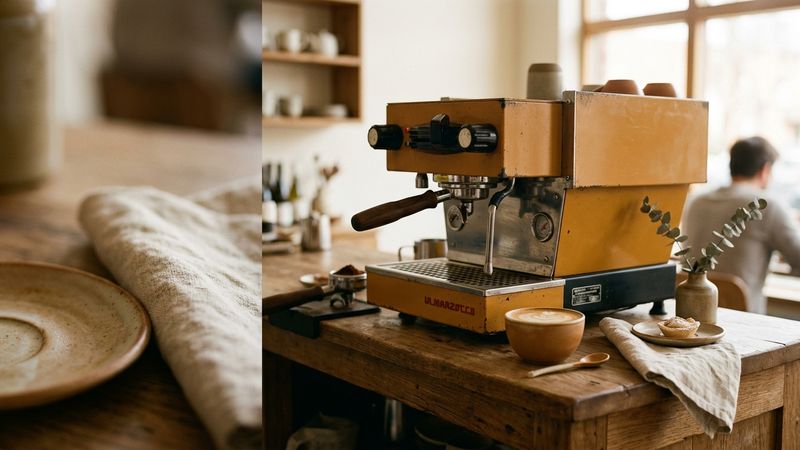
DRIBA COFFEE CLUB, the newest arrival in , leans into nostalgia. A mustard-coloured espresso bar, retro chairs, old film memorabilia. The 1950s aesthetic is an invitation to remember a pace of life that predates the smartphone.
THIRTY5IVE, operating since and renovated in , doubles as an art gallery. An antique turntable guards shelves of vinyl. The coffee comes from FIVE WAYS COFFEE in Australia. The upstairs gallery, the record collection, the slow rhythms: everything says stay.
And then there is Kartell Kollektiv itself, with locations in both Guéliz (opened 2022) and the Medina (opened 2025).
El Moujahid's vision began in Düsseldorf, Germany, in .
Kartell Kollektiv is not simply a collection of coffee shops. It is a network where specialty coffee, art and urban subculture intersect.
Носталгията не е бягство от настоящето - тя е рецепта за по-бавно утре.
Nouaman El Moujahid
What This Means for Cities Like Sofia
The ecosystem in Marrakech is, by El Moujahid's own admission, not yet fully developed. But that is precisely what makes it instructive.
There is a lot of room for growth, experimentation and new ideas, and we are seeing more people become curious about coffee and the culture around it.
Nouaman El Moujahid
What both cities share is the question of how craft coffee fits into existing social rituals without erasing them. The answer Marrakech suggests is not replacement but addition: a new layer of urban life that exists alongside the old.
The heat outside Gless Coffee is still brutal. The souks are still a maze of sound and colour. But inside, someone is drinking a filter coffee in silence, watching the light change on the blue tiles. The city has not stopped. They have simply found a way to pause within it.
Frequently Asked Questions
Q: Where is specialty coffee concentrated in Marrakech?
A: Most specialty coffee shops are located in Guéliz, the French-built New Town, rather than the historic Medina. This includes Gless Coffee, HeiBai Specialty Coffee, DRIBA COFFEE CLUB, THIRTY5IVE, and one of Kartell Kollektiv's two locations.
Q: What is nous nous, and how does it differ from specialty coffee?
A: Nous nous, meaning half half in Arabic, is a traditional Moroccan drink made of equal parts strong coffee and steamed milk, served in small glasses. It remains central to Moroccan café culture, while specialty coffee introduces single-origin beans, filter brewing methods, and a focus on craft and sourcing.
Q: When did Marrakech's specialty coffee scene begin to develop?
A: According to Kartell Kollektiv co-founder Nouaman El Moujahid, the contemporary independent coffee shop culture in Marrakech began to take shape around 2021-2022, when Kartell Kollektiv opened as one of the first third-wave coffee shops in the city.
Where is specialty coffee concentrated in Marrakech?
+
Most specialty coffee shops are located in Guéliz, the French-built New Town, rather than the historic Medina. This includes Gless Coffee, HeiBai Specialty Coffee, DRIBA COFFEE CLUB, THIRTY5IVE, and one of Kartell Kollektiv's two locations.
What is nous nous, and how does it differ from specialty coffee?
+
Nous nous, meaning half half in Arabic, is a traditional Moroccan drink made of equal parts strong coffee and steamed milk, served in small glasses. It remains central to Moroccan café culture, while specialty coffee introduces single-origin beans, filter brewing methods, and a focus on craft and sourcing.
When did Marrakech's specialty coffee scene begin to develop?
+
According to Kartell Kollektiv co-founder Nouaman El Moujahid, the contemporary independent coffee shop culture in Marrakech began to take shape around 2021-2022, when Kartell Kollektiv opened as one of the first third-wave coffee shops in the city.
Slowmade Letter
Once a week. No rush.
The Slowmade Letter: what happened in the city this week, gathered into one letter.
By subscribing you agree to receive the Slowmade Letter once a week at this address. You can unsubscribe with one click, at any time. How we handle your data
Analytics cookies
We use Google Analytics and Microsoft Clarity to understand which stories get read and how you move around the site. Nothing is recorded without your consent. The cookies needed to sign in always work. Learn more