
The Backyard Where Bread Begins
Прочети на български
The eggs are still warm when they reach the kitchen counter. Twenty chickens, three breeds, a spectrum of shells from deep brown to pale blue. By afternoon, those eggs will be folded into brioche dough, the yolks lending their particular richness to loaves that will cool on a rack by evening.
Alyssa Arellano runs Little Arellano Farm from a 4,000-square-foot backyard in Long Beach's Westside neighbourhood. The operation includes tomatoes, jalapeños, onions, a flour mill, and a sourdough microbakery. The chickens are salmon faverolles, a heritage breed she chose partly for their temperament and partly because they lay pink eggs.
They're like the millennial new-age Pokemon.
Alyssa Arellano
She described her collection habit to Eat. See. Do.
This kind of integrated practice, where the farm feeds the bakery and the bakery feeds the neighbourhood, remains rare in urban settings. In Sofia, where specialty coffee and craft chocolate have grown steadily over the past five years, residential-scale food production is still an outlier. The regulatory landscape is ambiguous, green space is limited, and air quality in certain districts makes growing anything a calculated risk.
Arellano lost roughly 40% of her crops last year to poor air quality in Long Beach. Sofia's Nadezhda and Krasna Polyana districts face similar constraints. The makers who persist anyway are worth documenting.
The Kitchen as Origin Point
Arellano started baking at three years old, sitting on the counter while her mother made banana bread for Christmas baskets. They danced and sang while the loaves baked.
That was like the best time of my life.
Alyssa Arellano
At fourteen, her father died suddenly from a heart attack. Baking became an outlet for grief. She enrolled at The New England Culinary Institute in Vermont at seventeen, worked through professional kitchens under Thomas Keller and Wolfgang Puck, then opened her own bakery in San Pedro. When she became pregnant with her first child, she closed it.
Four years and three children later, postpartum depression hit hard. She returned to dough.
I needed something that felt like myself again.
Alyssa Arellano
Sourdough as Practice
She chose sourdough specifically: easier to digest, more nutritious than commercial yeasted bread, and demanding in a way that holds attention.
It's alive and very fluid.
Alyssa Arellano
The fermentation requires patience. The timing shifts with temperature and humidity. The result, when it works, is unmistakable.
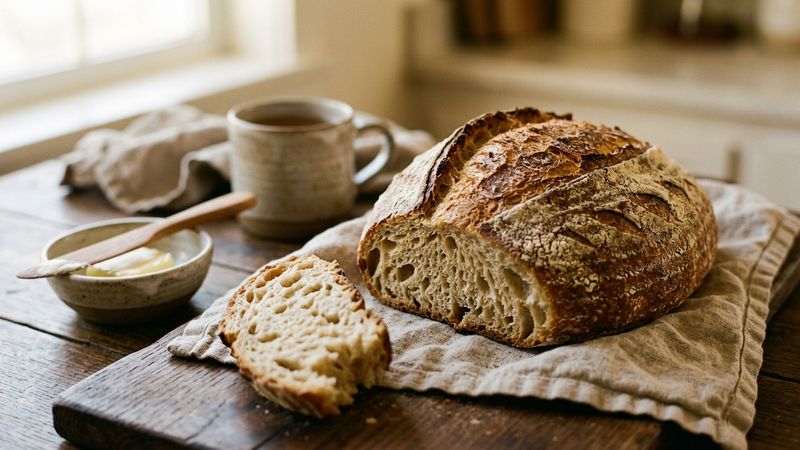
The flour she mills herself. The eggs come from her own coop. The process from raw ingredient to finished loaf happens within the same property, a closed loop that most commercial bakeries cannot replicate.
In Sofia, roasteries like Aroma Coffee apply a similar principle to coffee, sourcing green beans and roasting in-house to control quality and origin.
The parallel is not accidental. Craft producers who mill, ferment, or roast their own materials share a common logic: the finished product cannot be separated from the process that made it.
The Neighbourhood as Customer
Arellano did not intend to start a business. She baked too much bread, gave loaves to neighbours, and found she could not stop. The neighbours became her first customers. She began selling at local farmers markets, including the Westside Night Market.
There was no real intention of going back into business, but it was just kind of heavy on my heart to keep going. I really love that I'm able to feed my community food that is made fresh and with wholesome ingredients.
Alyssa Arellano
Her seven-year-old son told his class that his mother is a community leader because she feeds everyone in the neighbourhood. Her five-year-old daughter wants to grow up to be a baker.
What Success Looks Like Now
Three years into the operation, Arellano has a different definition of success than she did when she ran a commercial bakery. The scale is smaller. The relationships are closer. The work is harder to separate from the rest of her life, which may be the point.
It feels good to serve those close to home. It's been really wonderful to not only feed your soul, but then be able to feed your family as well.
Alyssa Arellano
Orders are placed online. Pickup is Saturday mornings. The eggs are still warm when they reach the counter.
Frequently Asked Questions
Q: What is a sourdough microbakery?
A: A microbakery is a small-scale, often home-based operation that produces bread in limited quantities, typically for local customers or farmers markets. Sourdough microbakeries use naturally fermented starters rather than commercial yeast, which requires longer fermentation times and more hands-on attention.
Q: How many chickens does a backyard farm need to supply a home bakery?
A: Arellano keeps 20 chickens to supply all the eggs for her baking. The exact number depends on breed, laying frequency, and production volume, but heritage breeds like salmon faverolles typically lay 3-4 eggs per week per hen.
Q: Where can you buy bread from Little Arellano Farm?
A: Orders are placed online through Little Arellano Farm's website, with pickup available on Saturday mornings at her Westside Long Beach location.
The Artisan