
The Bookshop That Stays Open After the Books Close
Прочети на български
The walnut-panelled fireplace at Llibreria Byron in Barcelona runs on electricity, but the warmth it generates is real. Every Friday, neighbours from El Raval gather around it for what the shop calls a philosophical coffee hour: debates on consumerism, uncertainty, the texture of daily life. The grand piano in the corner hosts jazz performances some evenings, Puccini on others. The books are almost incidental.
This is what happens when a bookshop decides it wants to be a living room.
A City That Kept Opening Doors
Barcelona now has 140 independent bookshops, a 30 per cent increase since 2008, according to the Catalan Guild of Booksellers. This growth happened while cinemas closed and small music venues disappeared. Readers aren't just buying books; they're buying membership in a space.
Ona, which opened a 900-square-metre location on Carrer Pau Claris in 2020, became the world's largest bookshop dedicated to Catalan-language books. It stocks 1,500 titles by Catalan authors translated into 15 languages, from English to Mandarin.
Iolanda Batallé, Director
It's painstaking work because we have to go publisher to publisher.
The shop has grown fivefold in six years, hosting book clubs, talks, and live music in its café space.
Laie, which opened in 1979, took a different path. Four young women launched it without fanfare.
Conxita Guixà, Co-founder
Perhaps three or four people came in during the first few hours.
Forty years later, it runs 35 outposts across Spain. The first-floor café has become what literary director Damià Gallardo calls a nerve centre of Barcelona's culture, with journalists conducting interviews and authors negotiating deals over plates of ham croquetas.
When Closure Becomes Reopening
The most instructive story belongs to Llibreria Sant Jordi. When longtime owner Josep Morales died in 2024, the Gothic Quarter shop announced it would close. Hundreds of people arrived to buy discounted stock on art, photography, and design. The event became a spontaneous tribute to a business that had occupied its listed 19th-century wooden shopfront since the early 1980s.
Alba Biliotti
The neighbours made it clear that they didn't want yet another shop to close.
Sant Jordi reopened in December 2025 with most interiors unchanged, but with a restaurant that operates after shopping hours.
Book clubs meet over piquillo peppers stuffed with cod brandade. Some visitors come for dinner and leave with a book; others come for a book and stay for a drink.
The Ritual of Slowness
Llibreria Finestres, which opened in 2021 inside a modernist building by architect Enric Sagnier, describes itself as a bookshop for reading. Patrons curl up in well-lit reading nooks or linger on the terrace with a glass of vermut. The poor mobile signal inside serves as an unexpected advantage: notifications and calls simply stop.
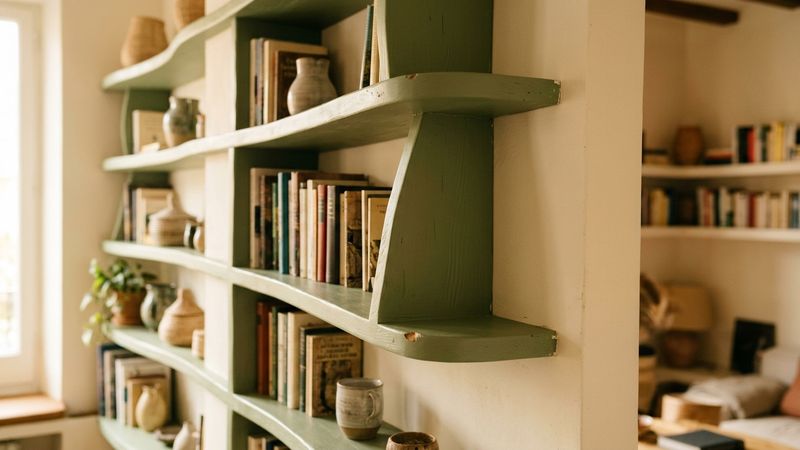
The shop has since expanded to four locations, including Finestres Palestina in Gràcia, designed by Palestinian architect Malek Murad Mateu with bright green sculptural bookshelves and an indoor fountain inlaid with a mosaic map of Palestine.
Byron, which finally opened months after the pandemic delayed its April 2020 launch, was welcomed by locals who had rediscovered reading during Spain's strict lockdowns. Founder Mariana Sarrias wanted it to be a place where culture is brought to life, not just sold in the form of books. The restored antique fireplace, the philosophical coffee hours, the children's section with a packed calendar of community events: all of it serves a single purpose, giving neighbourhood residents a place to reconnect.
What the Ritual Requires
The coffee matters. In Sofia, where specialty coffee culture has grown alongside a similar appetite for intentional gathering spaces, the sourcing behind a cup mirrors the curation behind a bookshop's selection. Blue Bag Specialty Coffee, where head barista Francisco Lopez sources beans from verified farms at peak ripeness, operates on the same principle: deliberate attention to origin, process, and care. Both spaces demand attention. Both reward it.
Llibreria Calders, which opened in 2014 in a former button factory in Sant Antoni, was named after Catalan writer Pere Calders, who lived in the neighbourhood in his later years. Co-founder Isabel Sucunza and historian Abel Cutillas wanted to showcase small publishing houses. The space resembles a vast wine cellar, with dark bookcases against bare stone walls. Customers seek it out for poetry and dramatic theory.
Isabel Sucunza, Co-founder
At the time there were very few independent bookshops in Barcelona. There also wasn't a single one named after an author.
The naming matters. It signals that the shop belongs to a tradition, not just a market.
Frequently Asked Questions
Q: Why are Barcelona's independent bookshops growing while other retail is declining?
A: Barcelona's bookshops have increased by 30 per cent since 2008, reaching 140 locations, because they function as cultural gathering spaces rather than pure retail. The hybrid model, combining books with cafés, restaurants, and community events, creates reasons for people to stay, not just buy.
Q: What is the hybrid bookshop-restaurant model?
A: Pioneered by Llibreria Sant Jordi after its 2025 reopening, this model keeps the bookshop open during the day and transforms the space into a restaurant in the evenings. It addresses rent pressures while creating multiple reasons for community engagement, from book clubs to author dinners.
Q: How do bookshops like Ona support local language publishing?
A: Ona, the world's largest Catalan-language bookshop at 900 square metres, stocks 1,500 titles by Catalan authors translated into 15 languages. The shop works publisher by publisher to source these translations, supporting Catalan publishing growth in a market where Spanish-language titles typically dominate.
The Flaneur