
The Certification That Tells You What the Label Cannot
Прочети на български
A small workshop in Brussels holds a piece of paper from the Belgian government. It certifies the makers as "true and honest handcraft chocolate makers." The phrase sounds almost quaint, the kind of thing you might find framed in a grandmother's kitchen. But the certification exists because the word "artisan" has been stretched so thin it means almost nothing.
The workshop belongs to The Belgian Chocolate Makers, and what they do there is worth understanding, not because Belgian chocolate is inherently superior, but because the principles behind their work translate directly to what Sofia's craft food community is already building.
The Same Logic, Different Beans
Sofia's specialty coffee scene has spent years normalising direct-trade sourcing. Roasters like Aroma Coffee and Blue Bag work with verified farms, know their producers by name, and control their roast profiles from green bean to cup. Bean-to-bar chocolate operates on identical logic: full control over every stage, from raw cacao to finished bar.
The Belgian Chocolate Makers roast and conch their own beans in-house, a practice rare enough in Belgium that it warrants government certification. Conching, for those unfamiliar, is the process of heating and mixing chocolate for hours to develop flavour and texture. Most chocolatiers buy pre-made couverture and melt it into shapes. Bean-to-bar makers start with the raw bean.
In Sofia, Flow Cacao operates from the same philosophy, sourcing single-origin cacao beans directly from Latin American farms and roasting them in their own facility. They know their farmers by name, not by commodity codes.
What Fair Pricing Actually Means
The Belgian workshop pays farmers a price "entirely independent of the fluctuations of the international commodity market." Commodity markets treat cacao like copper or wheat, subject to speculation, weather derivatives, and trading algorithms that have nothing to do with the farmer standing in a field in Peru.
The workshop's price is always higher than market rate. When farmers ask for less than their labour is worth, the makers increase the price anyway. This is not charity. It is a recognition that stable livelihoods produce better cacao, and better cacao produces better chocolate.
The origins they work with span Brazil, Colombia, Peru, the Philippines, Nicaragua, India, Indonesia, and Venezuela. Each origin carries its own identity, shaped by climate, soil, altitude, and the traditions of the farmers who cultivate it.
Three Commitments That Cost Money
The workshop has made three specific environmental stands that most industrial producers would never consider:
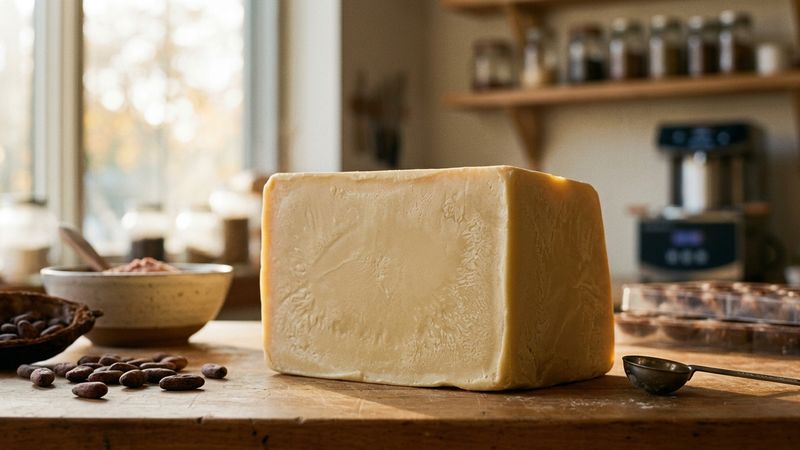
No soy lecithin. Soy cultivation is one of the main drivers of illegal deforestation in the Amazon. The workshop uses only pure cocoa butter, extracted from the same beans they source directly. This costs more. They do it anyway.
Boycott of CCN-51. This hybrid cacao variety, created in Ecuador, produces extremely high yields and resists disease. It also requires vast quantities of water, exhausts the soil, and encourages monocultures that threaten local ecosystems. Worse, its spread pushes out native cacao varieties, many of which are less profitable but infinitely richer in flavour and cultural heritage.
Zero tolerance for child labour. The plantations they partner with follow principles set by the International Labour Organization and UNICEF. This is not a checkbox on a form. It is a condition of doing business.
The workshop is honest about the ecological cost of sourcing cacao from around the world. Every journey to meet farmers leaves a footprint. They acknowledge this directly: "responsibility begins with honesty." Their response is to invest in energy-efficient machinery, recycled cardboard packaging, bio-sourced PLA films, natural inks, and biodegradable cornstarch fillers that dissolve in water or compost.
What This Means for Sofia
The point is not that Sofia should import Belgian chocolate. The point is that the principles behind this work are already present in Sofia's craft food community, waiting to be applied more broadly.
When you buy bean-to-bar chocolate made this way, you are not just tasting craft. You are supporting a system of relationships that connects you to farmers, artisans, and ecosystems. The same is true when you buy specialty coffee from a roaster who knows their producer, or bread from a baker who mills their own flour.
Sofia already has makers thinking this way. The question is whether consumers will demand the same transparency from everyone else.
Frequently Asked Questions
Q: What does bean-to-bar mean in chocolate production?
A: Bean-to-bar means the chocolate maker controls every stage of production, from raw cacao bean to finished bar. This includes roasting, winnowing, grinding, conching, and tempering, all done in-house rather than buying pre-made chocolate and melting it into shapes.
Q: Why do some chocolate makers boycott CCN-51 cacao?
A: CCN-51 is a high-yield hybrid variety that exhausts soil, requires excessive water, and encourages monocultures that threaten biodiversity. Its spread also pushes out native cacao varieties with richer flavour profiles and cultural heritage.
Q: How does direct-trade pricing differ from commodity market pricing for cacao?
A: Commodity markets price cacao based on speculation and trading algorithms, often disconnected from actual farming costs. Direct-trade pricing is negotiated directly with farmers, typically higher than market rate, and remains stable regardless of market fluctuations.
The Artisan