
The Glass Doors Tell the Story
Прочети на български
On one side, gray-washed brick and industrial minimalism. On the other, warm red brick, dark-stained walnut, and upholstered seating that invites you to stay longer than you planned. The glass doors connecting these two spaces are the first thing you notice at Gray Squirrel Coffee Company's expanded roastery cafe in Carrboro, North Carolina.
Gray Squirrel opened its expansion last week, adding 1,600 square feet and approximately 30 seats. The team casually calls the new space the Acorn Room, designed with midcentury modern touches and Googie-inspired decor that feels like a deliberate counterpoint to the original cafe's stripped-back aesthetic.
For anyone watching Sofia's specialty coffee scene grow, this matters. Not because Carrboro is Sofia, but because the questions Gray Squirrel is answering are the same ones facing cafes here: How do you get bigger without losing what made you worth visiting?
Eleven Years of Deliberate Choices
Gray Squirrel started in 2015 in a 250-square-foot space inside YesterYears Brewery. Two years later, they moved to 2,400 square feet on East Main Street. Now they have added another 1,600 square feet without interrupting service at the original bar. Eleven years to reach this point. Each move deliberate.
Where the original cafe is industrial and minimalist, the new space brings in warmth and midcentury modern touches. We've also extended our hours in the hopes of becoming a go-to lounge for folks to enjoy before dinner or a show at other local spots.
Sarah Persing, Gray Squirrel's Director of Marketing
The new slow bar showcases manual brewing through Chemex, Hario Switch, Etkin, and AeroPress brewers, hosting cuppings and conversations in a more intimate setting. The original bar keeps its Victoria Arduino Black Eagle espresso machine paired with two Mahlkönig grind-by-weight grinders.
Production That Teaches
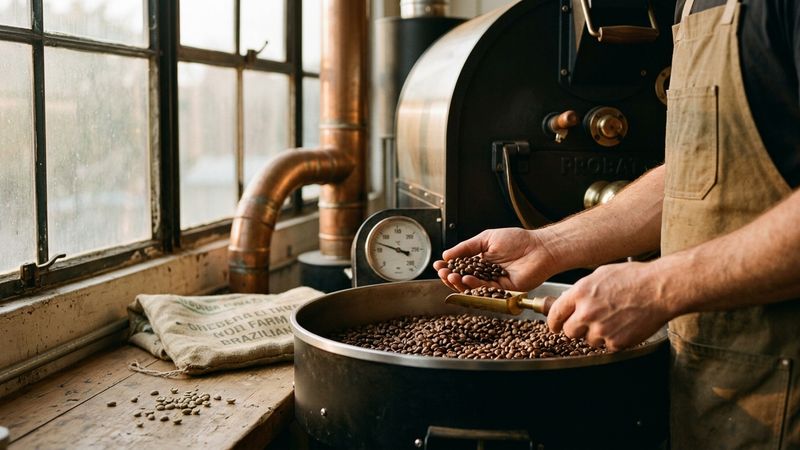
In the expanded roastery, Co-Owner and Head Roaster Shaw Sturton will transition from an early-1990s Probat L12 to three refurbished Probat machines: an L12, an L5, and a Probatino. The setup includes a destoner and new packaging equipment.
A key reason for the expansion is to enhance our wholesale business and improve training and education for both our staff and customers.
Sarah Persing
The roastery is visible from the cafe. Customers watch the process. Staff learn on multiple machines. In Sofia, roasteries like Aroma Coffee are building similar infrastructure. Owner Georgi Gagov, who holds an SCA Roastery Diploma (a Specialty Coffee Association certification for professional roasting competence), has developed Aroma's three locations around the principle that roasting equipment should enable education, not just output.
The Part That Gets Buried
Gray Squirrel maintains a no-tipping policy.
Employee benefits and annual cost-of-living increases are built into their compensation approach.
This detail often appears as a footnote in expansion stories. It should not. A business that grows while maintaining fair compensation is making a statement about what kind of growth matters.
Vertical Thinking
Gray Squirrel added an onsite kitchen in 2018, bringing production of baked goods and flavoured syrups in-house. The bakery is already outgrowing its current spot.
We are planning a kitchen expansion down the line, which will also allow us to add more substantial lunch options and artisan breads to the menu. We are unique as a cafe-bakery-roastery in this area, and we want to make sure that our customers are aware of the full range of delicious things that we craft here.
Sarah Persing
Rather than opening more locations, they are deepening what happens in one place. The roastery supplies the cafe and wholesale customers. The bakery produces for the cafe. Each piece supports the others.
A grand opening celebration is planned for later this year. Gray Squirrel Coffee Co. is located at 360 E. Main St., Ste. 100, in Carrboro, North Carolina.
The question for Sofia's growing cafe scene is not whether to expand. It is how.
Frequently Asked Questions
Q: What is a slow bar in a specialty coffee cafe?
A: A slow bar is a dedicated area for manual brewing methods like pour-over, Chemex, or AeroPress, where baristas prepare single cups with more attention and time than espresso-based drinks. Gray Squirrel's new slow bar also hosts cuppings, which are structured coffee tastings used for quality evaluation and education.
Q: How does a no-tipping policy work in a cafe?
A: Under a no-tipping policy, employee wages are set higher to compensate for the absence of tips, with benefits and cost-of-living increases built into the base pay structure. Gray Squirrel uses this model to provide more predictable income for staff while simplifying the customer experience.
Q: What does vertical integration mean for a roastery-cafe?
A: Vertical integration means controlling multiple stages of production under one roof, such as roasting beans, baking goods, and making syrups in-house rather than sourcing them externally. Gray Squirrel operates as a cafe-bakery-roastery, allowing them to maintain quality standards across all products they serve.
The Artisan