
The Jar on the Counter That Refuses to Be Rushed
Прочети на български
A Glass Jar, a Cloth Napkin, and the Quiet Revolution of Waiting
A glass jar sits on a kitchen counter in Lozenets, covered with a cloth napkin and a rubber band. Inside, a pale disc floats on amber liquid. It looks vaguely alive because it is. The woman who tends it checks it once a day, sometimes twice, the way you might check on a sleeping child. She started brewing kombucha three months ago after a colleague brought a piece of SCOBY (symbiotic culture of bacteria and yeast) to the office in a ziplock bag, like contraband.
This is how fermentation spreads in Sofia now: not through shops or courses, but through kitchens and favours.
The Living Cultures in Bulgarian Kitchens
Home fermentation is having a moment, though "moment" is the wrong word for something that takes weeks to complete. Sourdough starters require daily feeding with flour and water. Kombucha needs seven to thirty days of primary fermentation before it's drinkable. Neither process can be hurried. This is precisely the point.
What draws people to these practices is not efficiency. It's the opposite: the chance to participate in something that operates on its own schedule. A sourdough starter is a colony of wild yeast and lactobacillus bacteria that must be maintained like a pet. Forget to feed it, and it dies. Rush the fermentation, and the bread tastes flat. The variables that matter are temperature, humidity, timing, intuition. These are skills that cannot be automated.
Bulgaria has its own fermentation traditions, of course. Turshi (pickled vegetables), kiselo mlyako (the yogurt that gave the world Lactobacillus bulgaricus), and kvass have been part of the food culture for generations. But for many urban Bulgarians under forty, these were things grandmothers made, not skills they inherited. The knowledge gap is real. Industrialisation made fermented foods something you bought in jars, not something you understood.
Why People Are Fermenting Again
The reasons people give for starting are varied, and rarely singular. Some cite ingredient transparency: knowing exactly what goes into the jar. Others mention cost, though the savings are modest once you account for time. A few describe it as meditative, a counterweight to screen-heavy work. Most mention the satisfaction of making something from scratch, of watching transformation happen slowly.
There's also community. Online groups and informal networks have emerged where people trade starters, troubleshoot failures, and share successes. A sourdough that collapses in the oven is not a private shame but a collective problem to solve. This knowledge-sharing mirrors how fermentation was traditionally passed down, except now it happens in group chats and forums rather than across kitchen tables.
What's notable is that this revival is not driven by nostalgia alone.
The people fermenting at home are not trying to recreate their grandmothers' kitchens. They're making choices about how they want to relate to food: with attention, with patience, with understanding of process. The appeal is not returning to the past but reclaiming a skill that industrialisation had nearly erased.
The Craft That Cannot Be Optimised
Fermentation teaches a particular kind of patience. A kombucha SCOBY grows thicker with each batch, a visible record of time invested. A sourdough starter develops character over months, its flavour profile shifting as the microbial community stabilises. These are not products to be optimised but relationships to be maintained.
The learning curve is real. Early batches often fail. Bread comes out dense. Kombucha turns to vinegar. But failure is part of the process, and the process is the point. Unlike most things in a modern kitchen, fermentation cannot be delegated to an appliance or compressed into a shortcut. It requires presence.
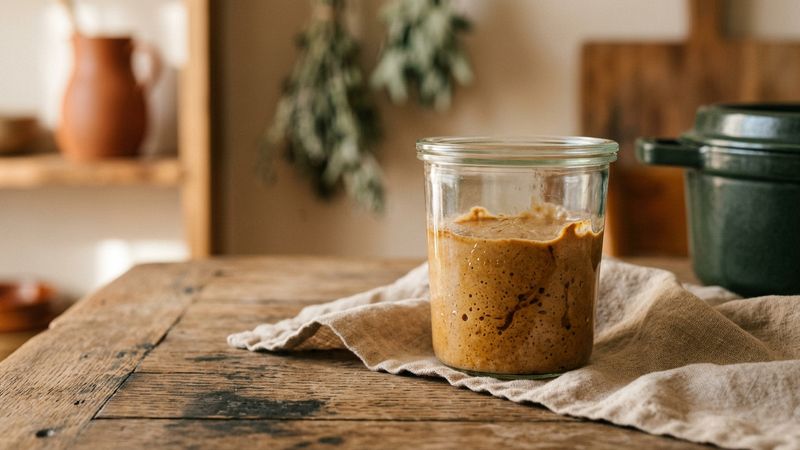
For those who stick with it, something shifts. The jar on the counter becomes a small act of resistance against the logic of convenience. Not a rejection of modern life, but a deliberate carve-out within it. A reminder that some things are worth the wait.
The woman in Lozenets is on her fourth batch now. The kombucha has developed a slight tartness she likes. She's already planning to give away pieces of her SCOBY to friends. The cycle continues.
Frequently Asked Questions
Q: How long does it take to make sourdough bread from scratch?
A: A sourdough starter takes about five to seven days to establish before you can bake with it. Once active, the bread itself requires twelve to forty-eight hours of fermentation depending on temperature and desired sourness, plus baking time.
Q: What is a SCOBY and where can I get one in Sofia?
A: A SCOBY is a symbiotic culture of bacteria and yeast used to brew kombucha. In Sofia, most people obtain them informally through friends, colleagues, or local fermentation groups rather than purchasing them commercially.
Q: Can I speed up the fermentation process for kombucha?
A: Primary fermentation typically requires seven to thirty days and cannot be significantly rushed without compromising flavour and carbonation. Higher temperatures can accelerate the process slightly, but the culture needs time to properly transform the sweetened tea.
The Artisan
Frequently asked questions
How long does it take to make sourdough bread from scratch?
A sourdough starter takes about five to seven days to establish before you can bake with it. Once active, the bread itself requires twelve to forty-eight hours of fermentation depending on temperature and desired sourness, plus baking time.
What is a SCOBY and where can I get one in Sofia?
A SCOBY is a symbiotic culture of bacteria and yeast used to brew kombucha. In Sofia, most people obtain them informally through friends, colleagues, or local fermentation groups rather than purchasing them commercially.
Can I speed up the fermentation process for kombucha?
Primary fermentation typically requires seven to thirty days and cannot be significantly rushed without compromising flavour and carbonation. Higher temperatures can accelerate the process slightly, but the culture needs time to properly transform the sweetened tea.