
Why Winemakers Send Their Grapes to a Vinegar Maker
Прочети на български
Laurent Faure comes from a family that has cultivated vineyards in the Aude region of southern France for half a century. He chose to make vinegar instead.
Rebellion had nothing to do with it. He simply saw something the people around him had missed. When Faure founded Granhota in Coursan in 2010, balsamic vinegar was still a curiosity in France, not a pantry staple. He was interested, as he puts it, in "a bridge between vines and gastronomy." The grapes were already there. The question was what to do with them that nobody else was doing.
Transformation as Strategy
Faure's grapes matter less than what he does to them. He turns fruit into something it was never going to become on its own. In Sofia, specialty roasters work from the same premise: Aroma Coffee sources green beans and transforms them through careful roasting rather than importing something already finished. Like Faure, they have built regional networks and international markets by refusing the easier path of commodity production.
Bulgaria has vineyard heritage too, and untapped potential in value-added fermentation products. What Faure demonstrates is that the raw material is only the beginning. The craft is in what happens next.
The Sourcing Radius
Faure uses his family's grapes exclusively for balsamic vinegars, which remain Granhota's best-sellers. For everything else, he sources from local vineyards within a five to six kilometre radius. "I use all sorts of grape varieties, which give a range of flavours," he explains in an interview with The Connexion.
This is not a limitation. It is a design choice. By staying local, Faure maintains relationships with growers who understand what he needs. By varying the grape varieties, he creates a product range that no single vineyard could produce alone. The constraint becomes the creative engine.
Listening to the Use Case
The product range at Granhota tells you something about how Faure thinks. His balsamic vinegars come in flavours like mango, apricot, apple, and fig. His classic vinegars include honey, raspberry, lemon, pepper, thyme, walnut, and ginger. But the one that reveals his approach most clearly is the oyster vinegar.
"It is very light and fragrant, developed to enhance the flavour of shellfish without dominating it. I think lemon can be a bit too acidic, a bit overwhelming."
Laurent Faure
This is craft as problem-solving. Someone, somewhere, was eating oysters and finding that lemon overpowered them. Faure made something better. The product exists because he listened to how people actually use vinegar, not because he wanted to add another flavour to a list.
The Winemaker Problem
The most interesting part of Granhota's business model is invisible to most consumers.
Winemakers across the region are increasingly commissioning Faure to make vinegar from their grapes.
The reason is technical: the bacteria used in vinegar production are catastrophic for wine. If acetobacter gets anywhere near a winery, it can ruin entire batches. Winemakers protect their wines by keeping them cool and dark. Vinegar requires heat and air. The two processes are fundamentally incompatible.
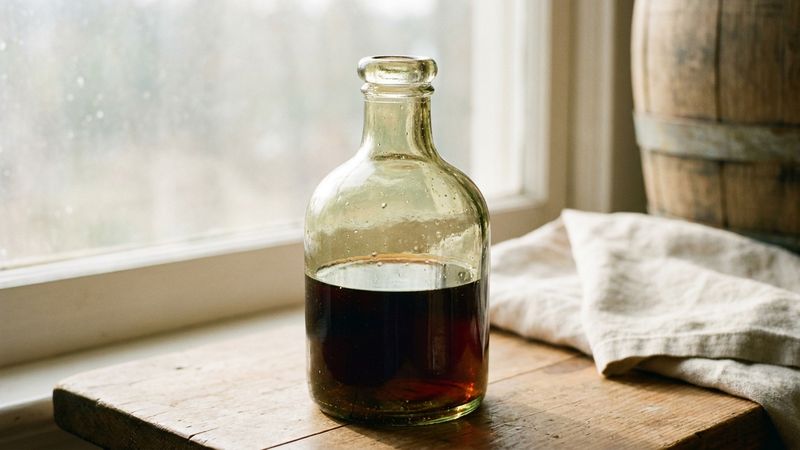
"They say a bad winemaker is a good vinegar-maker and vice versa," Faure notes. This is not just a saying. It describes a real constraint that creates a real market. Winemakers seeking to diversify their offerings cannot make vinegar themselves. Faure can. He has built a growing business by solving a problem that exists in an adjacent industry.
Granhota now exports to Japan, the United States, and Canada. The vinaigrerie also produces a small range of mustards and olive oil, all available through their website.
The Accessibility of Craft
Faure welcomes visitors to Granhota without charge. People can tour the vinaigrerie, taste the products, and buy directly. This is not a marketing strategy. It is how craft producers build trust. When you see how something is made, you understand why it costs what it costs.
The lesson is not in the products. It is in what Faure has done with his constraints: he specialised in transformation rather than raw production, he listened to an adjacent industry, and he built visitor access into the business model. None of that is an obstacle to growth. It is the growth strategy.
The family vineyard still produces, as it has for fifty years. But the value now comes from what happens after the harvest.
Frequently Asked Questions
Q: Why can't winemakers produce their own vinegar?
A: The bacteria required for vinegar production (acetobacter) can contaminate wine and ruin entire batches. Vinegar-making requires heat and air, while winemaking requires cool, dark conditions. The two processes are fundamentally incompatible in the same facility.
Q: What makes Granhota's oyster vinegar different from using lemon?
A: Laurent Faure developed the oyster vinegar to be lighter and more fragrant than lemon, which he considers too acidic for shellfish. The vinegar enhances the flavour of oysters without overpowering them.
Q: Can visitors tour the Granhota vinaigrerie?
A: Yes. Laurent Faure welcomes visitors free of charge. Tours include seeing how the vinegars are made, tasting the products, and purchasing directly. Check the Granhota website for current dates and times.
The Artisan
Frequently asked questions
Why can't winemakers produce their own vinegar?
The bacteria required for vinegar production (acetobacter) can contaminate wine and ruin entire batches. Vinegar-making requires heat and air, while winemaking requires cool, dark conditions. The two processes are fundamentally incompatible in the same facility.
What makes Granhota's oyster vinegar different from using lemon?
Laurent Faure developed the oyster vinegar to be lighter and more fragrant than lemon, which he considers too acidic for shellfish. The vinegar enhances the flavour of oysters without overpowering them.
Can visitors tour the Granhota vinaigrerie?
Yes. Laurent Faure welcomes visitors free of charge. Tours include seeing how the vinegars are made, tasting the products, and purchasing directly. Check the Granhota website for current dates and times.